Why the 'Fat Guy on a Treadmill' Should Switch to Rowing: 2026 Guide
Discover why the fat guy on a treadmill should switch to rowing. Our 2026 heavy-duty rowing machine buying guide covers specs, technique, and top models.

The Biomechanical Reality: Treadmill vs. Rower for Heavier Athletes
The phrase 'fat guy on treadmill' often conjures a specific, painful image: heavy footfalls, labored breathing, and the inevitable onset of shin splints, plantar fasciitis, or lower back pain. For heavier individuals starting their fitness journey, the treadmill is the default choice, yet it is often the most biomechanically punishing. According to the Centers for Disease Control and Prevention, low-impact aerobic activities are crucial for joint preservation, especially when carrying excess body weight.
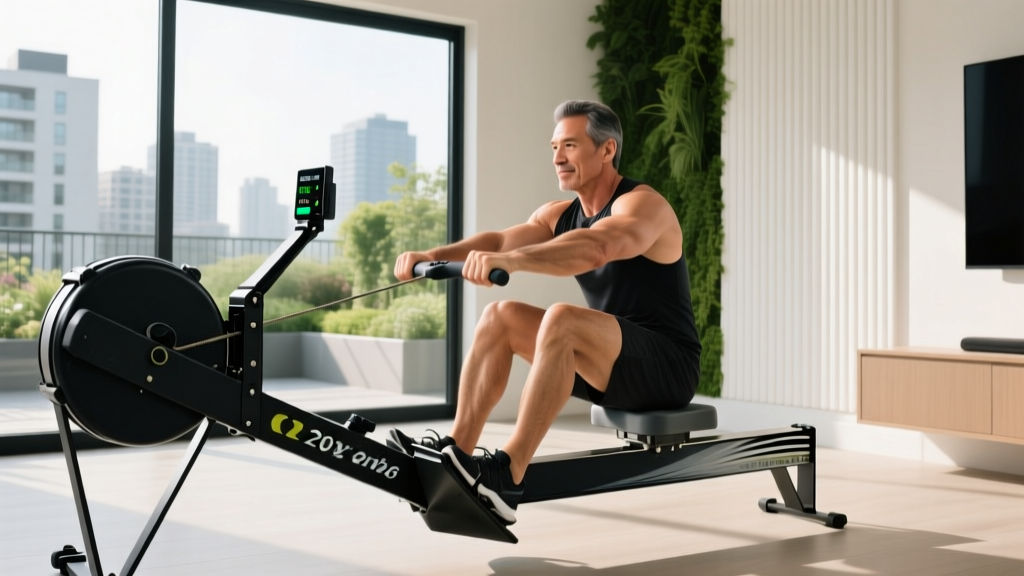
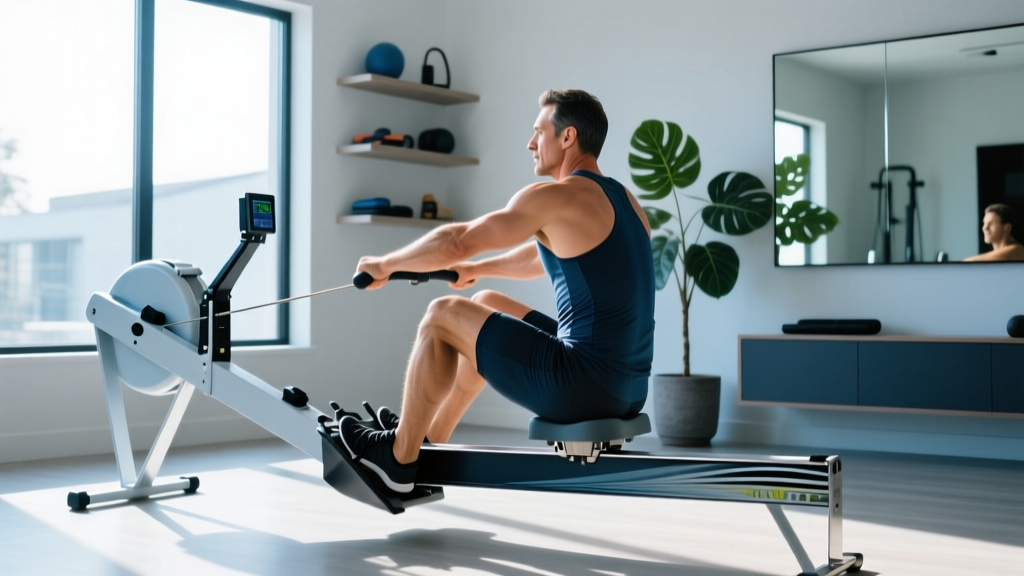
Running on a treadmill generates impact forces equivalent to 2.5 to 3 times your body weight with every stride. For a 280 lb individual, that means over 700 lbs of localized force crashing through the calcaneus (heel bone), tibia, and patellofemoral joint per step. Rowing, conversely, is a zero-impact, closed-chain kinetic exercise. It recruits 86% of the body's musculature—driving massive caloric expenditure and cardiovascular adaptation without the repetitive ground-reaction forces that destroy heavier runners' joints.
'The transition from high-impact treadmill work to the ergometer is the single most effective equipment pivot a heavyweight athlete can make for long-term joint longevity and sustained caloric output.'
Critical Specs for the Heavyweight Rower
Not all rowing machines are built to accommodate larger frames comfortably or safely. When shopping in 2026, heavier athletes must look beyond basic resistance types and scrutinize structural ergonomics.
- Weight Capacity & Rail Integrity: You need a machine rated for at least 400 lbs to 500 lbs. This isn't just about the frame snapping; it's about the monorail's ability to support concentrated weight without bowing, which causes the seat wheels to bind and derail.
- Seat Ergonomics & Width: Standard rower seats are notoriously narrow (often around 12 to 14 inches wide). For users over 250 lbs, this concentrates pressure on the ischial tuberosities (sit bones), leading to sciatic nerve compression and numbness within 15 minutes. Look for wider aftermarket options or machines with broader carriages.
- Inseam Clearance & Seat Height: Standard monorails fit up to a 6'10' inseam. However, larger athletes with thicker thighs and longer femurs often experience 'knee clearance' issues at the catch. A higher seat rail provides better hip angles and prevents the thighs from compressing the abdomen.
2026 Heavy-Duty Rowing Machine Comparison Matrix
Below is a data-driven comparison of the top heavy-duty rowers on the market, specifically evaluated for larger athletes. Pricing reflects early 2026 MSRP.
| Model | Max Weight | Resistance Type | Inseam Limit | Price (2026) | Best For |
|---|---|---|---|---|---|
| Concept2 RowErg (Tall) | 500 lbs | Air | 6'10' | $1,200 | Gold standard durability; tall legs improve hip clearance. |
| Rogue Echo Rower | 500 lbs | Magnetic/Air Hybrid | 6'8' | $1,250 | Quiet operation; massive footprint for extreme stability. |
| Titan Fitness Rower | 400 lbs | Air/Magnetic | 6'6' | $699 | Budget-friendly heavy-duty option; basic PM monitor. |
| Hydrow (Original) | 375 lbs | Electromagnetic | 6'6' | $2,495 | Not recommended for users near the 375 lb limit due to rail stress. |
Technique Modifications for Larger Bodies
Standard rowing technique tutorials are usually demonstrated by lightweight, highly flexible athletes. Heavier rowers must make specific biomechanical adjustments to maintain power output and avoid lower back shear forces.
The Catch: Managing Torso Clearance
At the 'catch' (the starting position with knees bent and shins vertical), a larger midsection can compress against the thighs, restricting diaphragmatic breathing and forcing the lower back into a dangerous rounded (flexed) posture. The Fix: Widen your stance slightly on the footplates (if the machine allows) to allow your torso to drop between your knees rather than over them. Additionally, focus on a slight forward pelvic tilt before you initiate the slide, ensuring your lumbar spine remains neutral.
The Drive: Sequencing Power Safely
Heavier athletes naturally possess more mass, which can translate to incredible wattage on the ergometer. However, relying on the lower back to 'yank' the handle will result in herniations. The Fix: Strictly adhere to the legs-core-arms sequence. Push the footplate away as if performing a heavy leg press. Do not open your hip angle until your knees are nearly extended. Keep the handle path low; pull it directly toward your sternum, not your neck or chin, to avoid trapping the handle against your chest at the finish.
The Recovery: Pacing and Breathing
Larger athletes require more oxygen per stroke. Rushing the recovery (the slide back to the catch) spikes the heart rate unnecessarily and ruins stroke efficiency. Maintain a strict 1:2 work-to-rest ratio. If your drive takes 1 second, your recovery must take 2 full seconds. Use the recovery phase to actively exhale and prepare your core brace for the next drive.
Common Failure Modes and Edge Cases
When applying higher wattage and greater body mass to a rowing machine, specific mechanical failure modes accelerate. Being aware of these edge cases will save you hundreds of dollars in replacement parts.
- Chain Stretch and Lubrication: Heavier athletes naturally pull at a higher drag factor, often leaving the damper at setting 8 to 10. This places immense tension on the steel chain, accelerating micro-stretching. You must lubricate the chain with purified mineral oil or 20W motor oil every 40 hours of use. Never use WD-40, which strips factory grease and accelerates wear.
- Footplate Plastic Fatigue: The hard plastic footplates on budget rowers (and even some mid-tier models) can develop stress fractures near the heel cup when subjected to repeated high-force leg drives from a 300+ lb user. Inspect the heel cups monthly for hairline cracks, and consider upgrading to aftermarket composite footplates if available.
- Seat Wheel Flat-Spotting: If you consistently mount the rower by dropping your full weight onto the seat while it is parked at the front of the rail, the polyurethane seat wheels can develop 'flat spots,' resulting in a bumpy, noisy stroke. Always sit gently or slide back before committing your full weight.
Frequently Asked Questions
Can I use a walking pad instead of a rower if I am overweight?
Walking pads are excellent for low-intensity steady-state (LISS) movement and joint preservation. However, they do not provide the upper-body muscular endurance or the peak cardiovascular VO2 max adaptations that a rowing machine offers. Many heavier athletes successfully combine both: walking pad for daily step goals, and the rower for 20-minute high-intensity interval sessions.
What damper setting should I use on the Concept2?
There is a pervasive myth that a damper setting of 10 is best for heavier, stronger users. In reality, a setting of 10 mimics rowing a slow, heavy wooden boat, which increases lower back fatigue. A setting between 3 and 5 accurately mimics the hydrodynamics of a sleek racing shell and allows for a higher, more cardiovascularly effective stroke rate (24-28 strokes per minute) without burning out your lumbar erectors.
More gear to consider
All reviews
Echanfit Treadmill vs Elliptical: Maintenance & Longevity Guide

Troubleshooting 15 3 30 Treadmill Noise: Cardio Machine Comparison
Stair Climber vs Treadmill for Weight Loss: Elliptical vs Treadmill
Rowing Machine Buying Guide & Technique: ProForm XP Treadmill Switch

Renestar Treadmill Setup & Cardio Machine Noise Comparison