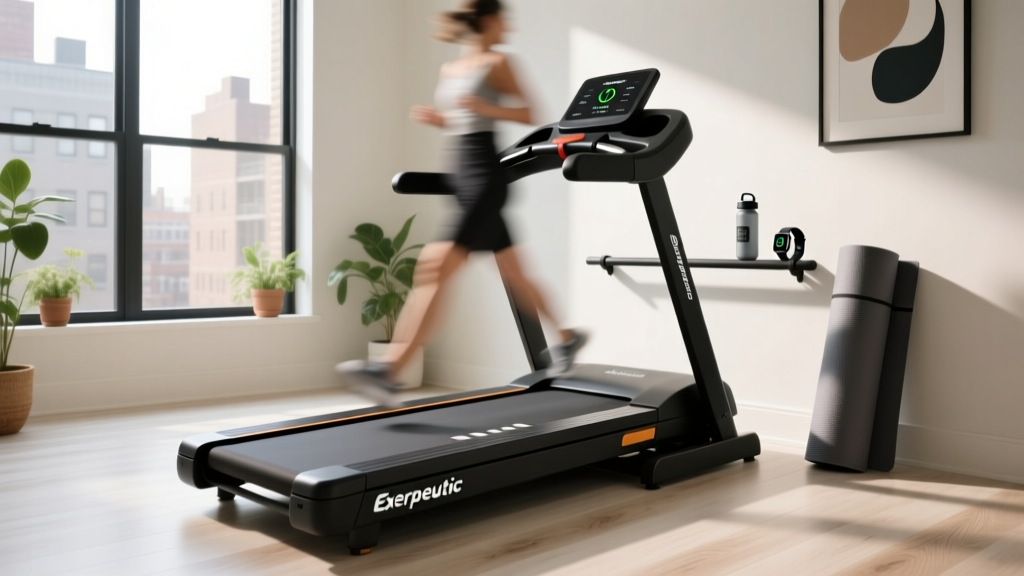
Exerpeutic Therapeutic Fitness Treadmill: Buying & Error Guide
Compare Exerpeutic therapeutic fitness treadmill models, avoid common buying mistakes, and master troubleshooting for error codes and belt maintenance.

The demand for at-home rehabilitation and low-impact mobility equipment has surged, making the Exerpeutic therapeutic fitness treadmill a staple in home gyms and physical therapy clinics alike. Unlike commercial running machines, these specialized treadmills prioritize extended handrails, low step-up heights, and steady walking paces. However, selecting the right model and keeping it operational requires navigating a minefield of misleading specs and common mechanical errors.
Whether you are recovering from a joint replacement or seeking a safe walking platform for an elderly family member, this 2026 guide breaks down the critical feature comparisons, purchasing pitfalls, and hands-on troubleshooting protocols for Exerpeutic's most popular therapeutic models.
The Exerpeutic Therapeutic Lineup: Feature Comparison Matrix
Exerpeutic dominates the budget-to-mid-tier therapeutic market. Below is a direct comparison of their three flagship walking treadmills to help you match the machine to your specific mobility requirements.
| Feature | Exerpeutic TF1000 Walk to Fitness | Exerpeutic TF2000 | Exerpeutic 1000XL |
|---|---|---|---|
| Motor (Continuous) | 1.5 HP | 2.0 HP | 1.5 HP |
| Belt Dimensions | 20' x 40' | 20' x 40' | 20' x 48' (Extended) |
| Weight Capacity | 350 lbs | 400 lbs | 350 lbs |
| Step-Up Height | 5.5 inches | 5.5 inches | 5.5 inches |
| Max Speed | 4.0 mph | 4.0 mph | 4.0 mph |
| Handrail Type | Full-length dual | Full-length dual w/ pulse | Full-length dual |
| Avg. 2026 Price | $329 - $349 | $429 - $459 | $369 - $389 |
4 Critical Buying Mistakes to Avoid
According to ACE Fitness treadmill buying guidelines, matching the equipment to the user's biomechanical needs is the most common point of failure in home fitness purchases. Here are the specific mistakes buyers make when shopping for therapeutic treadmills.
1. Ignoring the 50-Pound Weight Buffer Rule
Never buy a treadmill where your body weight is near the maximum stated capacity. If you weigh 320 lbs, the 350-lb capacity TF1000 will suffer from severe motor strain, belt friction, and premature drive-board failure. Always maintain a minimum 50-lb buffer between the user's weight and the machine's limit. For users over 300 lbs, the 400-lb capacity TF2000 is the only safe choice in this lineup.
2. Confusing 'Therapeutic' with 'Running'
Exerpeutic therapeutic models are capped at 4.0 mph. These are strictly walking and rehabilitation machines. Attempting to jog on a 20-inch by 40-inch belt with a 1.5 HP motor will not only void the warranty but drastically increases the risk of a fall. If cardiovascular running is the goal, you must look outside the therapeutic category.
3. Overlooking Deck Length for Tall Users
A standard 40-inch belt length is sufficient for users under 5'10'. However, taller users taking longer rehabilitative strides will find themselves stepping on the rear plastic end caps. If the primary user is over 6 feet tall, the 1000XL with its 48-inch extended belt is a mandatory upgrade to prevent stride restriction and hip impingement.
4. Neglecting Step-Up Height for Hip/Knee Rehab
Standard commercial treadmills sit 8 to 10 inches off the ground. The Exerpeutic line features a 5.5-inch step-up height. As noted in Mayo Clinic's guidelines on walking for joint health, minimizing the vertical ascent required to begin exercise is crucial for patients recovering from total knee arthroplasty (TKA) or hip replacements. Always measure the user's clearance needs before purchasing.
Troubleshooting Common Exerpeutic Error Codes
Therapeutic treadmills endure repetitive, low-speed friction, which often leads to specific console error codes. Before calling for a replacement part, run through these diagnostic steps.
⚠️ SAFETY WARNING: Always unplug the treadmill from the wall outlet and remove the magnetic safety key before inspecting the motor hood or internal wiring. Capacitors on the drive board can retain a charge even when unplugged.Error E1: Speed Sensor Failure
The E1 code indicates the console is not receiving a signal from the speed sensor. This is rarely a dead sensor; it is almost always a misalignment caused by belt vibration.
- Remove the Motor Hood: Use a Phillips-head screwdriver to remove the 4 to 6 screws securing the front plastic motor cover.
- Locate the Sensor: Find the small black plastic sensor pointing at the front roller. You will see a small magnet embedded in the roller pulley.
- Adjust the Gap: The sensor must be exactly 2mm to 3mm away from the magnet as it passes. Gently bend the sensor bracket closer to the roller if the gap is too wide.
- Check the Safety Key: A weak magnet on the red safety lanyard can also trigger an E1 or sudden shutdown. Test by placing a stronger refrigerator magnet over the console sensor pad.
Error E2: Motor Voltage / Drive Board Overload
An E2 error means the motor is drawing too many amps, causing the drive board to shut down to prevent a fire. This is almost exclusively caused by extreme deck friction.
- The Fix: You must lubricate the deck. Lift the edge of the walking belt and apply 15ml of 100% silicone treadmill lubricant in a zig-zag pattern across the wooden deck. Run the machine at 2.0 mph for 5 minutes to distribute the silicone.
- What NOT to do: Never use WD-40, lithium grease, or petroleum-based oils. These will melt the rubber belt backing and destroy the deck wax coating.
Mechanical Maintenance: Fixing Belt Slippage
If the front roller spins but the walking belt hesitates or stops when you step on it, your belt tension is too loose. This is a common issue on the TF1000 after the first 50 miles of use as the cotton/polyester belt stretches.
According to Treadmill Doctor's belt lubrication and maintenance protocols, a properly tensioned belt should allow you to lift the edge of the belt about 2 to 3 inches off the deck in the center. Any higher, and it will slip; any lower, and it will cause motor strain.
Step-by-Step Belt Tensioning
- Locate the two rear roller adjustment bolts at the very back of the treadmill (left and right sides).
- Using a 3/16-inch Allen wrench (standard on most Exerpeutic models), turn the left bolt exactly one-quarter (1/4) turn clockwise.
- Turn the right bolt exactly one-quarter (1/4) turn clockwise. Never adjust one side more than the other, or the belt will track off-center and fray against the side rails.
- Plug the machine in, stand on the side rails, and run it at 3.0 mph. Step on and test for slippage. Repeat the 1/4 turn process if necessary, but do not exceed two full turns from the factory default.
Final Verdict: Matching the Machine to Your Mobility Needs
The Exerpeutic therapeutic fitness treadmill series remains one of the most cost-effective solutions for home rehabilitation in 2026, provided you respect the mechanical limitations of budget-tier walking machines.
Choose the TF1000 if you are under 280 lbs and need a reliable, space-efficient walking platform for general cardiovascular health. Upgrade to the 1000XL if you are taller than 5'10' and require a longer stride path to maintain natural gait mechanics. Finally, invest in the TF2000 if you are a bariatric user or require a heavier-duty 2.0 HP motor to handle prolonged, multi-hour daily use in a shared household environment. By avoiding weight-limit pitfalls and staying proactive with silicone deck lubrication, your therapeutic treadmill will provide years of safe, low-impact mobility support.
More gear to consider
All reviews
Maintaining Compact Treadmills for HIIT Treadmill Workouts
WalkingPad C2 Foldable Walking Treadmill vs Standard: Motor HP Guide

Air Bike vs Assault Bike: Does the Treadmill Help You Lose Weight?

Before You Hit the Treadmill: Motor Horsepower Guide

Omni One Treadmill vs. True Folding Treadmills for Small Spaces
