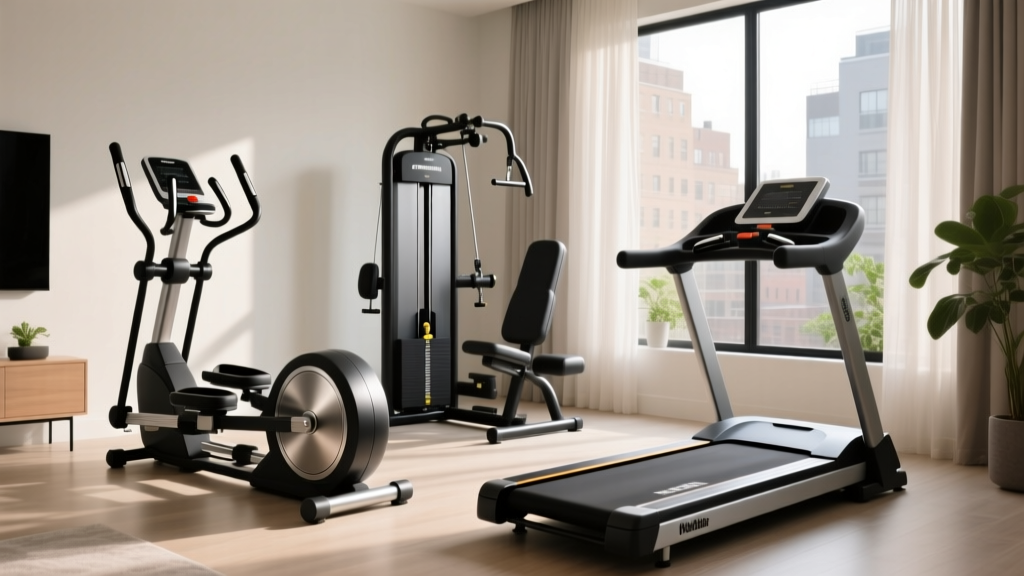
Escaping the Treadmill of Production: Step-by-Step Quiet Cardio Guide
Learn how to escape the noisy treadmill of production with our step-by-step guide comparing the decibel levels of top home cardio machines for peaceful workouts.

The "Treadmill of Production" at Home: Why Noise Matters
In environmental sociology, the "treadmill of production" describes the relentless, resource-heavy, and inherently noisy expansion of modern industrial systems. It is a cycle of endless grinding, consumption, and mechanical hum.
When we decide to invest in our health and bring fitness into our homes, the last thing we want is to replicate this loud, mechanical grind. Your home gym should be a sanctuary, not an extension of the industrial noise floor. Yet, many beginners unknowingly purchase cardio equipment that transforms their living space into a deafening factory floor, leading to complaints from neighbors, disrupted sleep for family members, and eventual abandonment of the machine.
According to the World Health Organization (WHO), chronic exposure to environmental noise above 55 decibels (dB) can elevate stress hormones, disrupt sleep architecture, and increase cardiovascular risks. To truly escape the treadmill of production, you must understand the acoustic footprint of your fitness gear. This beginner-friendly, step-by-step guide will walk you through the exact noise levels of modern cardio machines, helping you choose and maintain equipment that keeps your heart rate up and your ambient noise down.
Step 1: Understanding Decibels (dB) and Machine Mechanics
Before comparing machines, beginners must understand how sound is measured and generated. The decibel scale is logarithmic, meaning a 10 dB increase represents a sound that is perceived as twice as loud to the human ear. A quiet library sits around 40 dB, while normal conversation is about 60 dB.
Acoustic Baseline Rule of Thumb: For apartment living or shared homes, you want a machine that operates below 65 dB at peak use. Anything above 70 dB will easily bleed through standard drywall and disrupt adjacent rooms.Cardio machine noise generally falls into two categories:
- Airborne Noise: The hum of the motor, the whir of the flywheel, or the rush of air resistance. This is dictated by the machine's engineering and drive system.
- Impact Noise: The physical force of your body striking the machine (e.g., footfalls on a treadmill deck), which travels as structural vibration through the floor. The Environmental Protection Agency (EPA) notes that low-frequency impact noise is notoriously difficult to block and is the primary culprit for neighbor disputes.
Step 2: The Ultimate Cardio Machine Noise Matrix
Let us break down the acoustic profiles of the four major cardio categories. The data below reflects real-world testing at moderate intensity levels (e.g., a 6 mph jog, a moderate rowing pace, or an 80 RPM cycling cadence) measured from a distance of 3 feet.
| Machine Type | Benchmark Model (2026) | Drive / Resistance | Avg dB Output | Primary Noise Source |
|---|---|---|---|---|
| Treadmill | NordicTrack Commercial 1750 | 3.5 CHP Motor / Belt | 68 - 75 dB | Footstrike impact & motor hum |
| Elliptical | Sole E95 | 24 lb Flywheel / Magnetic | 50 - 58 dB | Drive belt & pivot joints |
| Stationary Bike | Schwinn IC4 | Belt Drive / Magnetic | 45 - 52 dB | Pedal bearing friction |
| Air Rower | Concept2 RowErg | Chain Drive / Air Fan | 55 - 65 dB | Air displacement (whoosh) |
| Smart Rower | Hydrow | Belt Drive / Electromagnetic | 40 - 48 dB | Minimal (roller wheels) |
Treadmills: The Impact Offenders
Treadmills are inherently the loudest cardio machines. Even with advanced cushioning systems like the NordicTrack's Runners Flex cushioning, the biomechanical reality of running means your body weight (often 150-250 lbs) is striking a composite deck repeatedly. At a 6 mph pace, impact noise easily pushes the acoustic envelope past 70 dB. If you live in a second-floor apartment, a treadmill is generally not recommended without extensive structural soundproofing.
Ellipticals & Bikes: The Magnetic Whispers
Because your feet never leave the pedals, ellipticals and stationary bikes eliminate impact noise entirely. The Sole E95 and Schwinn IC4 both utilize magnetic resistance. Unlike friction pads that scrape against a flywheel (creating a harsh grinding noise), magnetic resistance uses eddy currents to create drag without physical contact. This makes them exceptionally quiet, often drowned out by the sound of your own breathing or a TV set at low volume.
Rowing Machines: Air vs. Electromagnetic
The Concept2 RowErg is the gold standard for rowing, but its air resistance flywheel moves a massive volume of air, creating a distinct "whooshing" sound that scales with your effort. It is not obnoxiously loud, but it is highly noticeable. Conversely, the Hydrow uses an electromagnetic drag system and a polyurethane belt, rendering it virtually silent, making it the superior choice for noise-sensitive environments despite its higher $2,495 price point.
Step 3: Step-by-Step Soundproofing for Beginners
Even the quietest machine can become a nuisance if structural vibrations are not managed. Follow this step-by-step protocol to acoustically isolate your home gym.
- Invest in High-Density EVA Foam Mats: Do not rely on cheap, thin yoga mats. Purchase a 3/8-inch thick, interlocking EVA foam mat specifically rated for heavy fitness equipment. This decouples the machine from the subfloor, reducing low-frequency impact transmission by up to 15 dB.
- Implement the "Two-Foot Rule": Never place a cardio machine flush against a shared wall. Leave at least 24 inches of clearance. Sound waves amplify when they corner-load against intersecting walls; giving the machine space allows airborne noise to dissipate.
- Use Anti-Vibration Washer Pads: For treadmills and heavy ellipticals, place heavy-duty rubber anti-vibration pads (often sold for washing machines) under the machine's leveling feet. This costs less than $25 and drastically reduces structural hum.
- Manage Your Audio Environment: According to the National Institute for Occupational Safety and Health (NIOSH), prolonged exposure to noise above 85 dB can cause hearing damage. While most machines do not reach this, the combination of machine noise plus blaring tablet speakers can create a fatiguing environment. Use noise-isolating workout earbuds to keep your personal audio private and reduce overall room volume.
Step 4: Troubleshooting Edge Cases and Failure Modes
A machine that is quiet on day one may become a squeaking, rattling mess by month six if maintenance is ignored. Here are the specific mechanical failure modes that spike noise levels, and how to fix them:
- Treadmill Belt Friction Squeak: If your treadmill begins emitting a high-pitched chirping or rubbing sound, the walking belt has likely dried out or drifted off-center. Fix: Loosen the rear roller bolts, re-center the belt, and apply 100% silicone treadmill lubricant under the deck. Do this every 130 miles or 3 months.
- Elliptical Pivot Bearing Degradation: A rhythmic "click-clack" on an elliptical usually indicates that the grease in the pedal arm pivot joints has degraded or collected dust. Fix: Wipe the joints clean with a microfiber cloth and apply white lithium grease. Avoid WD-40, which attracts dirt and worsens the problem over time.
- Rower Bungee Cord Slack: On chain-drive rowers like the Concept2, the elastic bungee cord that retracts the chain can lose tension over years of use, causing a metallic slapping sound against the housing during the recovery phase. Fix: Contact the manufacturer for a replacement bungee cord and adjust the tension via the shock cord knot inside the handle cage.
- Stationary Bike Pedal Thread Wear: A persistent ticking sound that matches your cadence on a spin bike is almost always a loose pedal. The reverse-threading on the left pedal means standard vibrations can slowly back it out. Fix: Use a 15mm pedal wrench to aggressively tighten both pedals, ensuring the left pedal is threaded counter-clockwise.
Final Thoughts: Building Your Quiet Sanctuary
Escaping the "treadmill of production" means rejecting the idea that fitness must be a loud, disruptive, and mechanically aggressive chore. By understanding the decibel outputs of different cardio modalities, you can make informed purchasing decisions that respect your living space and your household. If your primary goal is high-intensity cardiovascular output with zero acoustic guilt, magnetic resistance bikes and ellipticals remain your best allies. However, if you are willing to invest in proper acoustic matting and rigorous belt maintenance, even a premium treadmill can coexist peacefully in a modern home. Choose your equipment wisely, maintain it meticulously, and enjoy the quiet burn.
More gear to consider
All reviews
Horizon 7.8AT Treadmill Motor Troubleshooting & Horsepower Guide

ProForm Pro 2000 Treadmill vs Rivals: 2026 Smart Features Comparison
Elliptical vs Treadmill: Budget Breakdown & Pregnant Treadmill Safety

Rowing Machine Setup & Technique: Smarter Than a bdsm treadmill?
ProForm Crosswalk 395CW Treadmill Review: Best for Small Spaces?
