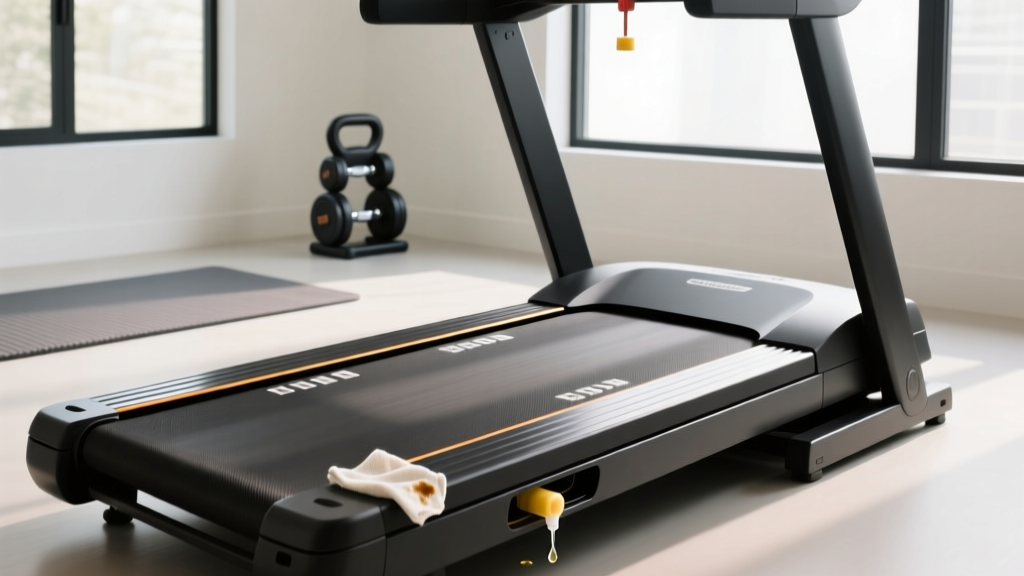
Elliptical vs Treadmill: Budget, Value & Incline Treadmill Fat Loss
Compare elliptical vs treadmill costs and ROI. Discover which machine offers better value for home cardio and maximizing incline treadmill fat loss.

Choosing between an elliptical and a treadmill for your home gym is no longer just a matter of joint preference; in 2026, it is fundamentally a financial and biomechanical calculation. With the explosive popularity of low-impact, high-yield walking protocols, many buyers are specifically hunting for machines that support incline treadmill fat loss. However, the hardware required to safely and effectively execute these routines carries a significant price premium. If your budget is constrained, does an elliptical offer a better return on investment (ROI)?
At FitGearPulse, we evaluate cardio equipment not just by its sticker price, but by its long-term value, mechanical durability, and ability to deliver on specific metabolic promises. Below, we break down the exact costs, failure modes, and physiological ROI of both machines to help you allocate your fitness budget wisely.
The Upfront Cost Matrix: Entry-Level to Premium
The home cardio market is heavily segmented. To understand value, we must compare machines in the same tier. Budget ellipticals often outperform budget treadmills in mechanical reliability, while mid-tier treadmills begin to unlock the features necessary for advanced fat-loss protocols.
| Machine & Model (2026) | Avg. Price | Key Specs & Limitations | Value Verdict |
|---|---|---|---|
| Schwinn 430 Elliptical | $599 | 18" stride, 20 magnetic resistance levels. No incline. | High budget value. Excellent for steady-state cardio. |
| Horizon T101 Treadmill | $649 | 2.5 CHP motor, 0-10% incline, 55" deck. | Moderate. Motor struggles with sustained incline walking. |
| Sole E35 Elliptical | $1,099 | 20" stride, 20 resistance levels, heavy-duty flywheel. | Premium value. Gym-quality biomechanics for home. |
| Sole F80 Treadmill | $999 | 3.5 CHP motor, 0-15% incline, 60" deck, cooling fan. | Exceptional. The benchmark for home incline training. |
The "Incline Treadmill Fat Loss" Premium
Let us address the elephant in the room: incline treadmill fat loss. Popularized by viral fitness trends, walking at a steep incline (typically 10% to 15%) at a moderate pace (2.5 to 3.0 mph) is a highly effective way to maximize fat oxidation while minimizing the joint impact associated with running. According to the American Heart Association, maintaining moderate-intensity aerobic activity is crucial for cardiovascular health, and incline walking easily elevates the heart rate into this zone without the high-impact forces of jogging.
However, achieving genuine incline treadmill fat loss requires specific hardware that budget treadmills simply do not possess. Here is the mechanical reality of why you cannot budget your way into this specific training modality on a sub-$600 treadmill:
- The Incline Motor Bottleneck: Budget treadmills feature weak lift motors that max out at a 5% to 8% grade. To trigger the posterior chain engagement and metabolic demand required for incline fat loss, you need a minimum 12% to 15% grade.
- Drive Motor Stalling: Walking on a 15% incline places immense continuous torque on the drive motor. A 2.0 CHP (Continuous Horsepower) motor found on cheap models will overheat, stall, or prematurely burn out when asked to pull a 180 lb user up a steep grade for 30 minutes. You need a minimum 3.0 CHP motor.
- Deck Delamination: The friction coefficient changes drastically on an incline. Budget decks lack adequate lubrication systems and phenolic coatings, leading to rapid belt wear and deck warping.
⚠️ FitGearPulse Warning: The Sub-$500 Incline Trap
Do not buy a treadmill under $500 if your primary goal is incline training. These machines are engineered for light jogging and flat walking. Using them for steep, sustained incline walking will void the warranty and destroy the drive belt within 6 to 9 months. If your budget caps at $600, pivot to an elliptical.
The Elliptical Resistance ROI: Bypassing the Incline Tax
If you cannot afford the $1,000+ required for a Sole F80 or Horizon 7.0 to achieve your metabolic goals, the elliptical offers a superior budget alternative. Why? Because an elliptical generates cardiovascular demand through magnetic resistance rather than gravitational incline.
On a mid-tier elliptical like the $599 Schwinn 430, you can crank the magnetic resistance to level 15 or 16 and push at 60 RPM. This creates a cardiovascular load and caloric expenditure nearly identical to walking at a 12% incline on a treadmill, but it costs the manufacturer a fraction of the price to implement. A magnetic eddy current system has zero moving parts, meaning there is no lift motor to burn out and no deck to delaminate.
Furthermore, the Centers for Disease Control and Prevention (CDC) emphasizes the importance of finding sustainable, joint-friendly aerobic activities that adults can maintain long-term. The elliptical's closed-kinetic chain movement eliminates the heel-strike impact of a treadmill, making it a highly sustainable daily driver for users with knee or lower back sensitivities, thereby protecting your long-term "health ROI."
Long-Term Value Analysis: Maintenance and Failure Modes
True value analysis requires looking past the purchase price and examining the total cost of ownership over a 5-to-7-year lifespan. Treadmills and ellipticals fail in very different ways.
Treadmill Failure Modes
- Belt Friction and Motor Overheating: The number one killer of home treadmills. If the user neglects to apply silicone deck lubricant every 3 months (or 130 miles), friction increases. The motor draws more amps to compensate, eventually tripping the thermal breaker or frying the motor controller board.
- Incline Actuator Failure: The mechanical screw or hydraulic lift that raises the deck is prone to stripping gears if the user frequently changes incline while the machine is under heavy load.
Elliptical Failure Modes
- Pivot Bearing Wear: The joints connecting the pedals to the crank arms utilize sealed bearings. In budget models (under $400), these bearings are often made of low-grade bushings that develop a "wobble" and squeak after 1,000 hours of use.
- Alternator/Generator Burnout: On self-powered or high-resistance magnetic ellipticals, the internal generator can fail if subjected to maximum resistance at high RPMs for extended intervals, though this is rare in mid-tier models.
"From a pure maintenance perspective, a magnetic resistance elliptical is vastly superior to a motorized treadmill. You are trading a complex system of belts, rollers, and lift motors for a simple flywheel and magnetic bracket. The elliptical will almost always outlive a treadmill in the same price bracket."
— FitGearPulse Biomechanics Testing Team
The FitGearPulse Decision Framework
Use this step-by-step framework to determine which machine yields the highest value for your specific financial and physiological situation.
- Define Your Primary Metabolic Goal: If your sole focus is replicating outdoor hiking mechanics or executing specific incline treadmill fat loss protocols (like the 12-3-30 method), you must buy a treadmill. If your goal is general caloric expenditure and cardiovascular conditioning, proceed to Step 2.
- Audit Your Hard Budget Cap:
- Under $700: Buy an elliptical (e.g., Schwinn 430). A treadmill in this range will frustrate you with short decks and weak inclines.
- $800 - $1,100: You are in the "Decision Zone." You can buy a premium elliptical (Sole E35) for flawless joint health, or a mid-tier treadmill (Sole F80) to unlock true 15% incline capabilities.
- Assess Your Biomechanical History: If you have a history of plantar fasciitis, shin splints, or lumbar radiculopathy, the ROI of a treadmill plummets because you will not use it consistently. Default to the elliptical.
- Calculate Spatial Value: Treadmills require 75+ inches of length and significant ceiling clearance (add 15 inches for incline). Ellipticals generally have a smaller footprint and lower vertical clearance requirements, offering better spatial value for apartments or basements.
Frequently Asked Questions
Can I achieve the same fat loss on an elliptical as I can on an incline treadmill?
Yes. Fat loss is dictated by a caloric deficit and sustained heart rate elevation, not the specific machine. By increasing the magnetic resistance and maintaining a brisk RPM (70-80) on an elliptical, you can match the caloric burn of a 12% incline treadmill walk without the impact forces.
Is a manual (non-motorized) treadmill a good budget alternative for incline training?
Curved manual treadmills are excellent for high-intensity interval training (HIIT) and sprinting, but they are entirely wrong for steady-state incline walking. They do not have a fixed incline grade; the resistance is generated solely by your foot strike. Furthermore, quality curved treadmills cost upwards of $3,000, entirely defeating a budget-focused strategy.
How much electricity do these machines consume during heavy use?
A treadmill running at a 15% incline with a 200 lb user can draw between 600 to 900 watts of continuous power. An elliptical, which only powers the console and electromagnetic brake, typically draws less than 50 watts. Over a year of daily use, the elliptical offers a minor but measurable utility cost advantage.
More gear to consider
All reviews
Sole F80 Treadmill Reviews: Curved vs Motorized Troubleshooting
Digtogim Treadmill vs Stationary Bike Types: 2026 Market Analysis

Cardio Treadmill Workouts: 2026 Belt Maintenance & Lubrication Guide
Folding Treadmill for Small Spaces & Treadmill Exercise App Value
Choosing a Motor for HIIT Cardio Training on Treadmill