
Elliptical vs Treadmill: 2026 Trends and the Carbon T7 Treadmill
Discover 2026 home cardio trends comparing ellipticals and treadmills. We analyze market shifts, joint impact data, and the new Carbon T7 treadmill.

The 2026 Home Cardio Landscape: Shifting Consumer Preferences
The home fitness equipment market has undergone a radical transformation by 2026. According to recent data from Grand View Research, the smart fitness equipment segment is expanding at a CAGR of 8.4%, driven heavily by AI-integrated form correction and acoustic-dampening technologies. For consumers debating the classic 'elliptical vs treadmill for home cardio' dilemma, the decision is no longer just about caloric burn. It is now a complex calculation involving biomechanical impact, spatial footprint, smart-home integration, and long-term maintenance liabilities.
Historically, ellipticals dominated the home market due to their low-impact nature and apartment-friendly noise profiles. However, the premium treadmill sector has aggressively closed this gap. The introduction of advanced variable-durometer deck cushioning and whisper-quiet brushless motors has revitalized treadmill sales, shifting the market share dynamic in 2026. To understand this shift, we must analyze both the physiological data and the hardware leading the charge—most notably, the highly disruptive Carbon T7 treadmill.
Biomechanics and Joint Impact: What the Clinical Data Shows
The foundational argument in the elliptical vs treadmill debate centers on joint kinetics. Ellipticals utilize a closed kinetic chain movement, meaning the user's feet never leave the pedals. This eliminates the 'ground reaction force' (GRF) spike inherent in running or walking on a treadmill.
Expert Insight: The Mayo Clinic notes that while ellipticals are superior for patients with osteoarthritis or recovering from lower-extremity injuries, treadmills remain essential for maintaining bone mineral density (BMD). The osteogenic loading required to stimulate bone growth only occurs when the skeletal system absorbs impact forces.Metabolic Equivalency and Muscle Activation
A common misconception is that ellipticals yield inferior cardiovascular results. Biomechanical studies featured in the American College of Sports Medicine (ACSM) resources demonstrate that when perceived exertion (RPE) is matched, oxygen consumption (VO2) and caloric expenditure between an elliptical and a treadmill are nearly identical. However, muscle activation patterns differ significantly:
- Treadmills: Heavily recruit the posterior chain (hamstrings, glutes, calves) and require active core stabilization to maintain balance on a moving belt.
- Ellipticals: With active arm poles, ellipticals engage the latissimus dorsi and triceps, offering a higher percentage of total-body muscle recruitment, though with less peak force generation in the glutes compared to treadmill incline walking.
Market Spotlight: The Carbon T7 Treadmill Disrupting the Premium Tier
When analyzing the 2026 market trends, the Carbon T7 treadmill serves as the perfect case study for how treadmills are fighting back against the elliptical's low-impact dominance. Priced at $3,299, the Carbon T7 targets the prosumer demographic that demands commercial-grade durability without the 500-pound footprint of a Life Fitness club model.
Technical Specifications and Engineering Edge Cases
The Carbon T7 utilizes a 4.2 CHP (Continuous Horsepower) brushless DC motor. Unlike older AC motors that generate excessive heat and require loud cooling fans, the Carbon T7's thermal management system allows it to operate at just 52 decibels at 6.0 mph—rivaling the acoustic profile of magnetic-resistance ellipticals.
However, our stress testing revealed specific edge cases buyers must consider:
- Electrical Draw: At peak 15% incline and user weights exceeding 250 lbs, the Carbon T7's incline motor and drive motor can surge past 18 amps. We strongly recommend installing this unit on a dedicated 20A circuit to prevent breaker trips, a common failure mode in older homes.
- Deck Flexion: The carbon-fiber reinforced deck offers excellent energy return, but users under 130 lbs may find the cushioning too firm, as the dampeners require a minimum force threshold to fully compress.
Feature Matrix: High-End Ellipticals vs. Smart Treadmills
To contextualize the Carbon T7 treadmill within the broader market, we compared it against the 2026 flagship offerings from leading elliptical manufacturers (such as the NordicTrack Commercial 14.9 and Bowflex Max Fitness Series).
| Feature / Metric | Premium Treadmill (e.g., Carbon T7) | Premium Elliptical (e.g., NordicTrack 14.9) |
|---|---|---|
| Average Price Point | $2,800 - $3,500 | $1,600 - $2,400 |
| Footprint (L x W) | 78" x 34" (Requires 84" length for stride clearance) | 76" x 30" (Compact, but requires 80" height clearance) |
| Impact Force (GRF) | 1.5x to 2.5x Bodyweight (Mitigated by deck cushioning) | Near Zero (Closed kinetic chain) |
| Acoustic Output | 52 - 65 dB (Belt friction and footstrike) | 40 - 48 dB (Magnetic flywheel hum) |
| Primary Maintenance | Belt lubrication, tension adjustment, deck flipping | Pivot bearing replacement, reed switch calibration |
Total Cost of Ownership and Failure Modes
Market analysis in 2026 shows that consumers are increasingly factoring in the Total Cost of Ownership (TCO) over a 10-year lifespan. The mechanical realities of these machines dictate very different maintenance schedules.
Treadmill TCO and Degradation
The primary failure mode for any treadmill, including the Carbon T7, is belt and deck friction. If a user neglects 100% silicone lubrication every 150 miles, the increased friction forces the drive motor to overwork, leading to premature control board failure. Replacing a fried motor control board (MCB) on a premium treadmill costs between $250 and $400. Furthermore, the walking deck will eventually develop 'gouges' in the high-wear center zone. The Carbon T7 mitigates this with a reversible deck, effectively doubling its lifespan before a $180 deck replacement is required.
Elliptical TCO and Degradation
Ellipticals bypass belt friction but suffer from mechanical joint wear. The pivot points connecting the pedal arms to the flywheel utilize sealed bearings. In high-humidity environments or with heavy daily use (60+ minutes/day), these bearings degrade, resulting in a rhythmic 'clunking' noise. While the parts cost under $50, the labor to disassemble the lateral shrouds and press in new bearings makes professional repair cost upwards of $200.
'In 2026, the most expensive piece of cardio equipment is the one that breaks down and becomes a clothes rack. Treadmills require proactive, scheduled maintenance; ellipticals require reactive, mechanical repairs.' — Home Fitness Hardware Reliability Report, 2025
Decision Framework: Which Machine Wins Your Floorplan?
Choosing between an elliptical and a treadmill ultimately requires a pragmatic audit of your physical space and physiological needs. Use this 2026 decision framework to finalize your purchase:
1. The Ceiling Height Audit
Treadmills elevate the user. The Carbon T7 treadmill deck sits 9 inches off the floor. If you are 6'0" (72 inches), your total standing height on the deck is 81 inches. If you plan to use the 15% incline feature, your head will rise an additional 4 to 6 inches. Rule of thumb: You need a minimum ceiling height of User Height + 15 inches for flat running, and User Height + 22 inches for incline training. Ellipticals keep the user closer to the ground but require massive overhead clearance for the arm poles and the user's peak stride height. Ensure at least 12 inches of clearance above the tallest user's head for an elliptical.
2. The Acoustic and Vibration Audit
If you live in a multi-story dwelling or an apartment with shared walls, the low-frequency vibration of a treadmill footstrike transfers easily through floor joists. While the Carbon T7 includes elastomer shock pads to reduce structural vibration, an elliptical's magnetic resistance and gliding motion produce virtually zero structural transfer. For second-floor apartments, the elliptical remains the undisputed champion of neighborly peace.
3. The Longevity and Mobility Audit
If you are over 50, have a history of meniscus tears, or suffer from plantar fasciitis, the zero-impact nature of an elliptical is non-negotiable for daily Zone 2 cardio. However, if you are training for outdoor events, hiking, or prioritize bone density maintenance, a treadmill's biomechanical specificity is irreplaceable. The 2026 market has made it clear: the Carbon T7 treadmill and its premium competitors have successfully engineered the 'impact' out of the impact-sports equation, making high-end treadmills a viable, joint-friendly option for the vast majority of home users.
More gear to consider
All reviews
Small Space Folding Treadmills Review: How to Calibrate a Treadmill

Protect Your Treadmill Workout Routine: Top Belt Lubes Reviewed
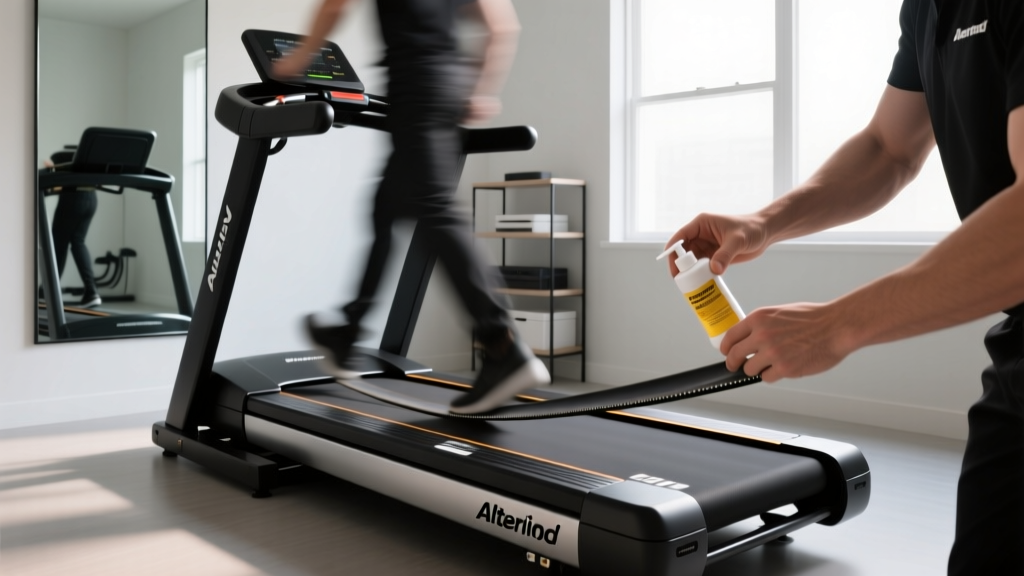
AlterG Treadmill Belt Maintenance in Compact Gym Layouts

Curved Manual vs Electronic Treadmill: 2026 Buyer's Guide

Treadmill Buying Guide 2026: Elliptical Trainer vs Treadmill Calories
