Elliptical vs Treadmill: Bowflex T9 Review & Value
We break down the elliptical vs treadmill debate with a total cost analysis, addressing the Bowflex T9 treadmill review and 2026 home cardio values.

The Home Cardio Dilemma: Beyond the Calorie Counter
When outfitting a home gym, the debate between an elliptical and a treadmill extends far beyond simple calorie expenditure. It is fundamentally a question of long-term financial value, biomechanical sustainability, and spatial economics. As fitness equipment prices fluctuate and subscription-based ecosystems become the industry standard in 2026, buyers must evaluate the Total Cost of Ownership (TCO) rather than just the sticker price. In this comprehensive budget breakdown, we will compare the true value of premium treadmills against mid-to-high-tier ellipticals, helping you make a data-driven investment for your home cardio setup.
Expert Note: The "Bowflex T9 Treadmill Review" Anomaly
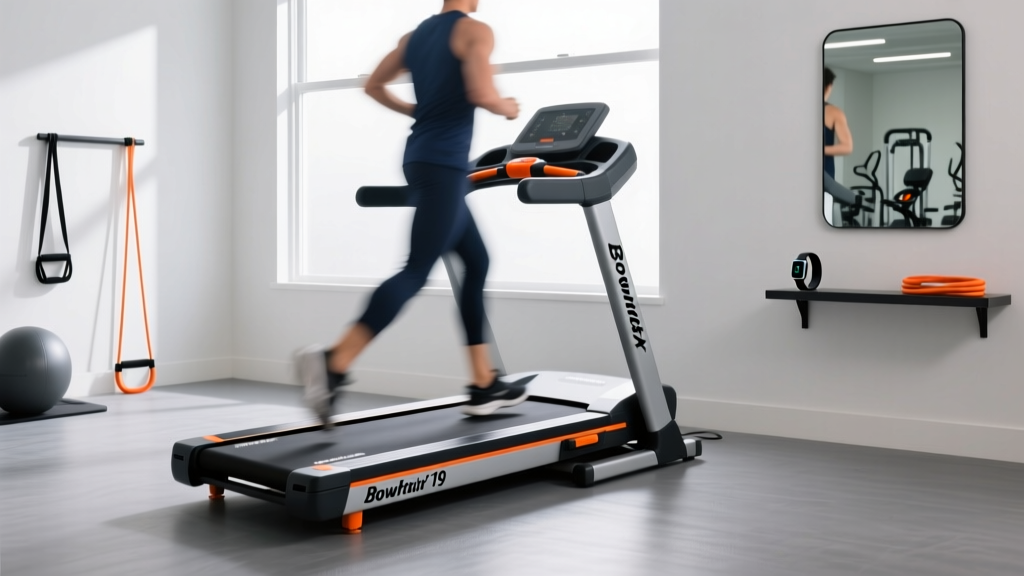
Every month, our editorial inbox receives multiple requests for a bowflex t9 treadmill review. As domain experts, we must first clarify a widespread industry misconception. Bowflex never manufactured a standard treadmill named the "T9." Consumers searching for this specific model are almost always conflating two distinct products: the discontinued Bowflex TreadClimber TC9 (a hybrid stepper-walker from the early 2010s) and the current flagship Bowflex Treadmill 10. For the purpose of this 2026 value analysis, we will use the Bowflex Treadmill 10 (retailing at $2,299) as our benchmark treadmill, as it represents the modern premium tier that buyers are actually researching when they mistype the T9 query.
Upfront Price vs. Total Cost of Ownership (TCO)
The most common mistake home gym buyers make is ignoring the backend costs of modern cardio equipment. A machine's value is determined by its upfront cost, mandatory software subscriptions, electrical draw, and 5-year maintenance projections. Below is a comparative TCO matrix for three of the most popular home cardio machines on the market today.
| Machine Category & Model | Upfront Cost | 5-Year App Subscription | Est. 5-Yr Maintenance | 5-Year TCO |
|---|---|---|---|---|
| Premium Treadmill: Bowflex Treadmill 10 | $2,299 | $1,188 (JRNY @ $19.99/mo) | $150 (Belt lube/tension) | $3,637 |
| Smart Elliptical: NordicTrack SE7i | $1,299 | $2,340 (iFIT @ $39/mo family) | $75 (Pivot joint lube) | $3,714 |
| Value Elliptical: Sole E35 | $1,199 | $0 (No mandatory sub) | $100 (Bearing check) | $1,299 |
Note: Subscription costs are based on 2026 monthly rates. While smart machines offer immersive coaching, the mandatory software locks on brands like NordicTrack and Bowflex can effectively double your 5-year investment. If budget preservation is your primary metric, non-subscription-dependent models like the Sole E35 offer unmatched financial value.
Biomechanical ROI: Joint Health and Caloric Yield
Financial value means little if the machine causes an injury that sidelines you. The biomechanical return on investment (ROI) must be weighed against your physical profile.
The Treadmill: Weight-Bearing Benefits and Impact Risks
Treadmills provide a natural, weight-bearing gait cycle. According to the Cleveland Clinic, weight-bearing exercises like treadmill walking or running are crucial for maintaining bone mineral density and stimulating osteogenesis. However, the repetitive ground-reaction forces (which can equal 2.5 times your body weight during a run) place significant stress on the menisci, Achilles tendons, and lumbar spine. If you have a history of plantar fasciitis or degenerative joint disease, the treadmill's biomechanical ROI diminishes rapidly due to the high risk of overuse injuries.
The Elliptical: Closed-Chain Kinematics
Ellipticals utilize a closed-chain kinetic movement, meaning your feet never leave the pedals. The Mayo Clinic highlights that this design drastically reduces impact forces on the hips and knees while still providing a robust cardiovascular stimulus. Furthermore, ellipticals with articulating upper-body arms engage the latissimus dorsi and pectoral muscles, offering a higher total-body muscle recruitment per minute than standard treadmill walking. For aging populations or those recovering from lower-body impact injuries, the elliptical is the undisputed champion of sustainable cardio.
Lifespan, Depreciation, and Mechanical Failure Modes
To truly understand value, we must examine how these machines fail. Treadmills and ellipticals suffer from entirely different mechanical degradation patterns over a 5-to-10-year lifespan.
- Treadmill Failure Modes: The primary point of failure on motorized treadmills (including the Bowflex Treadmill 10) is the running deck and belt friction. If a user neglects to apply 100% silicone lubricant every 150 miles, the friction generates excessive heat. This heat draws excess amperage from the 3.5 CHP continuous-duty motor, eventually frying the motor control board (MCB) or warping the phenolic deck. Replacing a delaminated deck and belt on a premium treadmill costs between $250 and $400 out of warranty.
- Elliptical Failure Modes: Ellipticals do not have high-friction belts or massive drive motors. Instead, their failure points are mechanical pivot joints and crank arm bearings. Over years of use, the sealed cartridge bearings in the pedal arms can wear out, resulting in a rhythmic "clunking" or squeaking sound. Fortunately, replacement bearings are cheap (often under $40), though the labor to disassemble the pedal arms can be tedious. Overall, ellipticals suffer fewer catastrophic electronic failures than treadmills.
Spatial Economics and Electrical Requirements
Home gym real estate is at a premium, and the physical footprint of your cardio machine dictates its spatial value.
Pro-Tip for Garage Gym Builders: Never plug a high-incline treadmill into a shared 15-amp household circuit. When a 220-lb user runs at an 8 mph pace on a 15% incline, the motor can spike to draw 14-16 amps. If your garage refrigerator kicks on simultaneously, you will trip the breaker. Always run a dedicated 120V/20A line for premium treadmills.
Treadmill Footprint & Power: The Bowflex Treadmill 10 measures roughly 85 inches long by 39 inches wide and requires a ceiling clearance of at least 14 inches above the user's height to accommodate the 20% incline. It requires a dedicated 15-amp or 20-amp electrical circuit.
Elliptical Footprint & Power: A premium elliptical like the Sole E35 measures approximately 70 inches long by 28 inches wide. Because it relies on magnetic eddy-current resistance rather than a massive drive motor, it draws less than 2 amps of electricity and can be safely plugged into any standard household outlet without risking a tripped breaker.
The Final Value Verdict: Which Machine Wins Your Budget?
The choice between an elliptical and a treadmill ultimately hinges on your specific physiological needs and your tolerance for ongoing software costs.
Choose the Treadmill (e.g., Bowflex Treadmill 10) if: You are training for outdoor running events, prioritize bone-density-building weight-bearing exercises, and have the budget to absorb both the $2,299 upfront cost and the ongoing JRNY subscription fees. Just be sure to religiously maintain the belt lubrication to protect your motor control board.
Choose the Elliptical (e.g., Sole E35) if: You want the highest 5-year financial value, suffer from knee or lower-back joint pain, and prefer a machine that draws minimal electricity and requires zero mandatory monthly app subscriptions. The closed-chain biomechanics of a quality elliptical will deliver comparable cardiovascular adaptations to a treadmill, but at a fraction of the long-term TCO.
By looking past the initial price tag and evaluating maintenance, subscriptions, and biomechanical longevity, you can ensure your next cardio purchase delivers genuine value for years to come. For more data-driven fitness equipment analysis, consult the American Council on Exercise (ACE) guidelines on cardiovascular programming to align your new machine with your specific health goals.
More gear to consider
All reviews
Curved vs Motorized: Average Treadmill Weight and Troubleshooting
Inventor of Treadmill Died at What Age? A Stair Climber Guide

T Series 10 Treadmill vs Stationary Bike Types: 2026 Guide

Cybex 625 Treadmill vs Portable Cardio: Top Compact Picks 2026

Under Desk Treadmill Resistance Training: Review & Maintenance
