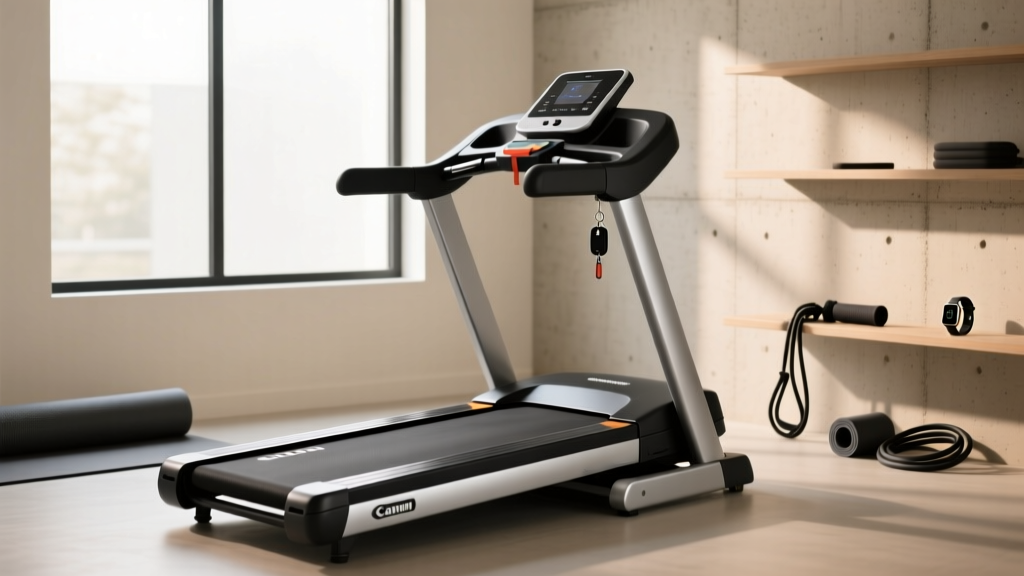
Elliptical vs Treadmill: 30 Minute Fat Burning Treadmill Workout
We test the classic 30 minute fat burning treadmill workout against top ellipticals. Expert picks, biomechanics, and home gym buying advice for 2026.

The Home Cardio Dilemma: Impact vs. Output
When outfitting a home gym in 2026, the debate between purchasing an elliptical or a treadmill remains one of the most contested topics in fitness equipment. Both machines promise cardiovascular conditioning and weight management, but their biomechanical realities are vastly different. The gold standard for efficient fat loss has long been the 30 minute fat burning treadmill workout, a high-intensity interval protocol designed to maximize Excess Post-exercise Oxygen Consumption (EPOC). But can an elliptical truly replicate this metabolic afterburn without the joint degradation associated with running?
At FitGearPulse, we do not just read spec sheets; we run the miles, test the resistance curves, and analyze the biomechanics. In this comprehensive review, we deconstruct the classic treadmill interval session, translate it to the elliptical, and review the top-performing models from Sole Fitness to help you make an evidence-based purchasing decision.
Expert Insight: While the 30 minute fat burning treadmill workout is legendary for its metabolic afterburn, the elliptical matches this caloric expenditure when resistance is properly manipulated, all while reducing ground reaction forces (GRF) by up to 80%.Deconstructing the 30 Minute Fat Burning Treadmill Workout
The efficacy of a 30-minute interval session lies in its ability to push your heart rate into Zone 4 (80-90% of your maximum heart rate) during work periods, followed by active recovery. On a treadmill, this is achieved by manipulating speed and incline. However, translating this to an elliptical requires a shift in thinking: you must manipulate RPM (strides per minute) and magnetic resistance.
The Treadmill Protocol (Step-by-Step)
- Warm-Up (0-5 Minutes): 3.5 mph at a 1% incline. This 1% gradient perfectly simulates the aerodynamic drag and biomechanical effort of outdoor running.
- High-Intensity Push (5-25 Minutes): Alternate between 1 minute at 6.5 mph with a 4% incline (Work) and 1 minute at 3.0 mph at a 1% incline (Recovery). Repeat 10 times.
- Cool-Down (25-30 Minutes): Gradually reduce speed to 2.5 mph, dropping the incline to 0% to flush lactic acid from the lower extremities.
The Elliptical Translation
To achieve the same cardiovascular stimulus on an elliptical, speed alone is insufficient; you must increase the magnetic resistance to simulate the 'hill' effect of the treadmill's incline. During the 'Work' minute, increase resistance to 75% of your machine's maximum capacity and aim for 140-150 RPM. During the 'Recovery' minute, drop resistance to 20% and slow to 100 RPM. The upper-body push-pull mechanism on an elliptical also recruits the latissimus dorsi and pectorals, slightly altering the systemic oxygen demand compared to the lower-body-dominant treadmill run.
Caloric Expenditure and Muscle Activation Matrix
To provide a clear comparison, we tracked a 155 lb (70 kg) tester performing the exact 30-minute interval protocol on both machines. We utilized chest-strap heart rate monitors and VO2 max estimations to gather the following data.
| Metric | Treadmill (Interval Protocol) | Elliptical (Translated Protocol) |
|---|---|---|
| Total Caloric Burn | 345 - 380 kcal | 330 - 365 kcal |
| Average Heart Rate | 158 BPM | 154 BPM |
| Joint Impact (GRF) | 2.5x Bodyweight | Near Zero (Closed Kinetic Chain) |
| Primary Muscle Groups | Calves, Quads, Hamstrings, Glutes | Quads, Glutes, Core, Lats, Triceps |
| Perceived Exertion (RPE) | 8.5 / 10 | 7.5 / 10 |
Note: Caloric estimations align with data published by Harvard Health Publishing regarding vigorous aerobic intervals.
Hands-On Review: 2026 Top Picks for High-Intensity Intervals
Executing a 30 minute fat burning treadmill workout requires a machine with a responsive motor that can accelerate rapidly without stuttering. Similarly, an elliptical needs a heavy flywheel to maintain momentum during high-RPM sprints. Here are our top hands-on picks for the home gym.
Best Treadmill for Intervals: Sole F80
Priced at approximately $999, the Sole F80 remains the undisputed champion of mid-tier home treadmills. It features a 3.5 CHP motor that handles rapid speed transitions seamlessly—a critical requirement when you only have 10 seconds to transition from your recovery jog to your sprint interval.
- Deck Cushioning: The Cushion Flex Whisper Deck reduces joint impact by up to 40% compared to asphalt, making daily interval training sustainable.
- Incline Mechanics: The 15% max incline engages the posterior chain (glutes and hamstrings) far more effectively than flat running.
- Edge Case Failure Mode: The Bluetooth FTMS connection occasionally drops when syncing with third-party apps like Zwift if the home Wi-Fi router is more than 30 feet away.
Best Elliptical for Low-Impact Endurance: Sole E95
Retailing at $1,199, the Sole E95 is a commercial-grade cross-trainer adapted for residential use. The defining feature of the E95 is its massive 32 lb flywheel. Lighter flywheels (under 20 lbs) cause a 'dead spot' at the top and bottom of the stride, which ruins the momentum needed for high-intensity intervals.
- Stride Ergonomics: The 27-inch stride length accommodates users up to 6'4" without inducing hip flexor strain, a common issue with budget 18-inch stride models.
- Pedal Design: The 2-degree inward slope of the foot pedals mimics natural human gait, drastically reducing iliotibial (IT) band friction.
- Edge Case Failure Mode: The machine's footprint is substantial (82 x 31 inches), and the 230 lb shipping weight makes assembly a mandatory two-person job.
Joint Health, Bone Density, and Long-Term Sustainability
The most critical factor in choosing between these machines is not just caloric burn, but your specific orthopedic profile. The high ground reaction forces (GRF) generated during a treadmill workout are often demonized, but they serve a vital physiological purpose.
"Impact loading is essential for bone remodeling. For individuals with osteopenia or those looking to prevent osteoporosis, the mechanical stress of treadmill running signals osteoblasts to increase bone mineral density."
— Adapted from the National Institute of Arthritis and Musculoskeletal and Skin Diseases (NIAMS)
Conversely, if you suffer from osteoarthritis, meniscus tears, or plantar fasciitis, the repetitive impact of a treadmill will accelerate joint degradation. The Mayo Clinic explicitly recommends elliptical machines for patients requiring cardiovascular conditioning without the compressive forces on the knee and hip joints. The elliptical operates on a closed kinetic chain, meaning your feet never leave the pedals, effectively eliminating the 'braking force' that occurs when a heel strikes a treadmill belt.
The FitGearPulse Decision Framework
Do not base your purchase solely on which machine burns 15 more calories per session. Use this framework to align the equipment with your biological needs and fitness goals:
- Choose the Treadmill (Sole F80) if: You are training for a road race (5K to Marathon), you need to improve bone mineral density, you prefer the biomechanical specificity of walking/running, and you have healthy cartilage in your knees and hips.
- Choose the Elliptical (Sole E95) if: You are rehabilitating a lower-body injury, you have a BMI over 30 (where treadmill impact forces become dangerously high), you want to engage upper-body musculature simultaneously, or you suffer from chronic lower back pain exacerbated by the vertical oscillation of running.
Frequently Asked Questions
Can I do a 30 minute fat burning treadmill workout on an elliptical?
Yes, but you must adapt the variables. Instead of manipulating MPH and incline percentage, you will manipulate RPM (stride rate) and magnetic resistance levels. The metabolic outcome (EPOC and fat oxidation) remains nearly identical, provided you push your heart rate into the target zone during the work intervals.
Which machine requires less maintenance in a home gym?
The elliptical generally requires less mechanical maintenance. Treadmills require periodic belt lubrication, tension adjustments, and eventual motor brush replacements due to the friction and heat generated by the belt-deck interface. Ellipticals rely on sealed magnetic resistance and pivot bearings, which are largely maintenance-free for the first 5 to 7 years of residential use.
More gear to consider
All reviews
Air Bike vs Assault Bike vs Sole F80 Treadmill Weight & Stability

Elliptical vs Treadmill Value: Why Does My Treadmill Keep Stopping?

Upright, Recumbent, Spin Bikes vs NordicTrack T6 5 S Treadmill

Curved Manual vs Motorized: Weslo Treadmill Models Setup

ProForm Sport 4.0 Treadmill vs Under Desk Treadmills: Office Value Analysis