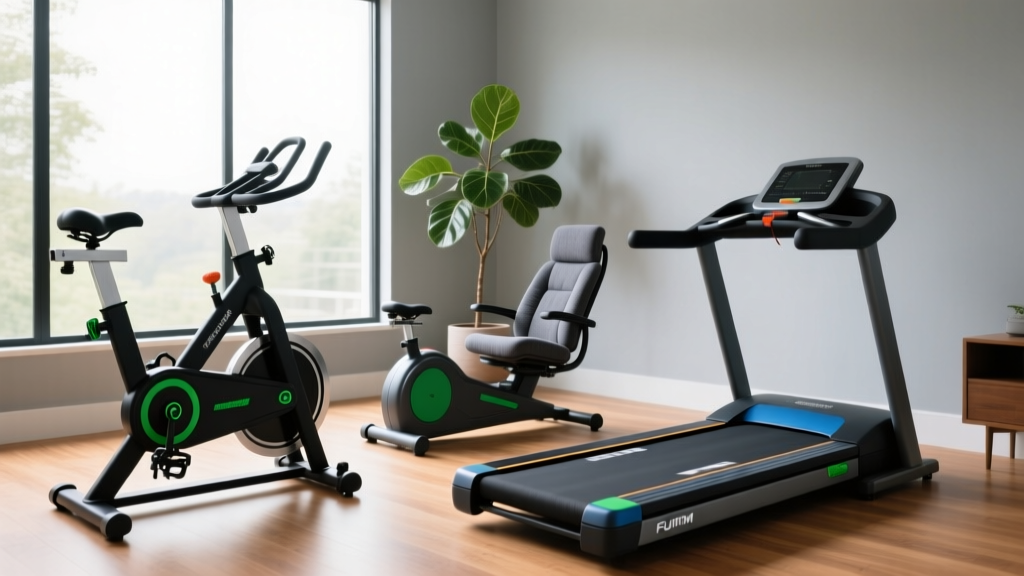
Stationary Bike vs Outdoor Treadmills: Maintenance & Longevity Guide
Master stationary bike maintenance for upright, recumbent, and spin models. Compare indoor care routines with outdoor treadmills for maximum longevity.

The Environmental Divide: Indoor Bikes vs. Outdoor Treadmills
As home and boutique fitness setups evolve in 2026, multi-modal cardio fleets are increasingly common. Facility managers and dedicated home-gym owners often find themselves maintaining a diverse array of equipment, ranging from precision indoor cycles to weather-exposed patio machines. While maintaining outdoor treadmills requires a heavy focus on UV protection, ozone degradation, and GFCI electrical safety, the maintenance philosophy for stationary bikes is entirely different. Indoor bikes battle a different set of enemies: sweat-induced urea corrosion, micro-dust accumulation in magnetic sensors, and high-torque vibrational loosening.
Expert Insight: The primary failure point for outdoor treadmills is environmental (moisture ingress and belt drying). Conversely, the primary failure point for stationary bikes is biomechanical and chemical (sweat corrosion and drivetrain wear). Understanding this distinction is the first step in maximizing your equipment's ROI.Upright Stationary Bikes: Drivetrain & Console Care
Upright bikes, such as the Schwinn 170 or the Nautilus U618, simulate traditional cycling geometry but rely on hidden internal drivetrains. Unlike outdoor treadmills where the belt is exposed, upright bike belts are enclosed, leading to a false sense of security regarding maintenance.
Poly-V Belt Tension and Alignment
Most mid-range upright bikes ($400–$800 price bracket) utilize a Poly-V ribbed belt. Over 12 to 18 months of regular use, these belts stretch. If you hear a rhythmic 'slapping' sound or experience resistance stuttering, the belt is slipping on the flywheel pulley.
- Inspection: Remove the side shroud (usually 4 to 6 Phillips or Allen screws). Check the belt for micro-cracking or glazing.
- Tensioning: Loosen the motor/resistance mount bolts. Apply tension until the belt has exactly 1/2 inch of vertical deflection at the midpoint between the crank pulley and the flywheel. Retighten to 15 Nm of torque.
- Console Mast Wiring: The upright posture places stress on the console mast. Every 6 months, check the internal data cable routing to ensure it isn't pinching against the metal tilt-bracket, which causes erratic heart-rate telemetry.
Recumbent Bikes: Track Rails and Seat Mechanisms
Recumbent bikes like the Sole R92 or high-end commercial Life Fitness RS3 models ($1,500–$3,500) are engineering marvels for joint rehabilitation. However, their defining feature—the adjustable seat rail—is also their most notorious maintenance headache.
The Pop-Pin Jamming Phenomenon
The seat adjustment pop-pin frequently jams, making it impossible to slide the seat forward or backward. This is rarely a mechanical failure of the pin itself; rather, it is a byproduct of environmental buildup. Dead skin cells, pet dander, and ambient dust mix with ambient humidity to form a concrete-like paste inside the rail track.
- Purge the Track: Pull the seat completely off the rail. Use a vacuum with a crevice tool to remove loose debris.
- Solvent Cleanse: Wipe the inner and outer tracks with 90% isopropyl alcohol. Never use WD-40; petroleum-based wet lubricants will attract more dust and exacerbate the jamming.
- PTFE Application: Apply a 100% dry PTFE (Teflon) bicycle chain lubricant to the track. Dry PTFE flashes off its carrier solvent in seconds, leaving a microscopic, frictionless film that repels dust.
Spin Bikes (Indoor Cycles): Sweat Corrosion & Flywheel Upkeep
Spin bikes endure the most hostile indoor environment. High-intensity interval training (HIIT) generates liters of sweat, which contains urea, lactic acid, and sodium chloride. This saline solution is highly corrosive to powder-coated steel and raw aluminum flywheels.
Combating Urea Corrosion on Premium Cycles
On magnetic resistance bikes like the Peloton Bike+ or the Keiser M3i, sweat drips directly onto the resistance mechanism and the bottom bracket. According to Peloton's official maintenance guidelines, wiping down the frame after every ride is mandatory, but the chemical composition of your cleaning agent matters immensely.
'Using bleach-based or highly alkaline gym wipes on indoor cycles will micro-fracture the powder coat, allowing sweat to reach the bare steel underneath. Use a pH-neutral enzyme cleaner or a 50/50 distilled water and white vinegar solution.' — Certified Fitness Equipment Technician
Pedal Arm Torque and Loctite Protocol
The most catastrophic failure on a spin bike is a pedal arm backing out during a standing sprint. The cyclical, high-torque loading causes standard threading to loosen. When installing or re-seating crank arms on spin bikes, you must apply a medium-strength threadlocker (specifically Loctite 243) and torque the crank bolt to exactly 35–40 Nm using a calibrated torque wrench. Checking this torque bi-annually prevents catastrophic bottom-bracket stripping.
Comparative Longevity Matrix: Bikes vs. Outdoor Treadmills
When budgeting for long-term cardio equipment care, it is vital to contrast the maintenance profiles of indoor cycles against outdoor treadmills. While outdoor treadmills require specialized UV-resistant silicone belt lubricants and weather-sealed motor hoods (as detailed by experts at The Treadmill Doctor), indoor bikes require high-frequency chemical and vibrational care.
| Equipment Type | Primary Enemy | Critical Maintenance Task | Est. Annual Cost |
|---|---|---|---|
| Upright Bike | Belt Stretch & Dust | Poly-V Belt Tensioning | $25 (Replacement Belt) |
| Recumbent Bike | Track Debris Buildup | PTFE Rail Lubrication | $15 (Dry Lube) |
| Spin Bike | Saline Sweat Corrosion | Enzyme Wipe & Crank Torque | $40 (Cleaners/Loctite) |
| Outdoor Treadmills | UV & Moisture Ingress | Weather-seal & GFCI Check | $85+ (Silicone/Sealants) |
Troubleshooting Common Magnetic Resistance Failures
Unlike the friction-based belts of outdoor treadmills, modern upright and spin bikes utilize magnetic resistance. If your bike displays a 'Resistance Calibration Error' or feels stuck on level 1, follow this diagnostic flow:
- Power Cycle & Clear Cache: Unplug the bike (or remove the Keiser M3i batteries) for 5 minutes to reset the hall-effect sensor logic board.
- Inspect the Servo Motor: On bikes with a physical magnetic slider (like older Schwinn IC models), locate the small servo motor near the flywheel. Ensure the linkage arm hasn't popped out of its plastic grommet.
- Check the Gap: The magnets must maintain a precise 2mm to 15mm distance from the steel flywheel. If a magnet has cracked or shifted, the eddy current field will be asymmetric, causing a 'grinding' sensation despite zero physical contact.
Final Verdict on Equipment Lifespan
Whether you are servicing a fleet of recumbent bikes for a physical therapy clinic, tightening the crank arms on a basement spin bike, or weather-proofing outdoor treadmills on a luxury apartment patio, the core tenet of longevity is proactive, scheduled care. By replacing reactive repairs with the targeted, chemistry-aware, and torque-specific maintenance protocols outlined above, you can easily extend the functional lifespan of your cardio equipment well past the standard 5-year manufacturer warranty, ensuring a safer, smoother ride for years to come. For further reading on commercial equipment standards, refer to the Fitness Repair Parts comprehensive repair guides.
More gear to consider
All reviews
Curved vs Motorized Treadmill Setup & Treadmill Control Board Guide

Air Bike vs Treadmill Brand Value: Assault Bike Comparison

ProForm XP 580 Treadmill vs. Compact Cardio: A Value Breakdown

Folding Treadmill vs Running Outdoors: 2026 Small Space Review
Fat Man on a Treadmill? Best Heavy-Duty Bikes for 2026
