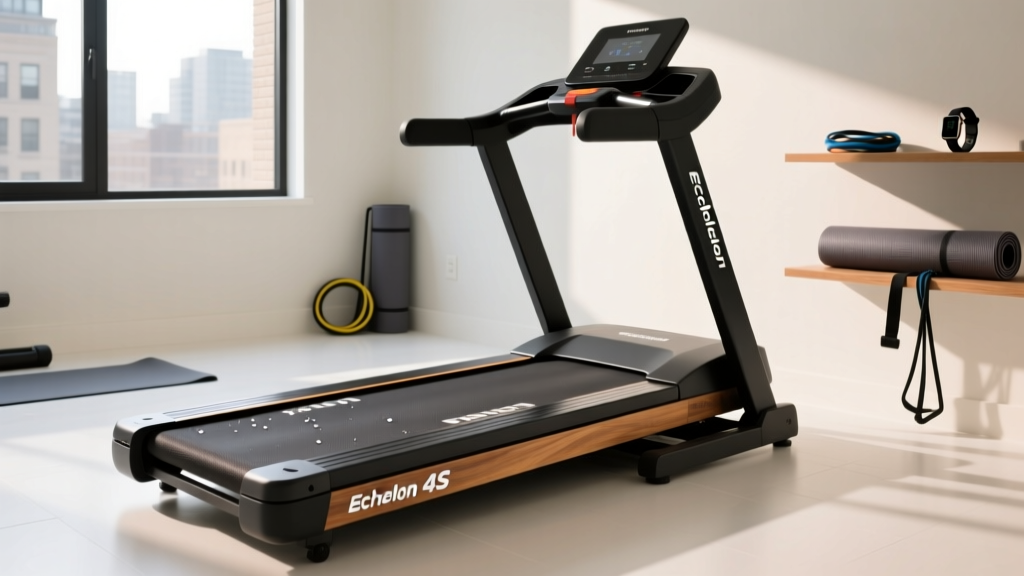
Elliptical vs Treadmill: Finding Affordable Treadmills for Home Use
Compare ellipticals and affordable treadmills for home use. Discover hidden costs, motor lifespans, and true caloric ROI to maximize your fitness budget.

The Home Cardio Dilemma: Upfront Cost vs. Long-Term Value
When outfitting a home gym on a strict budget, the debate between an elliptical and a treadmill is rarely just about biomechanics—it is fundamentally a financial decision. In 2026, supply chain stabilizations and manufacturing shifts have redefined what constitutes the "budget" tier of cardiovascular equipment. While shoppers are actively searching for affordable treadmills for home use, many fail to calculate the Total Cost of Ownership (TCO), which includes maintenance, energy consumption, and the inevitable failure rates of budget-tier components.
This guide breaks down the exact financial and biomechanical ROI of entry-level ellipticals versus budget-friendly treadmills, giving you the hard data needed to make a mathematically sound purchase for your home cardio setup.
💡 The 2026 Budget Baseline: Due to global material costs, the threshold for a reliable, motorized home treadmill has shifted from $300 to the $500–$700 range. Anything below $450 in today's market typically utilizes peak-horsepower (rather than continuous-duty) motors that are prone to early burnout.Budget Breakdown: Head-to-Head Model Comparison
To understand true value, we must compare specific, top-selling models in the budget-to-mid-tier bracket. Below is a matrix comparing the most popular entry-level machines available this year.
| Machine Type | Model | Approx. Price | Key Drive Spec | Warranty (Frame/Parts) |
|---|---|---|---|---|
| Treadmill | ProForm Carbon TL | $549 | 2.6 CHP Motor | Lifetime / 1-Year |
| Treadmill | Horizon Fitness T101 | $649 | 3.0 CHP Motor | Lifetime / 1-Year |
| Elliptical | Horizon EX-59 | $599 | 14 lb Flywheel | Lifetime / 1-Year |
| Elliptical | Schwinn 430 | $749 | 18 lb Flywheel | 10-Year / 1-Year |
The Hidden Costs of Budget Treadmill Motors
When evaluating affordable treadmills for home use, the most critical specification is Continuous Horsepower (CHP), not Peak Horsepower. Budget brands often advertise a "3.5 HP" motor, but fine print reveals this is peak output, which the motor can only sustain for seconds before overheating.
Failure Mode: The Motor Control Board (MCB)
If a user weighing over 200 lbs runs at 6.0 mph on a treadmill with a 2.0 CHP motor, the friction between the belt and the deck causes amp draw to spike. This spike sends excessive voltage feedback to the Motor Control Board (MCB). In budget treadmills, the MCB is often under-specced and will fry within 12 to 18 months of heavy use. Replacing an MCB and a burnt-out motor typically costs between $250 and $400—nearly the price of a new budget machine.
Maintenance: Belt Lubrication and Deck Delamination
Treadmills require active maintenance. The belt must be lubricated with 100% silicone oil every 150 miles or 3 months. Failure to do so increases friction, accelerating the motor burnout mentioned above. Furthermore, budget MDF (medium-density fiberboard) decks are prone to delamination and warping if exposed to garage humidity or basement moisture, requiring a $100+ deck replacement.
Elliptical Drivetrains: Why Magnetic Resistance Wins on Longevity
Ellipticals operate on an entirely different mechanical principle, which heavily influences their long-term value proposition.
Eddy Current Brakes and Zero-Friction Resistance
Unlike treadmills that rely on physical friction to move a belt, modern ellipticals—even in the $500 range—use magnetic resistance. A magnet moves closer to or further from a metal flywheel to create resistance via eddy currents. Because there is zero physical contact between the magnet and the flywheel, the resistance mechanism essentially never fails. You are paying for a drivetrain that requires almost zero mechanical upkeep.
The Real Failure Point: Pivot Bushings
Where budget ellipticals cut costs is in the joint articulations. Instead of sealed ball bearings found in $2,000+ commercial models, budget ellipticals use nylon or polyurethane pivot bushings at the pedal arms and crank joints. After 2 to 3 years of daily use, these bushings compress and wear out, resulting in a distinct "clunking" or squeaking noise. Fortunately, replacing a set of pivot bushings costs roughly $20 and requires only a socket wrench, making the long-term repair costs drastically lower than those of a treadmill.
"From a biomechanical and financial standpoint, magnetic resistance ellipticals offer a vastly superior lifespan-to-cost ratio for users who do not specifically require impact training for bone density." — Home Fitness Equipment Analysts
Space, Footprint, and Setup Realities
Value is also dictated by how well the machine integrates into your living space. Square footage is expensive, and a machine that forces you to rearrange your home loses practical value.
- Treadmill Footprint: A standard budget treadmill like the Horizon T101 measures roughly 70" L x 30" W. While many feature folding decks, the folded footprint is still substantial (approx. 35" L x 30" W), and the units weigh over 140 lbs, making them difficult to move for cleaning.
- Elliptical Footprint: Ellipticals generally have a smaller rectangular footprint (approx. 65" L x 25" W) but a much higher vertical profile. Critical Warning: You must add 12 to 15 inches to your total height to account for the pedal stroke apex. If you have standard 8-foot ceilings and are over 5'10", an elliptical may result in head strikes, rendering the machine unusable in low-ceiling basements.
Biomechanics and Caloric ROI: Which Gives You More for Your Money?
If your primary goal is caloric expenditure per dollar spent, we must look at the physiological data.
According to Harvard Health Publishing, a 155-pound person running at 5 mph (12 min/mile) on a treadmill burns approximately 288 calories in 30 minutes. The same person using an elliptical machine burns roughly 324 calories in the same timeframe, largely because the elliptical recruits both the upper body (latissimus dorsi, biceps, triceps) and the lower body simultaneously.
However, the Mayo Clinic notes that while ellipticals provide excellent cardiovascular benefits with significantly less impact on the knees, hips, and spine, treadmills offer weight-bearing benefits that are crucial for maintaining bone mineral density. If you are training for a 5K or need impact loading for osteopenia prevention, the treadmill provides a specific physiological ROI that the elliptical cannot replicate, justifying the higher maintenance costs.
The 3-Question Decision Framework
To finalize your purchase, run your specific scenario through this decision matrix:
- What is your ceiling height? If your workout space has ceilings lower than 8 feet, eliminate the elliptical to avoid head-strike injuries. Choose a folding treadmill.
- Are you a runner or a walker? If you only walk (under 4.0 mph), a budget treadmill motor (2.5 CHP) will last for years because the amp draw remains low. If you run, you must stretch your budget to a 3.0+ CHP motor or switch to an elliptical to avoid motor burnout.
- Do you have joint degradation? If you have a history of meniscus tears, plantar fasciitis, or lumbar herniations, the American Heart Association's guidelines on sustainable cardiovascular health suggest prioritizing low-impact modalities. The elliptical is the undisputed value winner here, as it prevents the medical costs associated with impact-related flare-ups.
Frequently Asked Questions
Are manual (non-motorized) treadmills a good budget alternative?
Curved manual treadmills are excellent for high-intensity interval training but typically cost $1,500+, placing them outside the budget category. Flat manual treadmills (under $200) lack the incline and momentum required for a natural walking gait, often leading to hip flexor strain. For true budget cardio, a motorized entry-level treadmill or a magnetic elliptical remains the superior choice.
How much electricity do these machines consume?
A budget treadmill running at 6 mph draws roughly 600 to 700 watts per hour. An elliptical, which only requires electricity to power the display console and electromagnet (not a drive motor), draws less than 50 watts. Over five years of daily use, the elliptical will save you roughly $40 to $60 in electricity costs—a minor but notable addition to its overall value proposition.
What is the best time of year to buy budget cardio equipment?
The deepest discounts on models like the ProForm Carbon TL or Schwinn 430 occur during Black Friday/Cyber Monday and the first two weeks of January, when retailers clear out inventory to make room for new-year model updates.
More gear to consider
All reviews
Upright, Recumbent, Spin Bikes & Treadmill Belt Adjustment
Stair Climber Troubleshooting: Why There Is No Treadmill Safety Clip
Echelon Treadmill Stride Review: 2026 Budget & Value Breakdown

How Long Does a Treadmill Stress Test Last? Home Bike Layouts & Space Optimization
Pre Postnatal Treadmill 2026: Belt Maintenance & Market Wear Trends