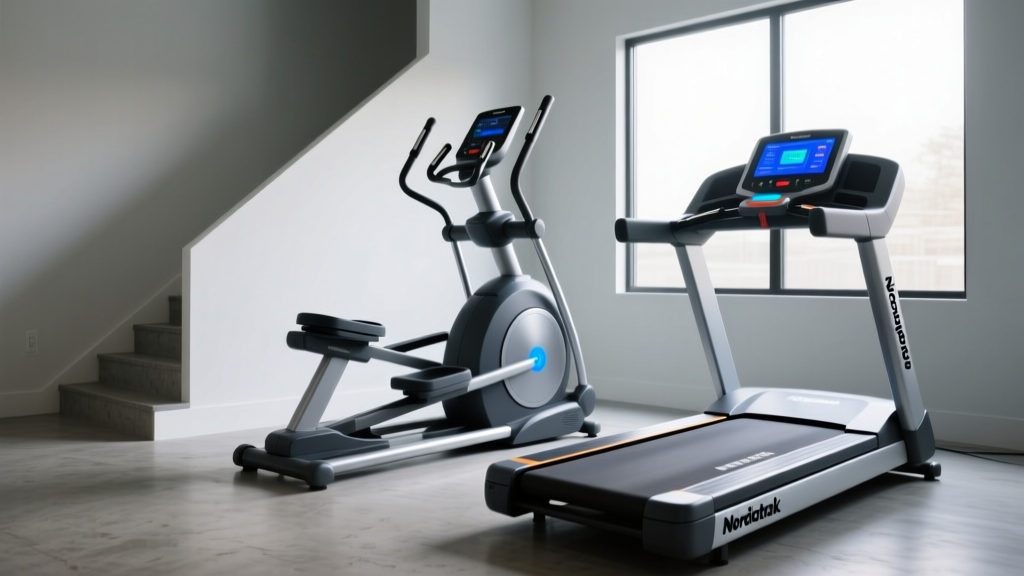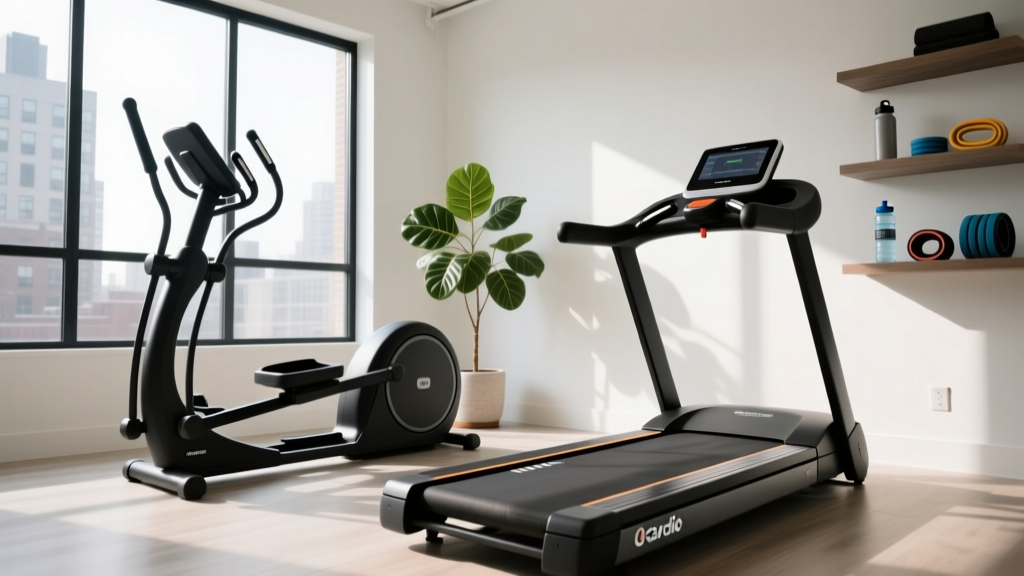
Is an Elliptical Better Than a Treadmill? Curved vs Motorized
Discover if an elliptical is better than a treadmill. We compare curved manual vs motorized models, analyzing joint impact, 2026 pricing, and biomechanics.

The Cardio Crossroads: Defining the Modern Treadmill
Before you can accurately answer the question, "is an elliptical better than a treadmill?", you must first recognize that the treadmill category has fundamentally fractured. In 2026, comparing an elliptical to a "treadmill" is no longer a one-to-one comparison. The market is now dominated by two distinct biomechanical experiences: the curved manual treadmill and the traditional motorized treadmill. Each interacts with your joints, cardiovascular system, and living space in radically different ways.
As a domain expert reviewing cardio equipment, I frequently see buyers make the mistake of comparing a low-impact elliptical to a high-impact motorized deck, completely ignoring the curved manual alternative. This comprehensive buying guide breaks down the exact specifications, hidden maintenance costs, and ground reaction forces (GRF) of all three machines to help you make an evidence-based purchase.
Curved Manual vs. Motorized Treadmills: The Biomechanical Divide
Understanding the treadmill side of the equation requires looking at the propulsion mechanism. Motorized treadmills pull your feet backward, which alters your natural hamstring engagement. Curved manual treadmills require you to generate 100% of the belt movement, fundamentally shifting the workload to your posterior chain.
Curved Manual Treadmills (e.g., Woodway Curve, Assault AirRunner)
Curved treadmills feature a slatted, non-motorized belt built on a concave frame. Because there is no motor, your top speed is limited only by your leg turnover. This makes them the gold standard for High-Intensity Interval Training (HIIT) and sprint mechanics.
- Pricing (2026): $3,499 (Assault AirRunner) to $6,599 (Woodway Curve).
- Biomechanics: Promotes a forefoot or midfoot strike, reducing the braking forces associated with heel-striking. Studies indicate a 20% to 30% higher caloric expenditure at the exact same perceived pace compared to motorized decks.
- Edge Case Warning: Curved treadmills sit higher off the ground. You need a minimum ceiling clearance of 82 to 84 inches to avoid head strikes during sprinting.
Motorized Treadmills (e.g., NordicTrack Commercial 1750, Sole F80)
Motorized treadmills rely on a Continuous Horsepower (CHP) motor to drive a flat or slightly cushioned belt. They excel at steady-state pacing, long-distance marathon simulation, and automated incline/decline adjustments.
- Pricing (2026): $1,499 (Sole F80) to $2,799 (NordicTrack Commercial 1750).
- Biomechanics: The moving belt assists with leg turnover, which can lead to a heavier heel strike. However, premium 2026 models feature multi-zone elastomer cushioning that absorbs up to 30% of the impact compared to outdoor asphalt.
- Edge Case Warning: Motorized treadmills require a dedicated 15-amp or 20-amp electrical circuit. Plugging a 4.0 CHP motor into a shared living room circuit will trip the breaker during heavy sprints.
Quick Comparison Matrix: Curved vs. Motorized
| Feature | Curved Manual | Motorized |
|---|---|---|
| Top Speed | Unlimited (User-driven) | 12 - 15 MPH (Capped) |
| Incline/Decline | Fixed curve (Simulates 8-10%) | -3% to +15% (Motorized) |
| Maintenance | Slat replacement (5-7 years) | Silicone deck lube (Every 150 miles) |
| Power Requirement | None (Self-powered) | Dedicated 15A/20A Circuit |
Answering the Core Question: Is an Elliptical Better Than a Treadmill?
Now that we have established the baseline of modern treadmills, we can address the most common question in home fitness: is an elliptical better than a treadmill? The answer depends entirely on your orthopedic health and your training goals. According to the Mayo Clinic, neither machine is universally "better"; rather, they serve different physiological demands regarding joint loading and muscle recruitment.
The Joint Impact Reality (Ground Reaction Forces)
When your foot strikes a motorized treadmill, the Ground Reaction Force (GRF) peaks at roughly 1.5 to 2.5 times your body weight. Even with advanced deck cushioning, the open kinetic chain nature of running generates repetitive micro-trauma to the meniscus and lumbar spine.
Conversely, ellipticals (like the Sole E95 or Life Fitness Club Series) utilize a closed kinetic chain. Your feet never leave the pedals, reducing the GRF to less than 1 times your body weight. If you are managing osteoarthritis, plantar fasciitis, or recovering from spinal fusion surgery, the elliptical is definitively the superior choice.
The Caloric and Muscular Output Debate
If joint preservation is not your primary concern, the treadmill generally wins on raw metabolic output. Harvard Health Publishing data consistently shows that vigorous running on a treadmill burns 10% to 15% more calories per hour than vigorous elliptical use. Furthermore, curved manual treadmills force deep glute and hamstring engagement that an elliptical's fixed pedal path simply cannot replicate.
"Patients frequently overestimate the calorie burn on ellipticals because the machine's console includes the upper-body arm levers in its algorithm. In real-world testing, if you do not actively push and pull the handles with resistance, the actual caloric expenditure is closer to a brisk walk than a run."
Hidden Maintenance and Spatial Footprints
Buying guides often ignore what happens after the machine is delivered. Here is the unvarnished reality of maintaining these three cardio staples in 2026.
1. The Elliptical Rail Dust Problem
Ellipticals rely on heavy-duty roller wheels gliding along aluminum or steel tracks. Over time, friction creates a fine metallic dust that mixes with ambient humidity to form a grinding paste. Actionable Advice: You must wipe down the guide rails with a damp microfiber cloth and apply a PTFE (Teflon) dry lubricant every 60 days. Failure to do so will result in a "shuddering" pedal stroke and premature bearing failure.
2. Motorized Treadmill Belt Drift
The continuous friction of a motorized belt generates heat and stretches the cotton/polyester weave. You will need to re-tension the rear roller bolts and apply 100% pure silicone deck lubricant every 150 miles. If you weigh over 220 lbs, reduce this interval to every 100 miles to prevent the motor control board from overheating and frying the MOSFETs.
3. Curved Treadmill Slat Degradation
While curved treadmills lack a motor to burn out, the rubber slats and internal ball bearings take a massive beating. Expect to spend $400 to $600 on a slat-belt replacement kit every 5 to 7 years if used heavily in a garage gym environment where temperature fluctuations degrade the rubber compounds.
The 2026 Buyer’s Decision Framework
Use this diagnostic matrix to finalize your purchase based on your specific physiological profile and space constraints.
Profile A: The Joint-Preservation User
Verdict: Buy an Elliptical (e.g., Sole E95, $1,799).
Why: Zero-impact closed kinetic chain. The 20-inch stride length accommodates users up to 6'3" without causing hip impingement. Ideal for daily Zone 2 cardio without cumulative joint fatigue.
Profile B: The Sprint & HIIT Athlete
Verdict: Buy a Curved Manual Treadmill (e.g., Assault AirRunner, $3,499).
Why: Infinite top speed and immediate acceleration/deceleration. The concave curve forces proper sprint mechanics and maximizes posterior chain recruitment without the lag time of a motorized belt ramping up.
Profile C: The Marathon Pacer & Tech Enthusiast
Verdict: Buy a Motorized Treadmill (e.g., NordicTrack Commercial 1750, $2,499).
Why: Automated pacing, -3% decline for eccentric quad loading, and integrated interactive programming. It remains the only way to accurately simulate outdoor road gradients and lock into a specific 7:30/mile pace for 18 miles.
Final Thoughts on Cardiovascular Health
Ultimately, the American Heart Association recommends at least 150 minutes of moderate-intensity or 75 minutes of vigorous aerobic activity per week. Whether you achieve this via the zero-impact glide of an elliptical, the self-powered surge of a curved manual treadmill, or the steady-state pacing of a motorized deck depends on your orthopedic limits and training preferences. Stop looking for the universally "best" machine, and start matching the biomechanics of the equipment to the reality of your body.
More gear to consider
All reviews
Curved vs Motorized: Treadmill Walking Workouts to Lose Weight

Sole F80 Folding Treadmill Reality: Cardio Noise Level Comparison
Under Desk Treadmill Review: Ditching the Nordic Track Treadmill 1250

Stair Climber vs BA04 Treadmill: Beginner Home Guide

2026 Trends: Stationary Bike Types vs. a 7.5 Treadmill Pace