How to Draw a Treadmill Floorplan: Elliptical vs Treadmill Budget
Learn how to draw a treadmill and elliptical floorplan. Compare 2026 budgets, hidden costs, and space requirements for home cardio equipment.

The Blueprint: Designing Your 2026 Home Cardio Zone
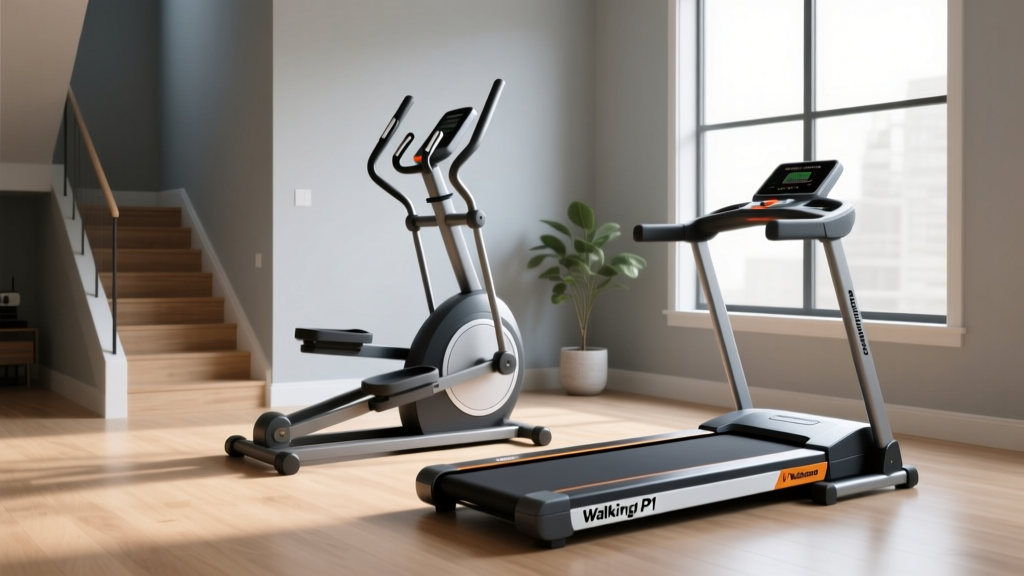
Designing a dedicated home gym in 2026 requires far more than simply picking a machine and plugging it in. It demands precise spatial mapping and rigorous financial planning. When homeowners begin researching how to draw a treadmill into their room layouts, they are often confronted with a harsh reality: the machine's physical footprint is only a fraction of the space it actually commands. This spatial dilemma is at the heart of the eternal elliptical vs. treadmill for home cardio debate.
Whether you are converting a spare bedroom, a garage bay, or a basement corner, sketching an accurate floor plan is the first step in protecting your investment. A poorly planned layout leads to safety hazards, restricted movement, and ultimately, a machine that gathers dust. In this guide, we break down the exact spatial requirements, upfront costs, and long-term value analysis of treadmills versus ellipticals to help you draft the perfect home cardio blueprint.
Drafting Tip: Use standard 1/4-inch graph paper. Assign one square to represent 6 inches of real-world space. This scale allows you to accurately map out both the machine's base and the mandatory safety clearance zones recommended by the American Council on Exercise (ACE).Spatial Mapping: How to Draw a Treadmill vs. Elliptical Footprint
Understanding the true spatial cost of cardio equipment is critical. You aren't just drawing a rectangle; you are mapping a dynamic biomechanical zone.
The Treadmill Danger Zone
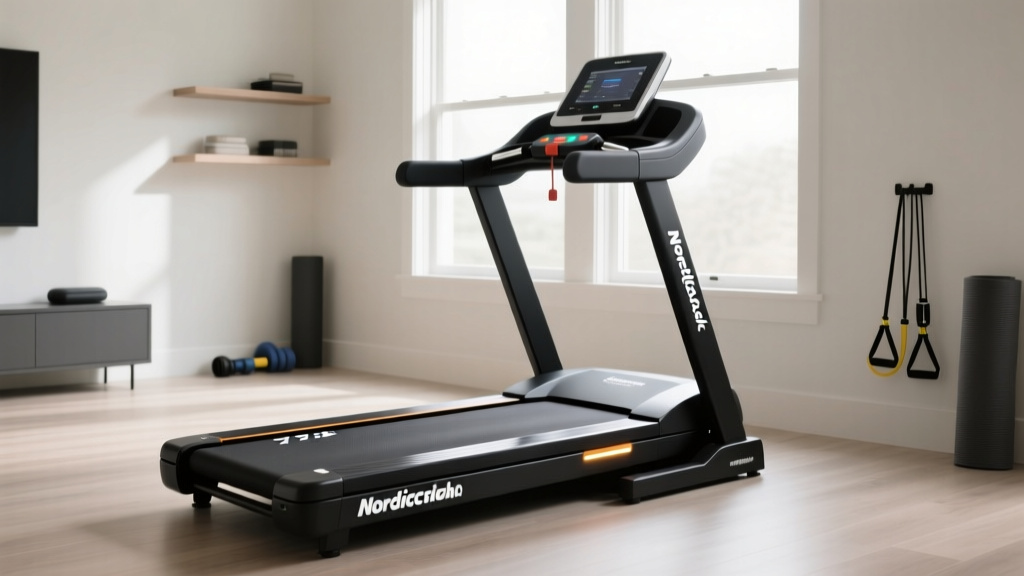
A standard premium treadmill (like the Sole F80 or NordicTrack Commercial 1750) features a running belt measuring 22 inches by 60 inches. However, the total chassis footprint averages 34 inches wide by 78 inches long. More importantly, you must draw a rear clearance zone. If a user slips or falls backward, they need a minimum of 78 inches of unobstructed space behind the deck to prevent severe friction burns or impact injuries against a wall. Side clearance requires at least 24 inches on both sides for safe mounting, dismounting, and arm swing.
The Elliptical Vertical Challenge
Ellipticals, such as the Bowflex Max Trainer M9 or Sole E35, have a smaller ground footprint—typically 30 inches wide by 72 inches long—and require only 20 inches of rear clearance since the user remains stationary relative to the floor. However, the hidden spatial cost is vertical. You must calculate the user's height plus the machine's step-up height (usually 12 to 15 inches) and add an additional 12 inches for overhead clearance. In rooms with standard 8-foot ceilings, tall users on high-incline ellipticals risk head strikes, a critical factor when drawing your floor plan.
The 2026 Budget Breakdown: Upfront and Lifecycle Costs
Space is only half the equation. The financial commitment of home cardio equipment extends far beyond the sticker price. Below is a comparative budget analysis based on 2026 market pricing, segmented by quality tiers.
| Tier | Treadmill Model (Est. Price) | Elliptical Model (Est. Price) | Delivery & Assembly |
|---|---|---|---|
| Budget | Horizon T101 ($699) | Schwinn 430 ($799) | $150 - $200 |
| Mid-Tier | Sole F80 ($1,199) | Sole E35 ($1,099) | $199 - $249 |
| Premium | NordicTrack 1750 ($2,499) | Bowflex Max M9 ($2,299) | $249 - $299 |
While treadmills generally command a higher entry price due to the cost of heavy-duty continuous horsepower (CHP) motors and reinforced steel decks, ellipticals often offer more advanced resistance mechanics at the mid-tier level. However, the initial purchase is merely the beginning of the financial lifecycle.
Hidden Costs: Electrical, Structural, and Maintenance
When evaluating the elliptical vs. treadmill debate from a value perspective, you must account for the hidden infrastructure costs that rarely appear on the checkout page.
1. Electrical Infrastructure
Treadmills are power-hungry. A 3.5 CHP motor can draw up to 15-20 amps during startup or heavy incline loading. According to electrical safety standards and the Consumer Reports Fitness Equipment Guide, a premium treadmill requires a dedicated 20-amp circuit. Sharing a circuit with a space heater or air conditioner will trip the breaker and potentially fry the machine's control board. Hiring an electrician to run a dedicated line costs between $250 and $500. Ellipticals, conversely, are largely self-powered or draw less than 2 amps for their magnetic resistance consoles, allowing them to be plugged into any standard 15-amp household outlet.
2. Floor Reinforcement and Acoustic Dampening
A 250-pound treadmill supporting a 200-pound runner generates a dynamic point-load impact exceeding 800 pounds per square inch with every footstrike. If you are drawing your floor plan on a second-story room or over a finished basement, you may need to reinforce the floor joists or purchase high-density EVA foam equipment mats ($80-$120) to prevent structural fatigue and noise transfer. Ellipticals provide a zero-impact, fluid motion that distributes weight evenly across a wider base, eliminating the need for costly structural reinforcements.
3. Long-Term Maintenance
- Treadmills: Require 100% silicone belt lubrication ($12 per bottle) every 150 miles. Belt replacements ($85-$150) and deck flipping are necessary every 3 to 5 years depending on mileage.
- Ellipticals: Feature complex pivot arms and sealed bearings. While they lack a belt to maintain, the pivot joints endure immense lateral torque. When sealed bearings fail out of warranty, replacing the joint hardware and labor can cost $150 to $250 per side.
Value Analysis: Depreciation and Cost-Per-Use
To determine true value, we must look at depreciation. Fitness equipment loses value rapidly once assembled. Data tracked by industry analysts shows that treadmills depreciate by approximately 35% to 45% in their first year, primarily due to the high cost of shipping and the risk of motor failure during second-hand transport. Ellipticals hold their value slightly better (depreciating around 25% to 30% in year one) because they are easier to disassemble and lack a heavy, easily damaged motor.
'The true ROI of home cardio equipment isn't measured in resale value, but in cost-per-use and injury prevention. An elliptical offers superior joint preservation for aging demographics, while a treadmill remains unmatched for sport-specific bone-density loading.' — Adapted from guidelines by the American College of Sports Medicine (ACSM).
If your primary goal is high-intensity interval training (HIIT) or marathon preparation, the treadmill's higher upfront cost is justified by its biomechanical specificity. If your goal is sustainable, low-impact daily caloric expenditure, the elliptical offers a higher long-term value proposition due to lower electrical and structural overhead.
Decision Matrix: Finalizing Your Floor Plan
Before you finalize the ink on your home gym blueprint, run your specific scenario through this checklist:
- Measure the Rear Zone: Do you have 78 inches of clear space behind the intended spot? If no, cross the treadmill off your list and draw an elliptical or front-drive rower instead.
- Check the Ceiling: Is the ceiling height at least 14 inches taller than the tallest user in the home? If no, avoid high-step ellipticals.
- Audit the Breaker Box: Can your electrical panel support a new dedicated 20-amp line? If your home's wiring is outdated, factor a $400 electrical upgrade into the treadmill's budget.
Learning how to draw a treadmill into your home layout is ultimately an exercise in risk management and financial forecasting. By mapping the invisible zones—rear clearances, electrical loads, and dynamic impacts—you ensure that the machine you choose delivers maximum cardiovascular return on investment without compromising the safety or functionality of your home.
More gear to consider
All reviews
Elliptical vs Treadmill: Space Design & Kelsey Kane Treadmill Trail

Portable Cardio Longevity: Maintenance Care & How to Burn the Most Calories on a Treadmill
Stair Climber Guide vs WalkingPad P1 Classic Foldable Walking Treadmill

Curved vs Motorized Treadmill Setup & Shrimp on Treadmill Cost
NordicTrack T 5.7 Treadmill & Compact Portable Cardio Value