
DeerRun Treadmill Reviews & Spin, Upright, Recumbent Bike Care
While DeerRun treadmill reviews focus on walking pads, this guide dives deep into maintaining upright, recumbent, and spin bikes for maximum longevity.

Beyond the Walking Pad: The Evolution of Home Cardio Maintenance
Many of you discover FitGearPulse through our extensive DeerRun treadmill reviews, seeking advice on maintaining budget-friendly walking pads and compact treadmills. While brushless motors and simple belt alignments dominate the treadmill space, the stationary bike market requires an entirely different mechanical mindset. As home gyms continue to evolve in 2026, stationary bikes—specifically spin, upright, and recumbent models—have become the cornerstone of low-impact cardiovascular longevity. However, a bike is only as reliable as its maintenance schedule.
Unlike treadmills, where friction and belt tension are the primary concerns, stationary bikes battle galvanic corrosion, magnetic sensor misalignment, and complex seat-rail mechanics. According to the CDC's physical activity guidelines, consistent cardiovascular routines are vital for long-term health, which is impossible if your machine is sidelined for preventable repairs. This comprehensive guide breaks down the exact maintenance protocols for the three main types of stationary bikes, ensuring your investment lasts for decades.
Spin Bikes (Indoor Cycles): High-Sweat, High-Stress Environments
Spin bikes, such as the Peloton Bike+, Keiser M3i, and Schwinn IC4, are designed to mimic the aggressive geometry and high-cadence output of outdoor road bikes. This intensity creates a unique maintenance environment characterized by heavy perspiration and extreme drivetrain stress.
The Drivetrain: Chain vs. Belt
Older or budget spin bikes utilize steel chains that require monthly lubrication with a dry PTFE (Teflon) bike chain lube (approximately $12 per bottle). However, premium 2026 models predominantly use the Gates Carbon Drive belt system. A common and catastrophic mistake new owners make is applying chain oil to a carbon belt. Belt drives require zero lubrication; applying oil will attract dust, create a grinding paste, and prematurely destroy the polyurethane cogs. If a belt squeaks, it is a tension issue, not a lubrication issue. Adjust the rear axle tensioners to achieve exactly 1/2 inch of deflection when pressing the center of the belt with moderate thumb pressure.
⚠️ CRITICAL WARNING: Galvanic CorrosionHuman sweat has a pH ranging from 4.5 to 7.0, making it highly acidic. When sweat drips onto the steel seat post and mixes with the aluminum frame, it triggers galvanic corrosion. Within six months, the seat post can fuse permanently to the frame. Fix: Wipe down the seat post and handlebar stems with a microfiber cloth dampened with a 50/50 water and white vinegar solution after every single ride, then apply a thin layer of marine-grade grease to the post insertion point.
Upright Bikes: Magnetic Resistance and Console Care
Upright bikes, like the NordicTrack S22i or standard ProForm models, prioritize comfort and interactive programming over raw cycling performance. Their maintenance challenges are largely electrical and sensor-based rather than mechanical.
Troubleshooting Jerky Magnetic Resistance
Most modern upright bikes use a servo-motor that moves a magnetic bracket closer to or further from the steel flywheel. If your resistance feels "jerky" or fails to change during automated incline/resistance workouts, the issue is rarely a broken magnet. Instead, it is usually a misaligned Hall effect sensor or a stretched servo cable. Before ordering a $65 replacement servo motor, remove the plastic shroud and check the cable tension. A simple 2mm adjustment to the cable barrel nut often restores perfect resistance gradation.
Pedal Threading and Bottom Bracket Longevity
Upright bikes endure immense lateral torque. The left pedal is reverse-threaded. If you hear a rhythmic "clicking" sound at the bottom of the pedal stroke, do not ignore it. A loose pedal will strip the aluminum crank arm threads within a few rides, turning a $0 tightening fix into a $45 crank arm replacement. Use a 15mm pedal wrench to torque the pedals to 35-40 Nm monthly. Furthermore, the bottom bracket cartridge bearings should be replaced every 3 to 5 years depending on usage; a standard 68mm BSA bottom bracket costs under $20 and requires a basic splined removal tool.
Recumbent Bikes: Joint-Friendly but Mechanically Complex
Recumbent bikes, such as the Teeter FreeStep or various Sunny Health & Fitness recumbent models, are the gold standard for rehabilitation and low-impact cardio. Because the user is seated in a reclined position, the machine bears a higher static load and features a moving seat carriage that requires specific attention.
The Seat Rail Slider Mechanism
The most frequent failure point on a recumbent bike is the seat slider track. Dust, pet hair, and dead skin cells accumulate in the aluminum extrusion, causing the seat to stick or jerk during adjustments. Never use wet silicone sprays or WD-40 on these rails, as they will create a sticky residue that traps more debris. Instead, vacuum the track with a crevice tool, wipe it with isopropyl alcohol, and apply a dry PTFE lubricant. This ensures a smooth glide without attracting household dust.
Motorized Incline and Cable Tension
High-end recumbents feature motorized incline or automated resistance. The wiring harnesses that run beneath the seat carriage are subject to constant bending and flexing. Inspect the wire loom every six months for micro-fractures in the plastic casing. If you notice the console flickering when you adjust the seat, the internal ribbon cable is likely pinching. Re-routing the cable with a 2-inch service loop and securing it with a Velcro tie (rather than a hard plastic zip-tie) will prevent wire severing.
Maintenance Matrix: Upright vs. Recumbent vs. Spin
To help you structure your home gym upkeep, we have synthesized the maintenance requirements into a comparative matrix. This data reflects average consumer usage (4-5 hours per week) in a climate-controlled indoor environment.
| Bike Type | Primary Failure Point | Maintenance Frequency | Est. Annual Upkeep Cost |
|---|---|---|---|
| Spin Bike | Sweat corrosion on seat post & handlebars | After every ride (wipe down) | $15 - $30 (cleaners, marine grease) |
| Upright Bike | Servo cable stretch & pedal thread stripping | Monthly (torque check & cable inspect) | $10 - $25 (PTFE lube, pedal washers) |
| Recumbent Bike | Seat rail debris buildup & wire harness pinch | Bi-annual (deep clean & wire check) | $8 - $15 (dry PTFE, Velcro ties) |
The Science of Sweat: Why Bikes Degrade Faster Than Treadmills
When reading DeerRun treadmill reviews, you will rarely see warnings about rust. Treadmills keep the user's sweat largely contained to the deck and console. Stationary bikes, however, position the user directly over the bottom bracket, flywheel, and resistance magnets. As highlighted in equipment longevity analyses by WIRED's stationary bike gear guides, the integration of smart screens and complex magnetic assemblies makes modern bikes highly susceptible to liquid damage.
Sweat contains high concentrations of sodium chloride (salt). When salt water penetrates the flywheel housing, it causes the steel flywheel to oxidize. This rust creates microscopic pitting on the flywheel surface, which in turn causes the magnetic resistance bracket to vibrate and produce a loud "grinding" noise at high RPMs. To combat this, place a high-density, waterproof equipment mat beneath your bike, and consider using a silicone sweat cover for the handlebar console area during intense interval sessions.
Sourcing Replacement Parts in 2026
The fitness industry has shifted heavily toward proprietary parts, but the aftermarket has responded. For bottom brackets, pedal spindles, and standard bearings, do not overpay for "OEM Fitness Parts." These are standard industrial components. A 68mm sealed cartridge bottom bracket found on a $2,000 indoor cycle is identical to a $14 Shimano UN300 bottom bracket used on outdoor mountain bikes. Visit local bicycle cooperatives or online cycling retailers rather than specialized fitness part brokers to save up to 70% on mechanical wear items.
Expert Insight: "The most overlooked maintenance task on any home cardio machine is the leveling foot. If your bike rocks even 2mm during a standing climb, the alternating stress will eventually crack the welds on the front stabilizer bar. Always calibrate the adjustable feet on a hard surface using a digital level before your first ride." — FitGearPulse Lead Technician
Final Thoughts on Cardio Longevity
Whether you are maintaining a compact walking pad or tuning a commercial-grade spin bike, the principles of longevity remain the same: mitigate moisture, respect mechanical tolerances, and use the correct lubricants. By implementing these specific, type-dependent maintenance routines, your upright, recumbent, or spin bike will deliver flawless performance for years to come. For more deep-dive technical teardowns and American Council on Exercise (ACE) aligned workout protocols, continue exploring the FitGearPulse cardio archives.
More gear to consider
All reviews
Cardio Noise Comparison & ProForm Treadmill Maintenance Manual

Treadmill Porn: Head-to-Head Walking Pad Comparison 2026

Sprinting Speed on Treadmill: Motor HP Mistakes & Troubleshooting

Omni Directional Treadmill 2026: Compact Portable Cardio Market
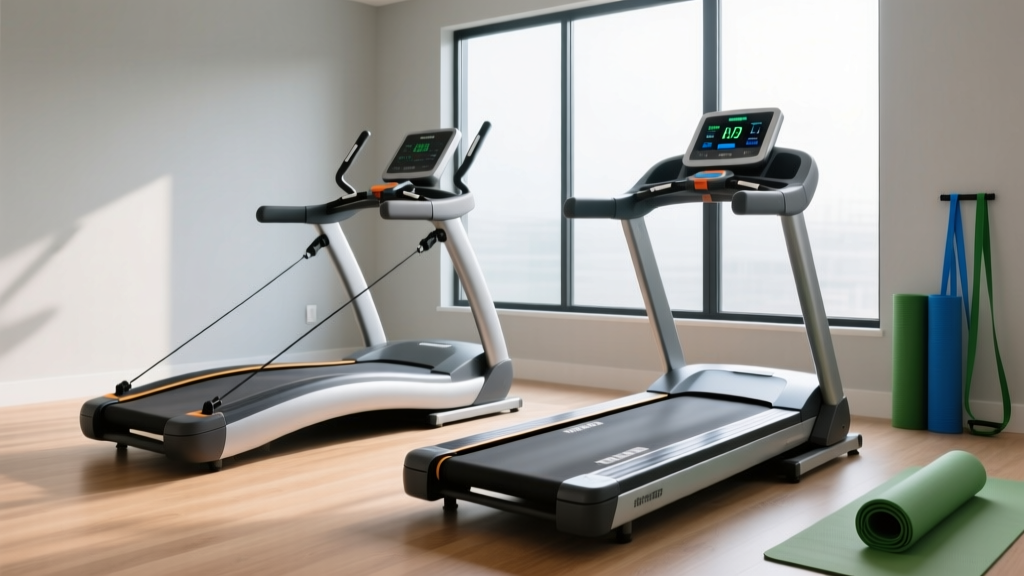
Setup Guide: Curved vs Motorized Treadmill Workouts
