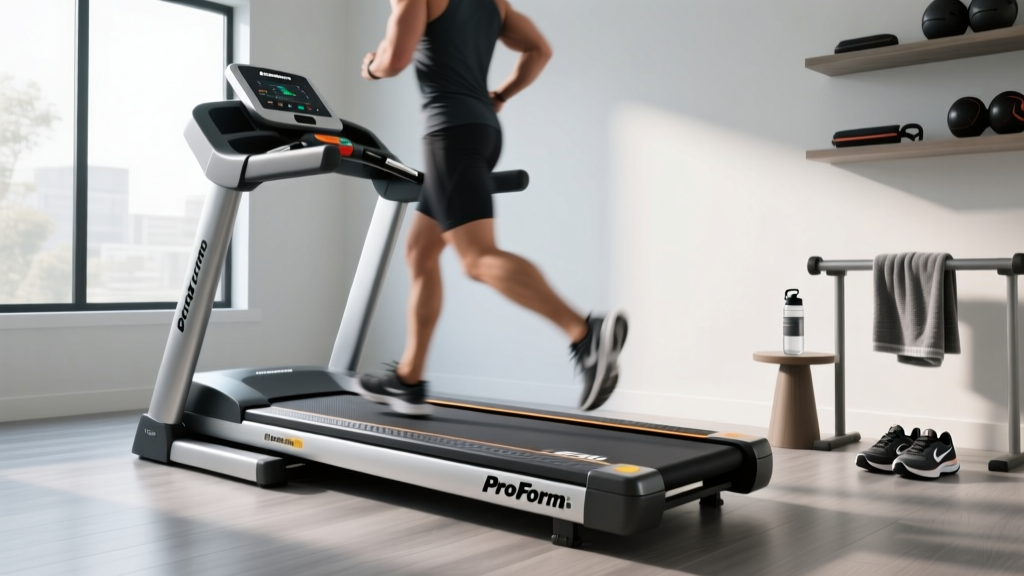
Curved vs Motorized Setup: ProForm 505 CST Treadmill Specs & Install
Compare curved manual vs motorized treadmill setup. We analyze ProForm 505 CST treadmill specs, spatial needs, and step-by-step installation.

Designing a home gym in 2026 requires more than just picking the sleekest cardio machine; it demands a rigorous understanding of spatial logistics, power requirements, and assembly realities. The debate between curved manual treadmills and traditional motorized models often centers on workout biomechanics, but the installation and setup phase is where many home gym owners hit a wall. To provide a comprehensive setup and installation walkthrough, we are using a highly popular motorized benchmark—analyzing the ProForm 505 CST treadmill specs—and contrasting its installation process directly against a premium curved manual treadmill (like the AssaultRunner Elite).
Whether you are bolting down a 280-pound curved runner or routing console wires on a folding motorized deck, this guide covers the exact measurements, tools, and edge cases you need to know before unboxing your equipment.
The Benchmark: Analyzing the ProForm 505 CST Treadmill Specs
Before we compare the physical setup of curved versus motorized units, we must establish our motorized baseline. The ProForm 505 CST represents the quintessential budget-to-mid-tier motorized home treadmill. Understanding the ProForm 505 CST treadmill specs is critical for spatial planning:
- Motor: 2.5 CHP (Continuous Horsepower) drive system.
- Belt Dimensions: 18 inches wide by 55 inches long.
- Assembled Weight: Approximately 135 lbs.
- Footprint (Upright): 66.5" L x 29" W x 67" H.
- Folding Capability: Yes, featuring a hydraulic soft-drop hinge.
- Power Requirement: Standard 120V grounded outlet (dedicated 15-amp circuit recommended).
Because the ProForm 505 CST features a folding deck, its spatial flexibility is high. However, the presence of a motor, incline actuator, and electronic console introduces specific setup vulnerabilities that curved manual treadmills entirely avoid.
Pre-Installation Matrix: Curved Manual vs. Motorized
The physical footprint and environmental requirements differ drastically between these two machine archetypes. Below is a comparative matrix to help you prep your installation zone.
| Setup Metric | Motorized (ProForm 505 CST Benchmark) | Curved Manual (e.g., AssaultRunner Elite) |
|---|---|---|
| Machine Weight | ~135 lbs (Manageable with 2 people) | ~285 lbs (Requires equipment dolly / 3 people) |
| Power Source | 120V Dedicated Outlet Required | None (100% Human-Powered) |
| Ceiling Clearance | Standard 8 ft (User height + 5") | Standard 8 ft (Deck does not drop; belt is elevated) |
| Floor Leveling | Forgiving (Auto-incline adjusts slightly) | Unforgiving (Must manually calibrate 6 leveling feet) |
| Matting Requirement | Standard 3/8" EVA or rubber mat | Heavy-duty 3/4" horse-stall mat recommended |
Phase 1: Unboxing and the Heavy Lift
Motorized Unboxing
When unboxing a motorized unit based on the ProForm 505 CST specs, the heaviest component is the pre-assembled deck and motor housing. The uprights and console are packaged separately. Pro-Tip: Do not fully cut away the cardboard base. Leave the deck strapped to the pallet base, and use a pry bar to gently tilt the box backward, allowing you to slide the deck out onto your gym mat without lifting the 100+ lb base.
Curved Manual Unboxing
Curved treadmills arrive almost entirely pre-assembled, but they are incredibly dense. The curved steel frame and vulcanized rubber slat belt create a dead weight of nearly 300 lbs. You cannot lift this manually. You will need a heavy-duty appliance dolly and a ramp if there is even a single step leading into your gym space. Position the machine on a 3/4" thick rubber mat; the acoustic dampening is mandatory, as a curved treadmill on bare hardwood will sound like a freight train during sprints.
Phase 2: Assembly and the Wiring Hazard
Motorized: Routing the Console Cable
The most common point of failure during motorized treadmill setup is pinching the console data wire. When bolting the upright posts to the ProForm-style base:
- Locate the data cable zip-tied inside the upright post.
- Feed it through the lower hinge joint before tightening the 15mm hex bolts.
- Ensure the wire sits in the designated plastic channel groove. If the wire rests against the raw metal edge of the hinge, the folding mechanism will sever the copper wiring within three weeks of use.
- Connect the push-pin connectors (listen for the audible click) and secure the collar with the provided threaded ring.
Curved Manual: Track Alignment and Leveling
Curved treadmills do not have wiring, but they require precise mechanical leveling. Because the belt runs on a curved track of polyurethane wheels, an unlevel floor will cause the slat belt to drift laterally, eventually grinding against the side rails.
- Place a 48-inch carpenter's level across the width of the deck.
- Adjust the six threaded leveling feet at the base of the frame using a 17mm wrench.
- Check the longitudinal slope. A curved treadmill must be perfectly level front-to-back to ensure the magnetic resistance and gravity curve function as engineered.
Expert Insight: 'The slat belt on a new curved treadmill will feel overly tight and stiff out of the box. Do not attempt to loosen the rear tensioner bolts during setup. The belt requires a 20-mile break-in period to stretch and seat properly into the drive gears.' — FitGearPulse Lab Technicians
Phase 3: Calibration and First Power-On
For the motorized ProForm 505 CST, setup concludes with software and mechanical calibration. Plug the machine into the wall, insert the magnetic safety key, and initiate the Incline Calibration Mode (usually accessed by holding the 'Speed Up' and 'Incline Up' buttons simultaneously). The deck will raise to its maximum 10% grade and lower to 0%. This resets the actuator's potentiometer, preventing the dreaded 'incline stuck at max' error code.
For the curved manual treadmill, calibration is entirely biomechanical. Your first run is about finding the 'sweet spot' on the curve. Unlike a motorized belt that pulls your foot back, you must push the curved belt down and back. If you run too far forward on the apex, the magnetic drag will halt the belt; if you drift too far back on the decline, the belt will accelerate uncontrollably.
Real-World Troubleshooting and Edge Cases
Even with meticulous adherence to the ProForm 505 CST treadmill specs or curved manual guidelines, edge cases occur. Here is how to handle them:
- Motorized Belt Drift (Left/Right): Do not adjust the front roller. Only adjust the rear roller bolts. Turn the left rear bolt clockwise by exactly 1/4 turn. Run the machine at 3 MPH for two minutes to allow the belt to track. Never over-tighten, or you will strip the motor drive belt.
- Curved Treadmill Squeaking: If the slats squeak against the side guides after setup, apply a dry PTFE (Teflon) lubricant to the interior edges of the rubber slats. Never use silicone spray, as it will attract dust and create a grinding paste.
- Console Flickering on Motorized Units: This is almost always a symptom of voltage drop. Ensure your home gym is not on a 15-amp circuit shared with overhead lighting. Upgrading to a dedicated 20-amp circuit is the only permanent fix for older homes.
Biomechanical Considerations Post-Setup
Once installation is complete, the transition between these machines requires physiological adaptation. According to biomechanical research published in the National Institutes of Health (NIH), running on a non-motorized curved treadmill significantly alters stride mechanics, increasing hamstring and glute activation while reducing the braking forces associated with traditional motorized belts.
However, joint impact remains a consideration regardless of the machine type. The Mayo Clinic notes that proper treadmill ergonomics—specifically maintaining a neutral spine and avoiding overstriding—are more critical for joint preservation than the deck cushioning system itself. When setting up your machine, ensure you have at least 20 inches of clearance on either side and 6 feet behind the machine. This isn't just for safety in case of a fall; it provides the visual space necessary to maintain proper posture and gaze alignment during high-intensity intervals.
Whether you are leveraging the space-saving folding specs of a motorized unit like the ProForm 505 CST or dedicating a permanent footprint to the raw power of a curved manual runner, a meticulous setup guarantees years of safe, high-performance cardio training.
More gear to consider
All reviews
Optimize Calories Burned From Treadmill: Setup & Noise Guide

Best Compact Gamified Treadmill Options for Small Spaces (2026)
Air Bike vs Assault Bike vs Sole F80 Treadmill Weight & Stability
Best Folding CrossFit Treadmill for Small Spaces 2026
2026 Trends: Belt Maintenance for a Treadmill for Knee Problems
