
Curved vs Motorized Treadmill: How Long to Walk 10000 Steps?
Comparing curved manual vs motorized treadmills? We break down pacing, calorie burn, and exactly how long to walk 10000 steps on each machine type.

When building a home gym or upgrading your cardio routine, the debate between a curved manual treadmill and a traditional motorized treadmill is one of the most common dilemmas fitness enthusiasts face. Both machines promise excellent cardiovascular conditioning, but they achieve it through fundamentally different biomechanical mechanisms. For walkers and runners focused on daily step goals, understanding these differences is critical.
In this comprehensive head-to-head comparison, we will dissect the mechanics, pricing, and real-world performance of both treadmill types. Most importantly, we will answer a highly specific question that plagues many step-counting enthusiasts: how long to walk 10000 steps on treadmill equipment of each variety, and why the answer changes depending on the belt beneath your feet.
Key Takeaway: The 30% Rule
Biomechanical studies consistently show that walking or running on a curved, self-powered manual treadmill requires approximately 30% more energy expenditure than a motorized treadmill at the exact same speed. This drastically alters your pacing, fatigue levels, and the total time required to hit high-volume step targets.
The Math: How Long to Walk 10000 Steps on Treadmill Machines?
Before comparing the machines, we must establish the baseline mathematics of step counting. According to general biomechanical averages, an adult's walking stride length is approximately 2.5 feet. Therefore, 10,000 steps equates to roughly 25,000 feet, or about 4.73 miles. The Mayo Clinic notes that while 10,000 steps is a popular benchmark for daily activity, the intensity and pace at which you accumulate those steps dictate the cardiovascular and metabolic benefits.
Here is how the time to complete 10,000 steps breaks down across both treadmill categories, assuming a target distance of 4.75 miles:
- Motorized Treadmill (Sustained 3.5 mph brisk walk): At a fixed, motor-driven pace of 3.5 mph, it will take you approximately 81 minutes (1 hour and 21 minutes) to complete 10,000 steps. The machine forces your cadence, making it easier to maintain a steady, uninterrupted rhythm.
- Curved Manual Treadmill (Self-paced 3.0 mph average): Because you must manually pull the slat belt with your posterior chain (glutes and hamstrings), sustaining a 3.5 mph walk for over an hour is highly taxing for the average user. Most walkers naturally settle into a 3.0 mph pace on a curved deck. At this pace, it will take you approximately 95 minutes (1 hour and 35 minutes) to hit 10,000 steps.
Head-to-Head Comparison Matrix
| Feature | Curved Manual Treadmill | Motorized Treadmill |
|---|---|---|
| Power Source | 100% Human-powered (Self-paced) | Electric motor (Forced pace) |
| Belt Type | Rubber vulcanized slats (Low friction) | Continuous PVC/Nylon loop |
| Caloric Burn | Up to 30% higher at identical speeds | Standard baseline (assists leg turnover) |
| Step Tracking Accuracy | High (Optical foot-strike sensors) | Moderate (Algorithmic belt-distance) |
| Average 2026 Price | $3,000 - $4,500 | $1,200 - $3,000 |
| Maintenance | Very low (No motor, no belt lubrication) | Moderate (Silicone lubrication, motor care) |
Deep Dive: Curved Manual Treadmills
Curved treadmills feature a concave, slatted running surface. Without a motor, the belt only moves when you push it backward with your feet. To walk faster, you simply shift your weight forward onto the balls of your feet; to slow down, you shift your weight back toward the heels. This mimics overground running and walking biomechanics far more accurately than a flat, motorized belt.
Top 2026 Models and Pricing
- AssaultRunner Elite ($3,299): The gold standard for commercial and high-end home gyms. Features a 150-tooth belt system and a highly responsive LCD console that tracks steps via optical sensors rather than belt distance, ensuring your 10,000-step count is highly accurate regardless of stride length variations.
- TrueForm Runner ($4,195): Known for its aggressive curve and low-profile slat belt. It demands more hamstring engagement, making it an incredible tool for posterior chain development, though it can lead to faster leg fatigue during long, steady-state walks.
The Step-Counting Reality on a Curve
Because you dictate the pace, maintaining a strict 3.5 mph or 4.0 mph walk for 80+ minutes on a curved treadmill is physically demanding. The Cleveland Clinic emphasizes that breaking up step goals into smaller, manageable chunks is often better for joint health and sustained cardiovascular output. On a curved treadmill, attempting to knock out 10,000 steps in a single session often results in form breakdown and a slowing cadence by minute 60, extending your total workout time.
Deep Dive: Motorized Treadmills
Motorized treadmills rely on an electric motor to turn a continuous belt beneath your feet. Your primary job is simply to keep up. This forced pacing is highly advantageous for users who struggle with self-regulation or those who want to zone out and watch a screen while accumulating their daily steps.
Top 2026 Models and Pricing
- Sole F80 ($1,999.99): A workhorse in the home fitness space. Features a 3.5 CHP motor, a 22-inch running path, and a cushioned flex deck that reduces joint impact by up to 40% compared to asphalt. The console calculates steps by dividing total belt distance by a hardcoded average stride length, which can slightly over- or under-count steps for exceptionally tall or short users.
- NordicTrack Commercial 1750 ($2,799): Offers a massive 14-inch HD touchscreen and automated incline/decline capabilities. The motorized belt makes hitting 10,000 steps significantly easier from a mental fatigue standpoint, as the machine does the heavy lifting of belt propulsion.
The Step-Counting Reality on a Motor
If your goal is purely volume—getting 10,000 steps done as efficiently as possible—the motorized treadmill wins. By setting the incline to 1% (to simulate outdoor wind resistance) and the speed to a brisk 3.5 mph, you can reliably finish your 10,000 steps in just over 80 minutes while maintaining a steady heart rate in Zone 2 (typically 110-130 BPM for most adults).
"When evaluating cardio equipment for high-volume step goals, motor consistency is just as important as human endurance. A motorized treadmill removes the variable of human pacing fatigue, making it the superior tool for strict, time-bound step targets."
Biomechanics and Stride Length Variations
One of the most overlooked factors in the "how long to walk 10000 steps on treadmill" equation is how the machine type alters your natural stride.
- Overstriding on Motorized Decks: Because the belt pulls your foot backward, users tend to overstride (reach too far forward with the leading foot) on motorized treadmills. This artificially lengthens your stride, meaning you might cover 5 miles in fewer than 9,500 steps, causing the machine's algorithmic step counter to fall short of your actual physical footfalls.
- Shorter Cadence on Curved Decks: The concave shape of a curved treadmill naturally encourages a mid-foot strike directly beneath your center of mass. This results in a shorter, quicker stride. You will likely take more steps to cover the exact same physical distance, meaning you might hit your 10,000-step goal having only traveled 4.2 miles.
Expert Verdict: Which Should You Buy?
Choosing between a curved manual treadmill and a motorized treadmill ultimately depends on your primary fitness objectives, budget, and how you prefer to track your progress.
Choose a Curved Manual Treadmill If:
- You want to maximize caloric burn and posterior chain engagement in shorter time windows.
- You are training for overground sports and need to practice self-paced acceleration and deceleration.
- You want a zero-maintenance machine with no motor to burn out and no belt to lubricate.
- You have a budget exceeding $3,000.
Choose a Motorized Treadmill If:
- Your primary goal is accumulating high daily step counts (10,000+) with minimal mental and physical fatigue.
- You rely on forced pacing to maintain a target heart rate zone without slowing down.
- You want interactive programming, automated inclines, and integrated entertainment screens.
- You prefer a more budget-friendly entry point (under $2,500) for premium features.
Ultimately, if your strict KPI is figuring out how long to walk 10000 steps on treadmill equipment in the shortest, most predictable timeframe, a high-quality motorized treadmill like the Sole F80 is your most reliable ally. However, if you view those 10,000 steps as an opportunity for deep muscular conditioning and athletic development, the curved manual treadmill will transform a mundane step-count into a rigorous, full-body workout.
More gear to consider
All reviews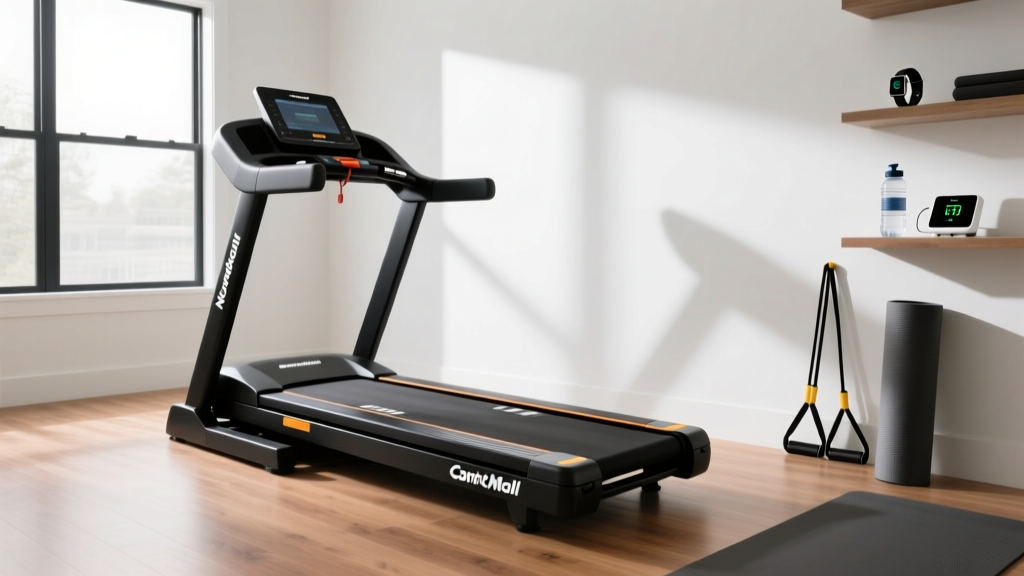
Nordic Track Commercial 1750 Treadmill: Setup & Feature Comparison

The Treadmilling Meaning: 2026 Folding Treadmill Market Review
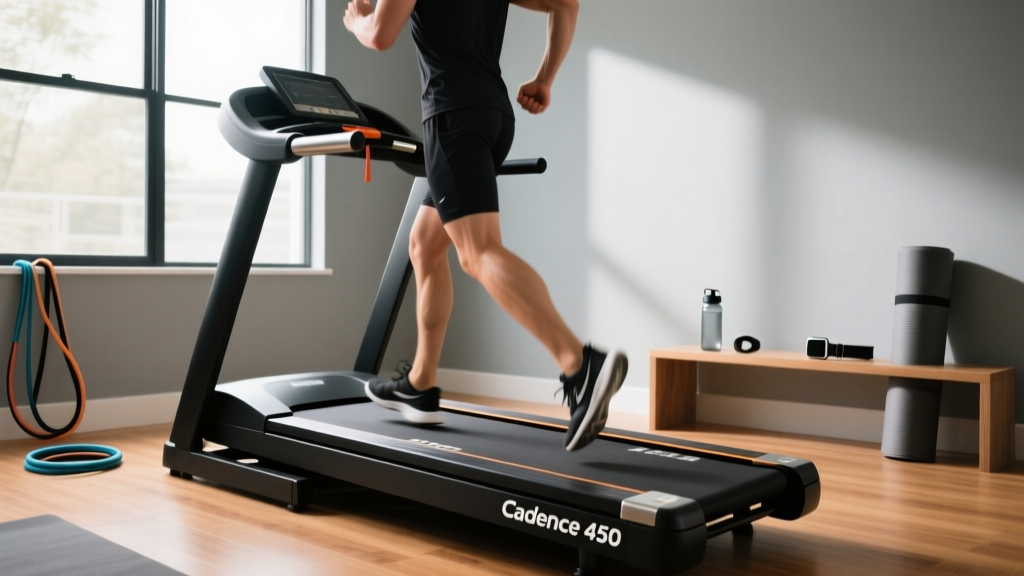
Curved Manual vs Motorized: How the Cadence 450 Treadmill Compares

Curved Manual vs Motorized & GoYouth 2-in-1 Walking Pad and Treadmill

Walking Pad vs Treadmill Setup: How to Oil a NordicTrack Treadmill
