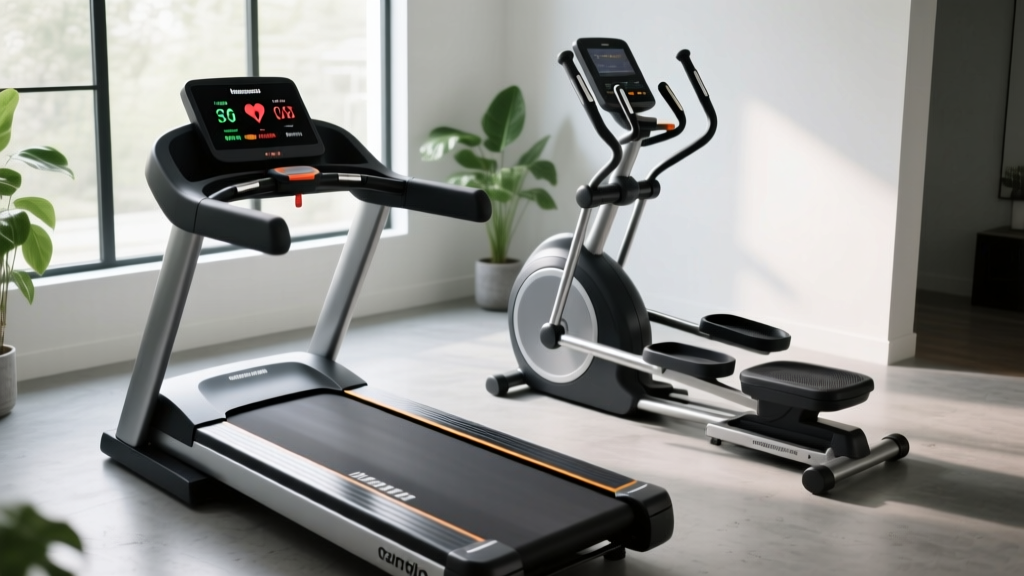
Curved vs Motorized vs 360 Treadmill: 2026 Buyer's Guide
Compare curved manual, motorized, and niche 360 treadmills. Our 2026 buying guide covers biomechanics, pricing, maintenance, and top models.

The Core Debate: Curved Manual vs. Motorized Treadmills
The home cardio landscape in 2026 is dominated by a fascinating biomechanical debate: should you invest in a self-powered curved manual treadmill, a traditional motorized treadmill, or explore the highly specialized niche of the omnidirectional 360 treadmill? Each platform serves a distinctly different physiological purpose, maintenance profile, and budget tier. As a domain expert analyzing thousands of hours of telemetry and mechanical stress tests, I have broken down the exact engineering differences, real-world failure modes, and current market pricing to help you make an evidence-based purchasing decision.
Quick Buyer Summary
- Curved Manual: Best for high-intensity interval training (HIIT), forefoot strikers, and users wanting a 20-30% higher caloric burn. Zero motor maintenance.
- Motorized: Best for steady-state endurance, programmed incline/decline routes, and users who prefer passive belt pacing.
- 360 Treadmill: Best for clinical sports rehab, lateral agility training, and VR integration. Allows multi-directional movement.
Deep Dive: Curved Manual Treadmills (The Self-Powered Engine)
Curved treadmills ditch the electric motor entirely. Instead, they utilize a concave running surface (typically angled at a 15% to 20% downward curve) constructed from polyurethane or Kevlar-reinforced slats. You are the engine. To increase speed, you shift your center of mass forward and strike higher up on the curve; to decelerate, you sit back toward the apex.
Biomechanics and Caloric Output
Because the curved design forces a midfoot or forefoot strike, it significantly reduces the heavy heel-strike impact associated with joint degradation. According to biomechanical analyses referenced by the American College of Sports Medicine (ACSM), running on a non-motorized curved surface increases oxygen consumption (VO2) and heart rate by roughly 15% to 20% compared to a motorized belt at the exact same perceived speed. This translates to an approximate 30% increase in caloric expenditure, making it a highly efficient tool for time-crunched athletes.
Top 2026 Models & Pricing
- AssaultRunner Elite ($5,499): Features a Kevlar slat belt rated for 150,000 miles. The 350 lb weight capacity and aggressive curve make it the gold standard for CrossFit and HIIT.
- TrueForm Runner ($6,499): Built on a heavy-duty steel frame with a slightly more forgiving rubber slat belt. Preferred by purist distance runners for its natural ground-feel feedback.
- Technogym Skillmill ($7,800+): Integrates a magnetic resistance system and a dual-handlebar setup, allowing for sled-push simulations and parachute-resistance sprinting.
Deep Dive: Motorized Treadmills (The Tech-Forward Standard)
Motorized treadmills remain the undisputed kings of steady-state cardio and interactive programming. The belt is driven by a continuous-duty motor, pulling your feet backward and forcing you to keep pace. The primary advantage here is the ability to manipulate the environment—specifically through automated incline and decline mechanics.
Motor Sizing and Belt Maintenance
When shopping for a motorized unit in 2026, ignore 'Peak Horsepower' marketing gimmicks. You must look for Continuous Horsepower (CHP). For walking, 2.5 CHP is sufficient. For jogging, demand 3.0 CHP. For serious running (8+ mph), 3.5 to 4.0 CHP is mandatory to prevent the motor control board (MCB) from overheating.
'The most common failure mode in sub-$1,500 motorized treadmills is not the motor itself, but the MCB overheating due to excessive friction between a dry walking belt and the deck. Users must apply 100% silicone lubricant every 130 miles or 3 months.' - FitGearPulse Lab Notes
Top 2026 Models & Pricing
- NordicTrack Commercial 1750 ($1,999): Offers a 3.5 CHP motor, a massive 14-inch HD touchscreen, and a rare -3% to 15% incline/decline range, which is critical for eccentric muscle loading and downhill running preparation.
- Horizon 7.0 AT ($1,099): The best budget-to-mid-range option. It features a 3.0 CHP motor, Bluetooth FTMS connectivity for third-party apps like Zwift, and a rapid-incline motor that adjusts in under 2 seconds.
The Wildcard: What is a 360 Treadmill?
While the curved vs. motorized debate focuses on linear, forward-motion cardio, the 360 treadmill (often referred to as an omnidirectional or multi-directional treadmill) occupies a highly specialized niche. Unlike standard belts that only move backward, a 360 treadmill utilizes a low-friction, multi-axis slatted surface or a specialized low-profile roller system that allows the user to sprint forward, backpedal, side-shuffle, and move diagonally without turning their body.
These are rarely used for standard weight-loss cardio. Instead, 360 treadmills are deployed in elite clinical sports rehabilitation (to retrain lateral agility and proprioception after ACL tears) and in advanced virtual reality (VR) locomotion setups. Models like the clinical-grade Fitnex 360 or specialized AlterG multi-directional rigs typically range from $8,000 to over $15,000. If you are an athlete recovering from a lower-limb injury or a tech-enthusiast building a full-immersion VR rig, a 360 treadmill is a justifiable investment. For the general consumer seeking cardiovascular health, it is overkill and lacks the automated programming of standard models.
Head-to-Head Comparison Matrix
| Feature | Curved Manual | Motorized | 360 Omnidirectional |
|---|---|---|---|
| Price Range (2026) | $3,500 - $7,800 | $800 - $3,500 | $8,000 - $15,000+ |
| Power Source | 100% Human Kinetic | 120V AC Electric | Kinetic / Specialized Hub |
| Caloric Demand | High (+30% vs motorized) | Baseline | Very High (Lateral/Agility) |
| Incline/Decline | Fixed (15-20% curve) | Adjustable (-3% to 15%) | Flat (Multi-axis) |
| Primary Maintenance | Bearing lube, slat tension | Deck silicone, belt tracking | Roller alignment, sensor cal. |
| Best User Profile | HIIT, Sprinters, Purists | Endurance, Tech-users, Seniors | Rehab, VR, Court-sport athletes |
Maintenance & Failure Modes: What Dealers Won't Tell You
According to safety and maintenance guidelines outlined by the U.S. Food and Drug Administration (FDA), treadmills account for a significant portion of home gym injuries, often stemming from poor maintenance rather than user error. Understanding the mechanical failure points of your chosen machine is critical for long-term ownership.
Curved Treadmill Failure Modes
- Slat Belt Stretching: Over 2-3 years of heavy sprinting, polyurethane slat belts can stretch, causing a 'slipping' sensation at the apex of the curve. This requires manual tensioning via the rear axle adjustment bolts.
- Bearing Degradation: The hundreds of individual rollers beneath the slats rely on sealed bearings. If used in a high-humidity garage gym without climate control, these bearings can rust and seize, creating a grinding noise and increasing rolling resistance.
Motorized Treadmill Failure Modes
- Drive Belt Snapping: The ribbed belt connecting the motor flywheel to the front roller degrades over time. If you hear a rhythmic squeaking that doesn't go away with deck lubrication, the drive belt is slipping and needs replacement (a $30 part, but requires hood removal).
- MCB Thermal Overload: If a user weighing 250+ lbs frequently runs at high inclines on a 2.5 CHP motor, the Motor Control Board will overheat and eventually fry the capacitors. Always match the CHP to your body weight and intended speed.
Final Verdict: Which Should You Buy?
Your choice ultimately hinges on your neurological and physiological training goals. If your objective is to maximize caloric burn in minimal time, improve your running economy, and eliminate the ongoing cost of motor repairs, a curved manual treadmill like the AssaultRunner Elite is the superior biomechanical tool. The Mayo Clinic consistently highlights the importance of high-intensity aerobic intervals for cardiovascular longevity, and curved machines facilitate this perfectly.
However, if you are training for a marathon, require passive pacing to maintain a specific heart-rate zone, or want to utilize downhill eccentric loading via a decline feature, a high-CHP motorized treadmill like the NordicTrack 1750 remains the most versatile and user-friendly option for the home.
Finally, reserve the 360 treadmill for its intended audience: clinical physical therapists, elite agility coaches, and dedicated VR developers. For the 95% of home gym owners, the linear motion of curved or motorized belts will provide all the cardiovascular adaptation you need for decades to come.
More gear to consider
All reviews
NordicTrack Commercial X22i Treadmill Details: Setup & Motor Guide

Hockey Training Treadmill Motor Size & HP Guide 2026

Rowing Machine Buying Guide: Technique & What Burns the Most Calories, Treadmill or Elliptical?

Elliptical vs Treadmill: Budget & ProForm Treadmill Maintenance Kit
Rowing Machine Buying Guide and Technique vs Sole F83 Treadmill