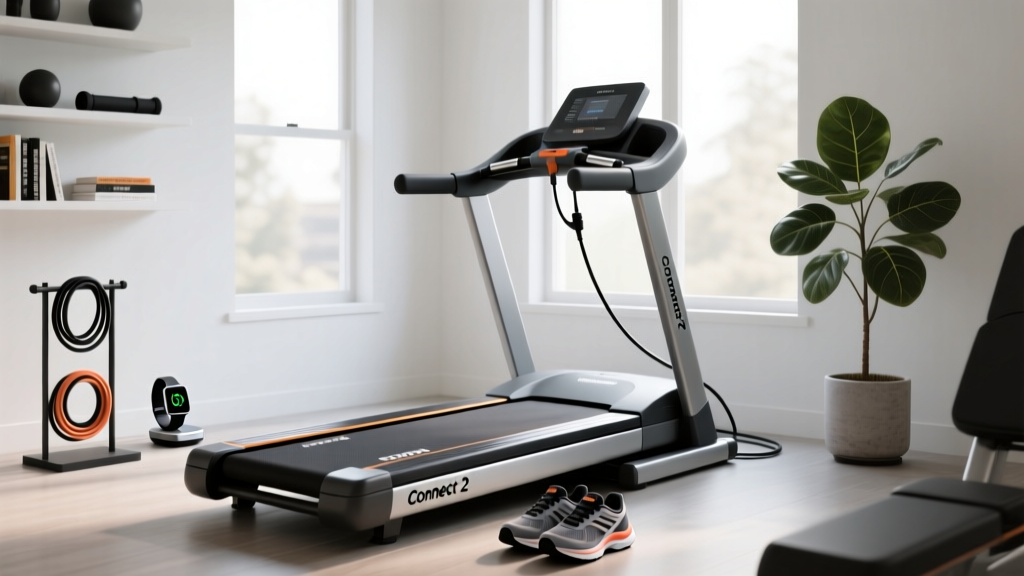
Curved vs Motorized: 30 Minute Walking Treadmill Workout Showdown
Is a curved or motorized deck best for a 30 minute walking treadmill workout? We compare 2026 models, biomechanics, and costs to help you choose.

The Biomechanical Divide: How the Deck Changes Your Stride
When fitness enthusiasts search for the ultimate 30 minute walking treadmill workout, the focus is usually on speed, incline, or interval timing. However, as of 2026, sports science and biomechanics research point to a more fundamental variable: the deck itself. Choosing between a curved manual treadmill and a traditional motorized treadmill completely alters your gait cycle, muscle recruitment, and joint loading.
On a standard motorized treadmill, the belt pulls your foot backward. This artificial propulsion reduces the activation of your hamstring and glute muscles during the push-off phase. Conversely, a curved non-motorized treadmill requires you to manually drive the belt with every step. This forces a midfoot or forefoot strike, significantly increasing the activation of the posterior chain (calves, hamstrings, and glutes) and reducing the harsh ground reaction forces (GRF) on your knees and lower back.
According to gait analysis research, walking on a curved manual treadmill can increase caloric expenditure by up to 30% compared to a motorized belt at the exact same speed, purely due to the metabolic cost of self-propulsion and the absence of motor assistance.
To help you decide which machine is the superior investment for your home gym, we are putting the premier curved deck against the industry-standard motorized deck in a head-to-head showdown.
Quick Decision Framework
- Choose Curved if you want higher caloric burn, athletic posterior chain development, zero electrical footprint, and a forefoot-dominant gait.
- Choose Motorized if you prefer precise speed/incline control, passive stretching of the hip flexors, folding convenience, and a lower upfront budget.
Head-to-Head Heavyweights: AssaultRunner Pro vs. Sole F80
To ground this comparison in reality, we are looking at two of the most popular models dominating home gyms in 2026: the AssaultRunner Pro (Curved) and the Sole F80 (Motorized).
| Feature | AssaultRunner Pro (Curved) | Sole F80 (Motorized) |
|---|---|---|
| 2026 Retail Price | $3,299 | $1,099 |
| Propulsion | 100% User-Generated (Slat Belt) | 3.5 CHP Motor |
| Incline Capability | Fixed Curve (Simulates 8-12% grade) | 0% to 15% Motorized Incline |
| Weight Capacity | 350 lbs (Steel Frame) | 375 lbs |
| Footprint | 69' L x 33' W (Non-folding) | 82' L x 37' W (Folding) |
| Maintenance Need | Low (Slat tensioning) | Medium (Belt lubrication, motor dust) |
Protocol 1: The Curved Deck 30 Minute Walking Treadmill Workout
Because a curved treadmill lacks a motor, you cannot simply press a button to set a pace of 3.5 mph. Your speed is dictated entirely by your foot placement on the curve. Stepping higher on the front of the arc increases speed; dropping back into the 'pocket' of the curve slows you down. This makes the 30 minute walking treadmill workout on a curved deck inherently interval-based and highly responsive to your perceived exertion.
The Self-Paced Posterior Chain Burn
This protocol leverages the natural resistance of the curve to maximize glute and hamstring engagement without breaking into a jog.
- Minutes 0-5 (Warm-up): Walk in the lowest 'pocket' of the curve. Focus on a heel-to-toe rolling motion to warm up the Achilles tendons and calves. Target pace: 2.0 - 2.5 mph.
- Minutes 5-25 (The Work Phase): Step 6 inches higher on the front curve. This naturally forces a midfoot strike and increases the belt speed. Drive your knees up and push the floor away behind you. Alternate between 3 minutes of aggressive power walking (3.5 - 4.0 mph) and 1 minute of active recovery in the pocket (2.0 mph).
- Minutes 25-30 (Cool-down): Drop back into the pocket. Allow your heart rate to descend below 100 BPM. Finish with 2 minutes of standing calf stretches on the flat rear deck.
Pro Tip: Do not hold the handrails on a curved treadmill. Holding the rails shifts your center of gravity backward, neutralizing the curve's resistance and entirely defeating the biomechanical purpose of the machine.
Protocol 2: The Motorized 30 Minute Walking Treadmill Workout
Motorized treadmills excel at Low-Intensity Steady State (LISS) cardio and precise incline manipulation. The Mayo Clinic consistently highlights walking as one of the most effective, joint-friendly methods for cardiovascular health and weight management, and motorized inclines allow you to amplify this without increasing impact forces.
The 12% Incline LISS Protocol
Popularized by physical therapists and fitness coaches, this method uses the Sole F80's steep 15% incline capability to simulate hiking, turning a simple walk into a formidable cardiovascular and muscular endurance test.
- Minutes 0-3: 0% Incline, 2.5 mph. Wake up the joints and establish a baseline breathing rhythm.
- Minutes 3-5: Ramp incline to 12%. Maintain speed at 3.0 mph. You should feel immediate engagement in your glutes and calves.
- Minutes 5-27: Hold 12% incline at 3.0 mph. This is your steady-state zone. Your heart rate should sit comfortably in Zone 2 (roughly 60-70% of your max heart rate). Focus on short, choppy steps rather than over-striding, which can cause shin splints on steep motorized inclines.
- Minutes 27-30: Drop incline to 0%, reduce speed to 2.0 mph. Allow the motorized belt to gently pull your legs into a passive hip-flexor stretch as you cool down.
Long-Term Ownership: Failure Modes and Maintenance
When investing thousands of dollars into home cardio equipment, understanding how these machines fail over a 5-to-10-year lifespan is critical. The Harvard Health Publishing guidelines emphasize the importance of consistent daily movement, meaning your machine must withstand hundreds of hours of use without catastrophic failure.
Motorized Treadmill Failure Modes (Sole F80)
The primary point of failure on any motorized deck is the friction between the belt and the wooden deck. If users fail to apply 100% silicone lubricant every 150 miles, the friction generates excess heat. This heat forces the 3.5 CHP motor to draw more amperage, eventually frying the motor control board—a $300+ repair. Additionally, the folding hinge mechanism, while convenient, is prone to developing a slight 'wobble' after 3 to 4 years of heavy daily use if the locking pins are not routinely tightened.
Curved Treadmill Failure Modes (AssaultRunner Pro)
Curved treadmills have no motors or electronic boards to fry, making them virtually bulletproof from an electrical standpoint. However, the mechanical failure mode lies in the slat belt and the magnetic resistance brake. Over time, the rubber slats can stretch, causing the belt to track to the left or right, requiring manual tensioning via the rear axle bolts. Furthermore, the magnetic brake generates fine metallic dust; if not vacuumed out of the flywheel housing annually, it can cause the resistance mechanism to grind and squeak.
Expert Verdict: Which Machine Fits Your Home Gym?
The Final 2026 Recommendation
If your primary goal is athletic performance, rehabilitation, and maximizing calorie burn in a short window, the AssaultRunner Pro is the undisputed champion. The self-paced nature forces you to work harder, and the curved deck inherently corrects over-striding, saving your knees from repetitive stress injuries. It is a buy-it-for-life piece of equipment.
However, if you are seeking a budget-friendly, low-barrier-to-entry machine for daily LISS cardio, passive stretching, and watching TV while hitting your step count, the Sole F80 remains the gold standard. The motorized incline provides a phenomenal workout without requiring the intense mental and physical engagement of a manual curve, making it much easier to adhere to a daily 30 minute walking treadmill workout routine over the long haul.
More gear to consider
All reviews
Compact Zero Impact Treadmill: 2026 Budget & Value Breakdown

OK Go Treadmill Music Video: Compact Portable Cardio Layouts

Actin Treadmilling vs Mechanical Wear: Belt Maintenance Budget
Stair Climber vs TR1200i Treadmill: Home Use Guide 2026

What Every Treadmill Fixer Says About Motor Horsepower