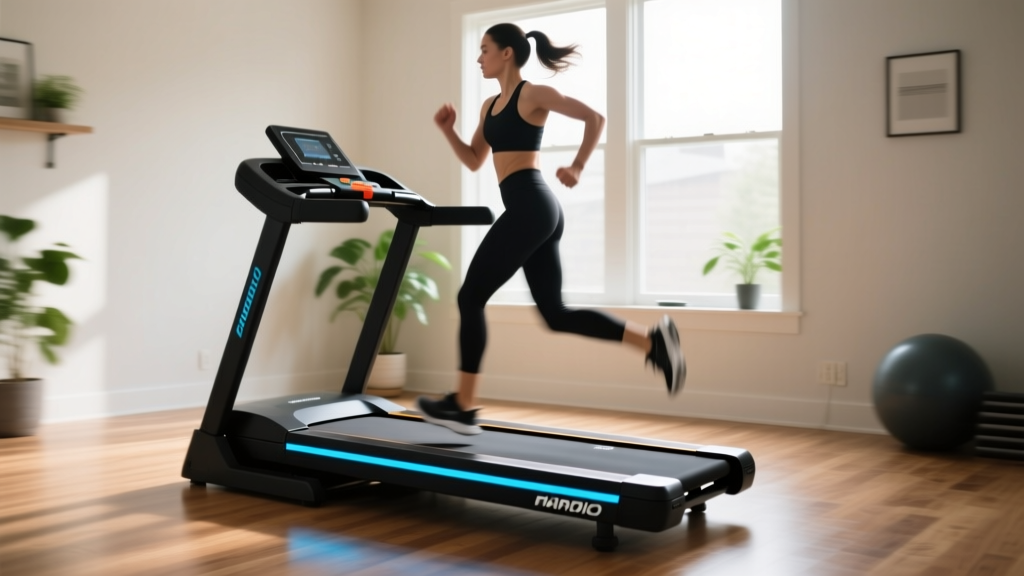
Maintaining Compact Treadmills for HIIT Treadmill Workouts
Learn essential maintenance care and longevity tips to protect compact portable treadmills during high-impact HIIT treadmill workouts at home.

The 2026 Shift to Compact Portable Cardio Equipment Options
As urban living spaces continue to shrink in 2026, the demand for compact portable cardio equipment options has skyrocketed. Fitness enthusiasts are increasingly turning to ultra-compact folding treadmills, walking pads, and slim-profile portable runners to maintain their routines in micro-apartments and home offices. However, a major conflict arises when users attempt to perform high-intensity interval training on these space-saving machines. While a commercial-grade Life Fitness or Precor treadmill is engineered to withstand the brutal biomechanical forces of sprinting, portable models operate under strict mechanical and thermal limitations.
If you are integrating HIIT treadmill workouts into your routine using a compact portable treadmill—such as the WalkingPad X21, the Sunny Health & Fitness SF-T723016, or the Horizon Fitness T101—aggressive maintenance protocols are no longer optional. They are mandatory. Without specialized care, the extreme acceleration and deceleration phases of interval training will rapidly degrade the drive belt, overheat the DC motor, and fracture the folding hinges.
The Mechanical Reality: Portable Treadmills vs. Sprint Intervals
To understand why maintenance must be adapted for HIIT, we must look at the physics of the machine. According to research from the Hospital for Special Surgery, the impact force of running can reach up to 2.5 times your body weight. During a sprint interval at 8 to 10 MPH, this force compounds, placing immense downward pressure on the running deck and the motor's drive system.
Most compact portable cardio equipment options utilize lightweight Direct Current (DC) motors ranging from 1.25 to 2.5 Continuous Horsepower (CHP). When you transition from a 9 MPH sprint to a 3 MPH recovery jog during a HIIT session, the treadmill's motor controller must handle regenerative back-electromotive force (back-EMF). Commercial treadmills use heavy AC motors and dynamic braking resistors to absorb this energy. Portable options, however, simply cut power to the motor, relying on the user's friction and the belt's inertia to slow down. This causes severe micro-slippage between the drive belt and the front roller, leading to premature stretching and eventual snapping of the belt.
⚠️ Critical Warning: DC Motor Amperage SpikesA standard 1.5 CHP motor on a compact walking pad draws roughly 8 to 10 amps during a brisk walk. During the initial acceleration phase of a HIIT sprint interval, amperage can spike to 18+ amps. If the user weighs over 180 lbs, this spike can easily trip the machine's internal thermal breaker, causing a sudden, dangerous mid-sprint shutdown. Always verify your machine's peak amperage rating before attempting intervals.
The 4-Step Pre-HIIT Maintenance Protocol
To safely execute HIIT treadmill workouts on portable equipment, you must shift from a passive maintenance mindset to an active, pre-flight inspection routine. Follow this protocol before every high-intensity session.
1. Belt Tension and the 'Quarter-Turn' Rule
Belt slip is the number one failure mode during sprint intervals. The sudden application of force from your foot strike can cause the belt to catch while the front roller continues to spin, resulting in a dangerous stutter-step effect.
- Power off and unplug the treadmill.
- Locate the midpoint of the running belt on the left and right edges.
- Lift the belt upward. It should rise exactly 2 to 3 inches off the deck.
- If it rises 4 inches or more, use a 6mm Allen wrench to tighten the rear roller adjustment bolts by exactly one-quarter turn clockwise on both sides.
- Test at 2 MPH. Overtightening will cause severe motor strain and deck friction.
2. High-Friction Lubrication Schedules
Standard manufacturer guidelines suggest lubricating a walking pad every 150 miles or every 3 months. However, the Mayo Clinic notes that the physiological demands of interval training translate to exponentially higher mechanical friction on the equipment deck. For users performing HIIT treadmill workouts twice a week, you must reduce your lubrication interval to every 40 miles.
- Use only 100% pure silicone lubricant. Avoid PTFE (Teflon) or WD-40, which will dissolve the factory-applied wax on portable treadmill decks.
- Application: Loosen the belt slightly, apply exactly 15ml of silicone down the center of the deck in a zig-zag pattern, retighten to spec, and run the machine at 2 MPH for 5 minutes to distribute the fluid evenly.
3. Drive Belt and Roller Inspection
The internal Kevlar-reinforced drive belt connects the motor to the front roller. Because portable treadmills lack heavy flywheels, the drive belt takes the brunt of the acceleration torque. Every 30 days, remove the motor hood (usually secured by 4 to 6 Phillips-head screws) and inspect the ribbed drive belt. Look for black dust accumulation—a sign of micro-slippage. If the ribs appear glazed or cracked, order a replacement specific to your model's SKU immediately.
4. Thermal Management and Active Cooling
Compact treadmills have minimal ventilation. During a 20-minute HIIT session, the motor housing can easily exceed safe operating temperatures. Keep a standard $15 infrared thermometer in your gym bag. Point it at the motor hood vents during your recovery intervals. If the surface temperature exceeds 130°F (54°C), abort the sprint intervals and switch to a light 3 MPH active recovery walk to allow the internal cooling fan to dissipate the heat.
Compact Cardio Maintenance Matrix
Not all compact portable cardio equipment options are built equally. Use the matrix below to understand the maintenance thresholds and HIIT limitations of the three primary categories of space-saving treadmills available in 2026.
| Equipment Class | Example Models | Motor Limit (CHP) | HIIT Suitability | Lube Interval (HIIT) | Max User Weight for HIIT |
|---|---|---|---|---|---|
| Under-Desk Walking Pads | WalkingPad C2, UREVO Strol 2E | 0.75 - 1.0 | Not Recommended | N/A | N/A |
| Compact Folding Runners | WalkingPad X21, Sunny SF-T723016 | 1.25 - 1.75 | Moderate (Short Sprints) | Every 35 Miles | 160 lbs |
| Mid-Size Portable Folders | Horizon T101, ProForm Carbon TL | 2.25 - 2.75 | High (Full HIIT Protocols) | Every 50 Miles | 220+ lbs |
Protecting Folding Hinges and Deck Elastomers
One of the most overlooked aspects of maintaining compact portable cardio equipment options is the structural integrity of the folding mechanism. When a treadmill is folded and unfolded, it relies on gas shocks, metal locking pins, or heavy-duty elastomer bumpers to secure the deck in the horizontal position.
During HIIT treadmill workouts, the vertical oscillation of your sprinting stride creates a 'hammering' effect on the deck. If the locking pins are not fully engaged, or if the elastomer bumpers have developed micro-fractures from repeated folding cycles, this hammering will warp the aluminum frame. According to Consumer Reports' treadmill buying and maintenance guidelines, structural frame alignment is critical for motor longevity; a warped frame forces the belt to track improperly, pulling it toward one side and shredding the edges against the plastic side rails.
Longevity Tip: Once a month, apply a dry PTFE lubricant to the folding hinge pins and locking mechanisms. Never use wet grease or WD-40 on the hinges, as this will attract dust and pet hair, eventually causing the locking pin to jam in the unlocked position. Additionally, inspect the rubber elastomer bumpers located under the front of the deck. If they appear flattened or cracked, replace them immediately to restore proper shock absorption and protect the internal motor mount.
Summary: Prolonging the Life of Your Compact Cardio Gear
The rise of compact portable cardio equipment options has democratized home fitness, allowing users to maintain rigorous cardiovascular routines without sacrificing valuable living space. However, treating a 1.5 CHP folding treadmill like a commercial gym workhorse is a fast track to mechanical failure. By respecting the thermal limits of DC motors, adhering to an accelerated silicone lubrication schedule, and meticulously monitoring belt tension before every sprint interval, you can safely execute HIIT treadmill workouts at home. Treat your portable machine with the precision of a high-performance engine, and it will reliably support your fitness goals for years to come.
More gear to consider
All reviews
Small Space Folding Treadmill & Treadmill Track Care
Orangetheory Treadmill Noise vs. Quiet Home Cardio: 2026 Guide

Air Bike vs Assault Bike Space & Average Heart Rate on Treadmill

Nordic Track Treadmill T6.5s vs Under Desk Pads: 2026 Office Value

Air Bike vs Assault Bike: How to Burn 500 Calories on Treadmill in 30 Minutes
