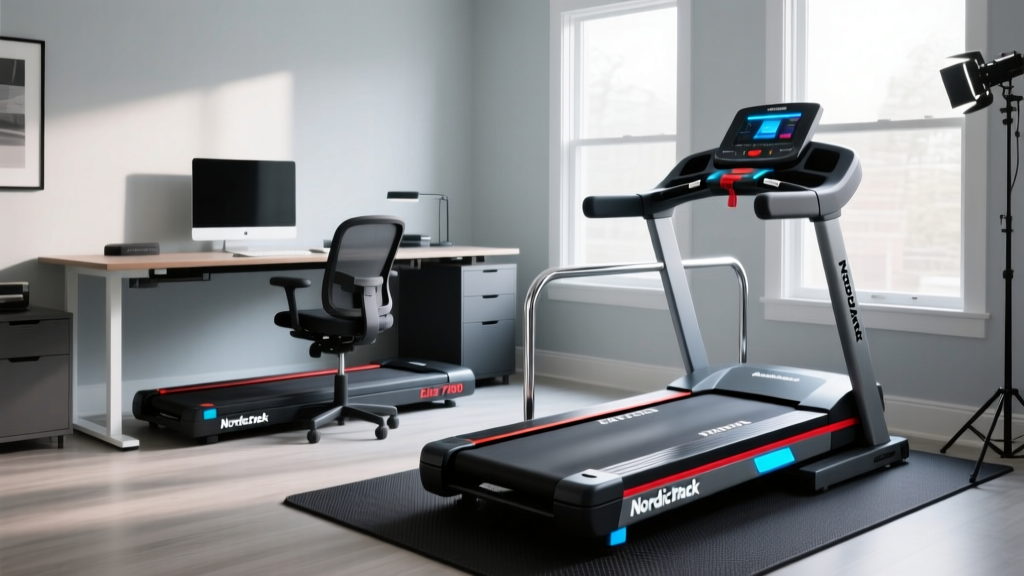
Compact Folding Treadmill Review & How to Recycle a Treadmill
We review top compact folding treadmills for small spaces, analyzing total cost of ownership, budget breakdowns, and how to recycle a treadmill responsibly.

The Hidden Costs of Small-Space Treadmills
When outfitting a small apartment or home gym, a folding treadmill seems like the ultimate space-saving solution. However, most buyers only calculate the upfront retail price, ignoring the Total Cost of Ownership (TCO). As of 2026, municipal bulk-trash pickups increasingly reject motorized fitness equipment due to stringent e-waste and scrap metal regulations. This means that when your compact treadmill inevitably reaches the end of its lifespan, you are left with a heavy, complex machine that costs between $150 and $300 to haul away.
In this budget breakdown and value analysis, we review two of the most popular folding treadmills for small spaces—the Horizon Fitness T101 and the Echelon Stride—and provide an expert, step-by-step guide on how to recycle a treadmill to recover scrap value and avoid exorbitant junk removal fees.
Budget Breakdown: Horizon T101 vs. Echelon Stride
To understand value, we must compare the engineering and lifecycle costs of a traditional folding model versus an ultra-compact auto-folding model.
| Feature | Horizon Fitness T101 | Echelon Stride (Auto-Fold) |
|---|---|---|
| Upfront Cost (2026 Avg) | $599 | $499 |
| Motor Size | 2.5 CHP | 1.25 HP |
| Belt Dimensions | 55' x 20' | 45' x 20' |
| Unit Weight | 140 lbs | 100 lbs |
| Expected Lifespan | 4–6 Years | 2–3 Years |
| Estimated Maintenance | $40 (Silicone lube/belts) | $110 (Hinge pin replacements) |
| Junk Removal Fee (If not recycled) | $200 - $250 | $150 - $200 |
Engineering Trade-Offs: Where Compact Treadmills Fail
Before learning how to recycle a treadmill, it is vital to understand why they fail. Small-space treadmills suffer from specific engineering compromises:
- Hinge Pin Shearing: Folding mechanisms rely on steel pivot pins. In budget models, repeated folding cycles (over 500 folds) cause micro-fractures in the pin, eventually shearing it and rendering the fold mechanism useless.
- MDF Deck Warping: To save weight, compact models use Medium-Density Fiberboard (MDF) decks coated in phenolic resin. In humid apartments, MDF absorbs moisture and warps, causing the belt to track poorly and overwork the motor controller.
- Motor Controller Frying: Small spaces often mean poor ventilation. Dust and pet hair are sucked directly into the motor hood, clogging the heat sink on the Pulse Width Modulation (PWM) controller board, leading to catastrophic electronic failure.
Step-by-Step: How to Recycle a Treadmill and Avoid Haul Fees
According to the Environmental Protection Agency (EPA), motorized appliances containing circuit boards and DC motors must be processed as e-waste or specialized scrap. Throwing a treadmill in a dumpster is illegal in many municipalities. Here is the professional method for dismantling and recycling your machine.
Phase 1: Safe Dismantling
You will need a metric Allen wrench set, a Phillips head screwdriver, wire cutters, and a socket set. Always unplug the machine and wait 15 minutes to allow the motor controller's capacitors to discharge.
- Remove the Console: Unscrew the upright caps and disconnect the data cable pinching the connector tabs. Set the console aside for e-waste recycling.
- Detach the Uprights: Unbolt the steel uprights from the base deck. These are high-grade steel and highly valued by scrap yards.
- Extract the Motor: Remove the plastic motor hood (usually 4-6 Phillips screws). Release the tension on the drive belt, unbolt the motor mount, and snip the wires leading to the controller board.
- Separate the Deck and Belt: The running belt (PVC/rubber) and deck (MDF) have zero scrap value and must be disposed of in standard municipal solid waste.
Phase 2: Material Sorting and Scrap Yield
To maximize your return, you must separate the materials. Scrap yards pay by the pound and by the metal grade. Based on 2026 scrap market averages, here is the material yield of a standard 140 lb folding treadmill:
| Component | Material Type | Approx. Weight | Est. Scrap Value |
|---|---|---|---|
| Frame & Uprights | Shredded Steel / Iron | 90 lbs | $4.50 - $9.00 |
| Drive Motor | Copper / Aluminum | 12 lbs | $8.00 - $15.00 |
| Console & Wiring | E-Waste / PCB / Copper | 5 lbs | $2.00 - $5.00 |
| Belt & Deck | PVC / MDF (Trash) | 33 lbs | $0.00 (Landfill) |
Expert Insight: Never throw the DC motor into the general steel bin. The copper windings inside a treadmill motor classify it as 'Electric Motor Scrap,' which pays significantly higher per pound than standard sheet steel. Use a local directory like Earth911 to find specialized e-waste and scrap metal drop-off centers near your zip code.
Donation vs. Scrapping: The Decision Matrix
Before taking a wrench to your machine, evaluate its operational status. If the motor runs and the belt tracks straight, the resale or donation value vastly outweighs the scrap value.
- Resale (Working Condition): A used Horizon T101 in good condition sells for $150–$250 on local marketplaces.
- Donation (Working Condition): Many local charities, women's shelters, or community centers will accept working fitness equipment and provide a tax-deduction receipt, often arranging free pickup.
- Scrapping (Broken/Motor Failure): If the PWM board is fried or the MDF deck is cracked, the machine is a liability. Proceed with the dismantling and recycling guide above to recover the $15–$25 in raw materials and save $200 on junk removal.
Final Verdict: True Cost of Ownership
When shopping for a folding treadmill for a small space, look beyond the retail price tag. Budget models with sub-2.0 HP motors and fragile auto-fold hinges will fail faster, forcing you into the recycling process sooner. Investing in a sturdier manual-fold model like the Horizon T101 extends your lifecycle by up to three years. Furthermore, understanding how to recycle a treadmill by separating the copper motor and steel frame empowers you to reclaim value at the end of the machine's life, turning a potential $250 disposal headache into a responsible, cost-neutral environmental action.
More gear to consider
All reviews
Space-Saving Cardio: Magnetic Treadmill & Portable Layouts
Older NordicTrack Treadmill vs Compact Portable Cardio: 2026 Trends

What's Better: Treadmill or StairMaster? Small Space Budget Guide

Elliptical vs Treadmill: NordicTrack Treadmill A2550 Space Layouts
Rowing Machine Buying Guide: Technique vs VR Treadmill Weight Limit