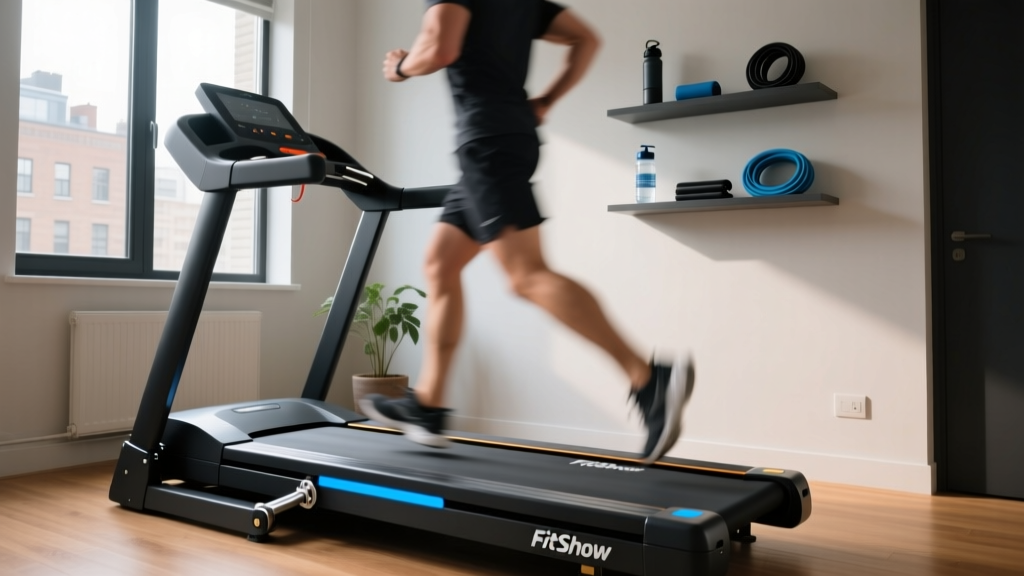
Compact Bikes vs Treadmill Workouts to Increase Speed and Endurance
Optimize your 2026 home gym layout. Compare stationary bike types and spatial needs for treadmill workouts to increase speed and endurance.

The Spatial Geometry of Modern Home Cardio Zones
As urban living spaces shrink and home real estate premiums rise in 2026, designing a functional home gym is no longer just about buying equipment; it is an exercise in spatial geometry and layout optimization. Fitness enthusiasts are frequently forced to choose between the compact efficiency of stationary bikes and the expansive footprint required for running machines. This guide breaks down the exact spatial requirements of various stationary bike types (upright, recumbent, and spin) and contrasts them with the rigorous layout demands necessary to safely perform treadmill workouts to increase speed and endurance.
Stationary Bike Types: Footprints and Layout Profiles
Stationary bikes are generally categorized into three distinct types, each with unique biomechanical profiles and spatial footprints. Understanding these dimensions is critical for mapping out your cardio zone.
1. Spin Bikes (Indoor Cycles)
Spin bikes mimic the aggressive, forward-leaning geometry of outdoor road bikes. They are the gold standard for high-intensity interval training (HIIT) and take up a relatively small footprint.
- Top 2026 Model: Schwinn IC4 or Bowflex VeloCore.
- Dimensions: Approximately 48.7" L x 21.2" W (roughly 7.2 square feet).
- Layout Strategy: Because the rider's center of gravity is pitched forward, spin bikes require at least 24 inches of lateral clearance on both sides for out-of-the-saddle climbing and swaying. They are best placed in corners or against windows where natural light and ventilation can offset the high thermal output of the rider.
2. Upright Stationary Bikes
Upright bikes feature a more relaxed, vertical seating position with a wider, plush saddle. They are ideal for steady-state cardio and users with lower back sensitivities.
- Top 2026 Model: ProForm Studio Bike or NordicTrack S22i.
- Dimensions: Average 48" L x 20" W (roughly 6.6 square feet).
- Layout Strategy: Upright bikes have the smallest overall footprint of the three. However, the step-through or step-over frames require a clear 30-inch frontal approach path. They can easily be tucked into narrow alcoves or placed at the foot of a bed in multi-use spaces.
3. Recumbent Bikes
Recumbent bikes feature a bucket seat with a backrest and front-mounted pedals. They eliminate upper body engagement entirely, focusing purely on lower-body rehabilitation and low-impact endurance.
- Top 2026 Model: Sole Fitness SR500 or Horizon Comfort R.
- Dimensions: Average 63" L x 28" W (roughly 12.2 square feet).
- Layout Strategy: Recumbent bikes are massive. Their elongated chassis makes them unsuitable for tight spaces. They must be placed along a long, uninterrupted wall. Furthermore, because the rider is reclined, overhead clearance is less of an issue, making them ideal for rooms with sloped ceilings or attic conversions.
Zoning for Treadmill Workouts to Increase Speed and Endurance
While stationary bikes are constrained primarily by their physical chassis, treadmills demand a much larger operational envelope. Designing a dedicated zone for treadmill workouts to increase speed and endurance requires more than just plugging in a machine; it demands rigorous attention to biomechanical clearance, safety corridors, and impact attenuation.
The 79-Inch Safety Corridor
According to safety guidelines highlighted by the American Council on Exercise (ACE) and consumer safety advocates, you must never place a treadmill flush against a wall. When executing high-velocity sprint intervals or exhaustive endurance pushes, the risk of stumbling or being thrown off the back of the belt is significant.
Critical Safety Metric: You must maintain a minimum rear clearance of 79 inches (2 meters) behind the treadmill deck. If your treadmill is 82 inches long (like the popular Sole F80), your total required room length is over 13.5 feet just for the running zone.
Impact Attenuation and Flooring Layouts
High-intensity treadmill workouts to increase speed and endurance generate ground reaction forces equivalent to 2.5 to 3 times your body weight. Standard laminate or hardwood floors will degrade, and the acoustic transfer will disrupt the household.
Expert Flooring Specification:
Do not use cheap EVA foam puzzle mats under a treadmill; they compress unevenly and cause the treadmill deck to warp over time. Instead, invest in 3/8-inch thick vulcanized rubber mats (Shore A hardness of 90). A standard 4x6 foot horse stall mat (typically $50-$80 from agricultural suppliers) provides the exact density required to absorb sprint impacts while keeping the treadmill feet perfectly level.
2026 Home Gym Layout Blueprints: Hybrid Configurations
If your goal is to incorporate both cycling and running into a compact space, you must adopt a hybrid layout framework. Here are two proven spatial designs for multi-modal cardio zones.
Blueprint A: The 'Galley' Corridor Layout
Best for long, narrow spaces (e.g., finished basements or hallways measuring at least 14 feet long by 8 feet wide).
- Wall 1: Place the treadmill (e.g., NordicTrack T Series 10) facing into the room. The 79-inch rear safety corridor doubles as your walking pathway and stretching zone.
- Wall 2 (Opposite): Position an upright or spin bike (e.g., Schwinn IC4) facing the same direction. The bike's compact 48-inch length ensures it does not encroach on the treadmill's lateral swing zone.
- Advantage: Centralizes all power drops and cable management along the perimeter walls, keeping the center of the room completely clear for dynamic warm-ups.
Blueprint B: The 'Fold-and-Stow' Studio Layout
Best for small square rooms (e.g., 10x10 foot spare bedrooms).
- The Compromise: Traditional treadmills simply will not fit alongside a recumbent bike in a 100-square-foot room while maintaining the 79-inch rear clearance. You must pivot to a premium folding treadmill (like the Sole F63, which folds to 44" L x 28" W) or a high-performance walking pad for endurance work, reserving the permanent floor space for a spin bike.
- Zoning: Use interlocking rubber tiles to define the 'wet' zone (where the treadmill deploys) and keep the spin bike on a separate, permanent mat to avoid having to move it when unfolding the treadmill.
Equipment Footprint & Clearance Matrix
Use the following matrix to calculate your minimum required room dimensions before purchasing equipment. Data compiled from manufacturer specifications and Runner's World biomechanical safety standards.
| Equipment Type | Machine Footprint (Sq Ft) | Required Rear Clearance | Total Operational Zone |
|---|---|---|---|
| Spin Bike (e.g., IC4) | 7.2 sq ft | 24 inches | ~15 sq ft |
| Upright Bike | 6.6 sq ft | 18 inches | ~12 sq ft |
| Recumbent Bike | 12.2 sq ft | 30 inches | ~22 sq ft |
| Standard Treadmill | 21.0 sq ft | 79 inches (2m) | ~55 sq ft |
Final Verdict: Optimizing for Your Cardio Goals
If your primary 2026 fitness objective revolves around executing rigorous treadmill workouts to increase speed and endurance, you cannot compromise on the 79-inch rear safety corridor or the high-density rubber flooring required to protect your joints and your subfloor. Treadmills are spatially dominant and will dictate the layout of your entire room.
However, if you are constrained to a space smaller than 120 square feet, stationary bikes—specifically spin bikes and upright models—offer a vastly superior space-to-performance ratio. A high-end spin bike like the Schwinn IC4 can replicate the cardiovascular endurance benefits of a long-distance run and the VO2 max benefits of track sprints, all while consuming less than 15 square feet of total operational space. By mapping your exact room dimensions against the matrix above, you can build a home cardio zone that is both biomechanically safe and highly efficient.
For more detailed spatial planning and equipment reviews, consult the Garage Gym Reviews database for up-to-date dimensional schematics on all major 2026 cardio releases.
More gear to consider
All reviews
Does Incline Treadmill Build Calves? Curved vs Motorized Mistakes
Mastering the Treadmill Zone: Belt Lubrication and Care Guide

Stair Climber Setup Guide & Benefits of Incline Treadmill Workout
Elliptical vs Treadmill: NordicTrack Treadmill Console Problems
Elliptical vs Treadmill: Is 30 Minutes on Treadmill Enough to Lose Weight?