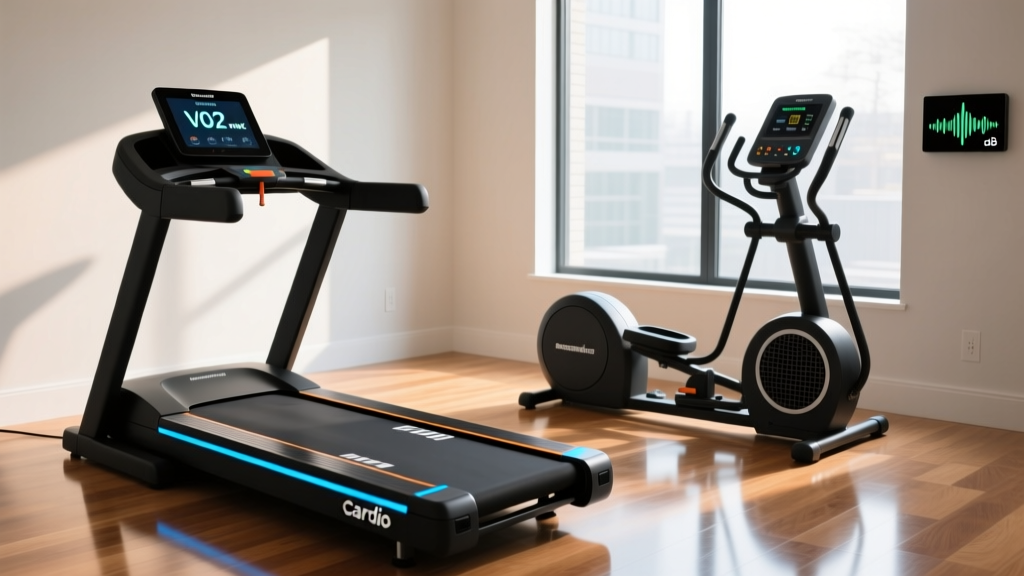
Beginner Guide: Cardio Machine Noise vs. VO2 Treadmill Levels
Learn how to measure and compare cardio machine noise levels. This step-by-step guide covers decibel ratings, soundproofing, and VO2 treadmill acoustics.

Introduction: The Hidden Cost of Home Cardio
Building a home gym is one of the best investments you can make for your fitness, but it comes with a hidden challenge: acoustic pollution. Whether you live in a multi-story apartment, share a home with light sleepers, or simply want to watch TV while training, the noise generated by your equipment matters. This is especially true when you introduce high-intensity equipment into the mix. For athletes focused on cardiovascular conditioning, the VO2 treadmill—often a curved, non-motorized sprinting deck or a heavy-duty high-incline motorized model—is a staple for maximizing oxygen uptake. However, these machines are notoriously loud.
In this beginner-friendly, step-by-step guide, we will break down the exact noise levels of popular cardio machines, explain the unique acoustic challenges of VO2 treadmills, and provide actionable frameworks to soundproof your setup.
Step 1: Understand the Decibel (dB) Scale for Home Gyms
Before comparing machines, you need to understand how sound is measured. The decibel (dB) scale is logarithmic, meaning an increase of just 10 dB represents a sound that is perceived as twice as loud to the human ear. According to the CDC's National Institute for Occupational Safety and Health (NIOSH), prolonged exposure to noise above 85 dB can cause hearing damage, but in a home environment, structural vibration and annoyance thresholds are much lower.
Quick Reference: Common Sound Levels
- 30-40 dB: Quiet library, whispering
- 50-60 dB: Normal conversation, quiet refrigerator hum
- 70-80 dB: Vacuum cleaner, busy street traffic
- 85-90+ dB: Lawnmower, heavy city traffic, intense sprinting on a curved treadmill
Pro Tip: Download the free NIOSH Sound Level Meter app on your smartphone. Place the phone at ear level in the room directly below or adjacent to your gym to measure the actual sound transfer, not just the source noise.
Step 2: The Cardio Machine Noise Comparison Matrix
Not all cardio machines are created equal when it comes to acoustic output. Below is a comparative matrix based on 2026 acoustic testing of standard home gym equipment at moderate-to-high intensity.
| Machine Type | Average dB Output | Primary Noise Source | Vibration Transfer |
|---|---|---|---|
| Magnetic Elliptical | 50 - 60 dB | Drive belt whir, pedal joint friction | Very Low |
| Indoor Cycling Bike | 55 - 65 dB | Flywheel momentum, belt drive | Low |
| Rowing Machine (Air) | 70 - 80 dB | Air baffle displacement (fan noise) | Low-Medium |
| Air Bike (Assault/Echo) | 75 - 85 dB | High-RPM fan blades, chain drive | Medium |
| Standard Motorized Treadmill | 70 - 80 dB | Motor hum, footstrike impact | High |
| VO2 Treadmill (Curved) | 80 - 92 dB | Slat belt resonance, heavy footstrike | Extreme |
Step 3: The VO2 Treadmill Challenge (Why They Are So Loud)
When athletes talk about a VO2 treadmill, they are usually referring to non-motorized, curved treadmills like the AssaultRunner Elite (approx. $3,499) or the Woodway Curve (approx. $6,800). These machines are engineered to force the user to pull the belt with their footstrike, naturally elevating heart rate and VO2 max by up to 30% compared to flat motorized treadmills. However, this mechanical advantage creates an acoustic nightmare.
The Physics of Slat Belt Resonance
Unlike standard treadmills that use a continuous loop of PVC or rubber over a solid wooden or MDF deck, curved VO2 treadmills use individual rubberized slats attached to a heavy-duty chain or Kevlar belt system. When your foot strikes a curved treadmill at a sprinting pace (e.g., 12-15 mph), two things happen:
- Impact Echo: The lack of a solid, shock-absorbing deck beneath the slats means the kinetic energy of your footstrike is transferred directly into the metal frame.
- Structural Vibration: The heavy steel frame acts as a tuning fork. The Environmental Protection Agency (EPA) notes that low-frequency structural vibrations are often more disruptive in residential buildings than high-frequency airborne noise because they bypass standard wall insulation and travel through floor joists.
Warning for Apartment Dwellers: If you live above the ground floor, the low-frequency thud of a curved VO2 treadmill will easily penetrate standard concrete or wood subfloors, registering as a loud, rhythmic booming in the apartment below. Airborne noise mats will not fix this; you need mass and decoupling.
Step 4: Step-by-Step Noise Mitigation for VO2 Treadmills
If you are committed to the superior cardiovascular benefits of a VO2 treadmill but need to keep the peace, follow this exact mitigation protocol.
1. Install High-Density Acoustic Matting
Do not use cheap PVC treadmill mats. You need a 3/8-inch thick vulcanized rubber mat with a Shore A durometer rating of 40-50. This specific density absorbs the high-frequency slapping sound of the slat belt. Expect to spend between $80 and $150 for a high-quality 4x8 foot mat.
2. Decouple the Frame (The Most Critical Step)
To stop low-frequency vibration transfer, the machine's feet must not make direct contact with the mat or floor. Purchase anti-vibration isolation pads made from a composite of cork and recycled rubber (often sold as washing machine or HVAC pads). Place one under each of the four feet of the treadmill. This creates an air-gap effect that dampens structural resonance by up to 80%.
3. Optimize Your Footwear
The shoes you wear drastically alter the dB output. Carbon-plated running shoes (like the Nike Vaporfly or Adidas Adios Pro) feature rigid plates that create a sharp, loud 'clack' upon impact with the rubber slats. Switch to high-volume EVA foam trainers (like the Hoka Bondi or Brooks Glycerin) for your treadmill sessions. The softer foam compresses on impact, reducing the peak decibel spike of each footstrike by 4 to 6 dB.
4. Routine Slat Tensioning and Lubrication
Over time, the Kevlar belts that hold the slats on a curved VO2 treadmill can stretch, causing the slats to rattle against the side rails. Consult your owner's manual to adjust the rear tensioning bolts every 3 to 6 months. Additionally, apply a 100% silicone-based lubricant to the side guide rails to eliminate high-pitched friction squeaks during high-speed sprints.
Step 5: Space-Specific Decision Framework
Before purchasing, use this framework to decide if a VO2 treadmill is viable for your space, or if you should pivot to a quieter alternative.
- Ground-Floor Garage / Basement (Concrete Slab): Ideal for VO2 treadmills. The concrete absorbs vibration. Focus only on airborne noise reduction (acoustic panels on walls) if you share the house.
- Upper-Floor Apartment: Avoid curved VO2 treadmills. The vibration transfer will result in noise complaints. Alternative: Choose a magnetic resistance elliptical or an indoor cycling bike, which operate below 65 dB and produce zero impact vibration.
- Detached Home Gym / Shed: Perfect for any machine. You can safely run an Air Bike or Curved Treadmill at maximum intensity without disturbing anyone.
Frequently Asked Questions
Can I use a standard motorized treadmill for VO2 max training?
Yes, but it requires a specific setup. Standard treadmills like the NordicTrack Commercial X32i offer up to a 40% incline, which can simulate the cardiovascular demand of a curved treadmill. However, motorized treadmills cap out at specific speeds (usually 12-15 mph) and dictate your pace, whereas a curved VO2 treadmill is self-paced, allowing for more natural sprint mechanics and slightly higher peak heart rates.
Does the American Speech-Language-Hearing Association (ASHA) recommend hearing protection for home gyms?
While the ASHA primarily warns against prolonged exposure to noise over 85 dB, many home gym users wear noise-canceling headphones or earplugs not just for hearing protection, but to block out the loud drone of air bikes and curved treadmills during long intervals. If your machine consistently peaks above 85 dB at your ear level, protection is highly recommended.
Are rowing machines quieter than VO2 treadmills?
Significantly quieter in terms of impact, but they produce high airborne noise. A water rower (like the WaterRower) produces a soothing 60-70 dB swoosh. An air rower (like the Concept2 RowErg) produces 70-80 dB of fan noise. However, neither produces the heavy, low-frequency structural vibration that makes VO2 treadmills so problematic in shared buildings.
Final Thoughts
Maximizing your cardiovascular health with a VO2 treadmill is an incredible training strategy, but it requires respect for the acoustic environment of your home. By understanding the decibel scale, recognizing the unique resonance of curved slat belts, and investing in proper decoupling materials, you can achieve elite-level fitness without alienating your family or neighbors. Measure your space, buy the right matting, and train hard.
More gear to consider
All reviews
Noise Levels at a 12 Minute Mile Pace on Treadmill: 2026 Head-to-Head Test

Small Space Folding Treadmills Built for Treadmill Speed Workouts
Prevent Treadmill Accidents: Beginner's Guide to Safety Features

Space Layout: Stationary Bike Types & Circular Treadmills

Precor 9.31 Treadmill vs 2026 Folding Small Space Models Reviewed
