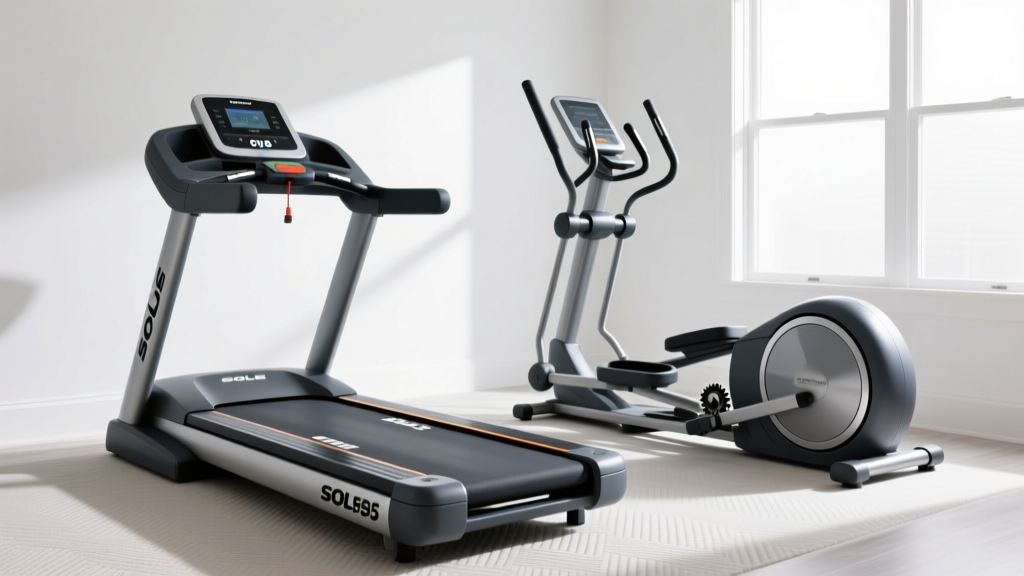
Walking Pad vs Treadmill: How to Burn Calories on a Treadmill
Discover how to burn calories on a treadmill or walking pad. Our beginner step-by-step guide compares specs, routines, and real-world setups for 2026.

The Ultimate Beginner's Guide: Walking Pad vs. Traditional Treadmill
Choosing the right indoor cardio equipment can feel overwhelming, especially when your primary goal is weight management and cardiovascular health. When beginners search for a burn calories treadmill routine, they often overlook the massive hardware differences between a full-sized traditional treadmill and a compact under-desk walking pad. Both can help you achieve a caloric deficit, but they do so through entirely different biomechanical and lifestyle mechanisms.
In this 2026 step-by-step guide, we will break down the exact specifications, real-world pricing, and physiological outcomes of both machines. Whether you are outfitting a small apartment or building a dedicated home gym, this guide will help you select the right equipment and build a sustainable routine to maximize your daily energy expenditure.
Quick Decision Framework
- Choose a Walking Pad if: You have less than 10 square feet of space, a budget under $400, and want to increase your NEAT (Non-Exercise Activity Thermogenesis) while working from home.
- Choose a Traditional Treadmill if: You have a dedicated workout space, a budget of $600+, and want to incorporate running, incline training, and high-intensity interval training (HIIT).
Step 1: Decode the Hardware Specs (2026 Market Reality)
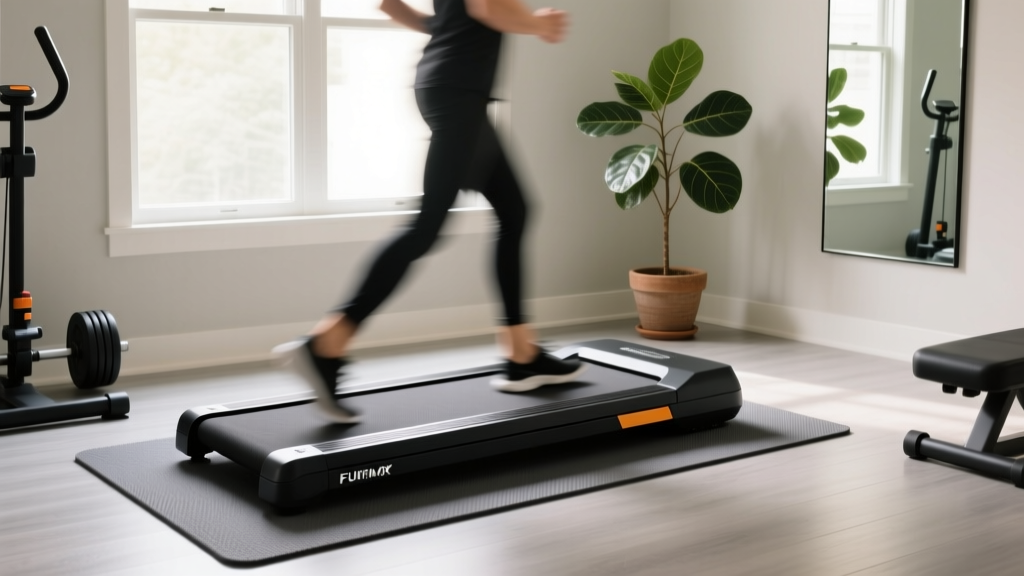
To understand how to burn calories on a treadmill or walking pad efficiently, you must first understand the mechanical limitations of each. Many beginners buy a walking pad expecting to jog on it, only to burn out the motor within a month.
| Feature | Premium Walking Pad (e.g., KingSmith R2) | Traditional Treadmill (e.g., Sole F63) |
|---|---|---|
| Motor Type | 1.5 HP to 2.5 HP (Peak) | 3.0 CHP (Continuous Horsepower) |
| Belt Dimensions | 16" x 43" (Narrow/Short) | 20" x 60" (Wide/Long) |
| Max Speed | 3.7 mph to 6.2 mph | 10.0 mph to 12.0 mph |
| Incline Capability | 0% (Flat only) | 0% to 15% Motorized Incline |
| Average 2026 Price | $299 - $449 | $899 - $1,299 |
⚠️ Expert Warning on Horsepower: Notice the difference between Peak HP and CHP. Walking pads advertise Peak HP, which is the maximum burst the motor can handle for a few seconds. Traditional treadmills use CHP (Continuous Horsepower), which is the power it can sustain indefinitely. If you weigh over 180 lbs and try to jog at 5.0 mph on a 1.5 Peak HP walking pad, the belt will stutter, and the motor will overheat.
Step 2: The Science of Calorie Burn (NEAT vs. EAT)
How exactly do these machines help you burn fat? It comes down to two physiological concepts: Exercise Activity Thermogenesis (EAT) and Non-Exercise Activity Thermogenesis (NEAT).
The Walking Pad: Mastering NEAT
Walking pads are designed for NEAT. This is the energy expended for everything we do that is not sleeping, eating, or sports-like exercise. According to the Mayo Clinic, integrating consistent, low-intensity walking throughout your workday can drastically improve your metabolic health without triggering the intense hunger responses associated with high-intensity cardio. A 160 lb person walking at 2.0 mph on a walking pad while answering emails burns roughly 100 calories per hour. Over an 8-hour workday (assuming 3 hours of actual stepping), that is an extra 300 calories burned effortlessly.
The Traditional Treadmill: Mastering EAT and Incline
If you want to burn calories on a treadmill rapidly, you need incline and speed. Harvard Health Publishing notes that a 155 lb person walking at 3.5 mph on a flat surface burns about 133 calories in 30 minutes. However, if you increase the incline to 10% or jog at 5.0 mph, that same person burns between 250 and 300 calories in the exact same timeframe. Traditional treadmills allow for this progressive overload.
Step 3: Your 4-Week Beginner Step-by-Step Routine
Regardless of which machine you purchased, consistency is the only metric that matters for the first 30 days. Follow this progressive protocol to build joint resilience and cardiovascular endurance.
- Week 1: The Acclimation Phase (Focus on Form)
- Frequency: 4 days a week.
- Duration: 15 minutes per session.
- Pace: 2.0 to 2.5 mph.
- Form Tip: Do not hold the handrails or lean on your desk. Holding on reduces your caloric expenditure by up to 20% and ruins your spinal alignment. Pump your arms naturally.
- Week 2: Building the Base (Focus on Duration)
- Frequency: 5 days a week.
- Duration: 25 minutes per session.
- Pace: 2.8 to 3.2 mph.
- Progression: Introduce a 5-minute warm-up at 2.0 mph, 15 minutes at your target pace, and a 5-minute cool-down.
- Week 3: Introducing Variables (Speed or Incline)
- Frequency: 5 days a week.
- Duration: 30 minutes per session.
- Action: If on a treadmill, set the incline to 5%. If on a walking pad, increase speed to 3.5 mph.
- Week 4: The 10,000 Step Integration
- Goal: Stop watching the clock and start watching your step count.
- Action: Use a smartwatch or the machine's companion app to hit a cumulative 8,000 to 10,000 steps daily. Break this into three 15-minute sessions if using a walking pad under your desk.
Step 4: Avoid These Common Beginner Failure Modes
Equipment failure and user burnout are the two main reasons home cardio machines become expensive clothes racks. Here is how to troubleshoot the most common edge cases.
1. Walking Pad Motor Overheating
Because walking pads lack the massive cooling fans found in traditional treadmills, their motors are prone to thermal throttling. The Fix: Never use a walking pad for more than 45 continuous minutes. If you feel the belt stuttering or the deck getting unusually warm beneath your feet, power the machine off for 20 minutes to let the internal copper windings cool down.
2. Belt Drift and Friction Burns
If your walking pad belt constantly shifts to the left or right, it will eventually fray against the plastic side rails, creating a burning rubber smell. The Fix: Use the included Allen wrench to adjust the rear roller bolts. Turn the left bolt clockwise by exactly one-quarter turn to shift the belt right. Furthermore, you must lubricate the deck with 100% pure silicone treadmill oil every 30 to 60 miles. Failure to do so will increase the amp-draw on the motor, leading to premature control board failure.
3. The 'Holding On' Posture Trap
As mentioned earlier, gripping the console or desk while walking shifts your center of gravity backward. This reduces the activation of your glutes and hamstrings, effectively turning a full-body movement into an isolated calf workout. The Fix: If you need to type while using a walking pad, invest in an adjustable standing desk and position your keyboard so your elbows rest at a 90-degree angle without leaning forward.
Frequently Asked Questions
Can I run on a walking pad to burn calories faster?
Technically, some premium walking pads (like the UREVO Strol 2E) advertise top speeds of 7.6 mph. However, the 15-inch wide and 40-inch long belt leaves zero margin for error. If you lose focus for a single second, you will step on the plastic rail and risk a severe ankle sprain. For running, a traditional treadmill with a 20" x 55"+ belt and extended handrails is a mandatory safety requirement.
Does the CDC recommend walking pads for daily exercise?
The CDC recommends at least 150 minutes of moderate-intensity aerobic activity per week. While a walking pad at 2.0 mph is considered 'light' intensity, bumping the speed to 3.0 mph or higher pushes it into the 'moderate' zone, allowing it to count toward your weekly CDC guidelines, provided you maintain a brisk pace that elevates your heart rate.
Which machine is better for apartment living?
Walking pads win the apartment category hands down. A traditional treadmill like the Sole F63 weighs roughly 250 lbs and generates significant impact noise that will travel through floor joists to neighbors below. A walking pad weighs around 60 lbs, and if you place a high-density EVA foam puzzle mat underneath it, the acoustic dampening will keep your downstairs neighbors completely undisturbed.
More gear to consider
All reviews
2026 Market Trends: ProForm ProShox Treadmill Belt Maintenance
StairMaster vs Incline Treadmill: 2026 Buyer's Guide
Rowing Machine Technique: Avoid the Shrimp on Treadmill Government Study Trap

NordicTrack T6.5z Treadmill vs Horizon T101: 2026 Guide
Walking Pad Setup: Cardio for Nuclear Stress Test Procedure Without Treadmill