Bowflex T6 Treadmill vs Stair Climber: Home Guide
Choosing between the Bowflex T6 treadmill and a home stair climber? Our 2026 head-to-head guide compares specs, joint impact, and real-world costs.

The Home Cardio Dilemma: Walking vs. Stepping
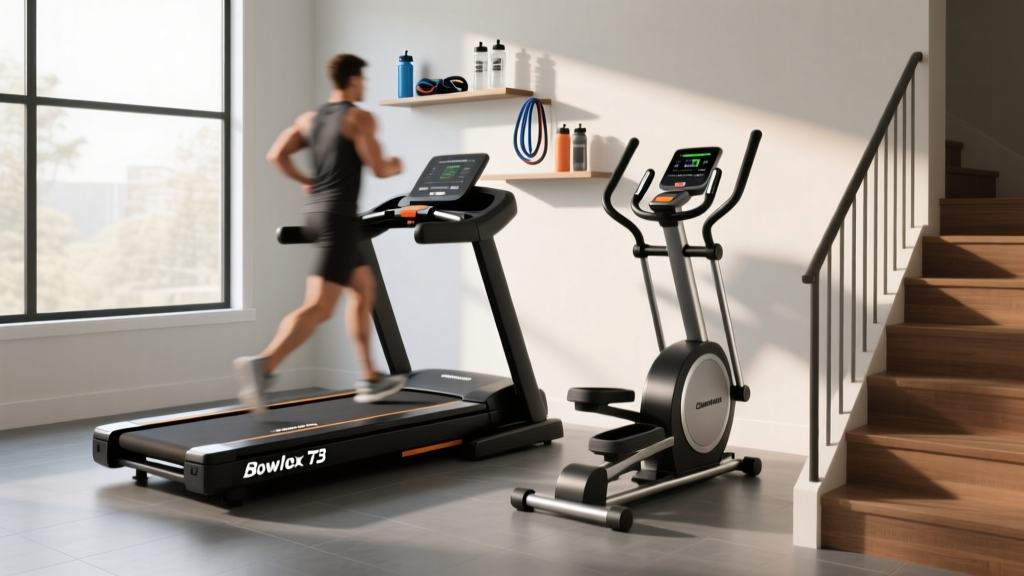
Designing a home gym in 2026 requires balancing spatial constraints, acoustic limitations, and specific biomechanical goals. When buyers narrow their search down to a compact, smart-enabled walking/jogging deck versus a dedicated vertical stepping machine, the debate usually centers on two distinct experiences. On one side, we have the Bowflex T6 treadmill, a space-saving, tech-integrated deck built for steady-state cardio and incline walking. On the other side, the stair climber category—ranging from premium magnetic hybrids to budget chain-drive step mills—offers high-resistance, low-impact glute and quad conditioning.
This head-to-head product comparison and stair climber machine for home use guide will dissect the engineering, maintenance realities, and physiological outcomes of both machine types to help you make an evidence-based purchasing decision.
Quick Verdict: Choose the Bowflex T6 treadmill if your primary goal is Zone 2 steady-state cardio, walking pad-style daily step accumulation, and running gait maintenance. Opt for a stair climber if you prioritize high caloric expenditure per minute, lower-body hypertrophy, and possess the necessary ceiling clearance for vertical stepping.Contender Profile: Bowflex T6 Treadmill
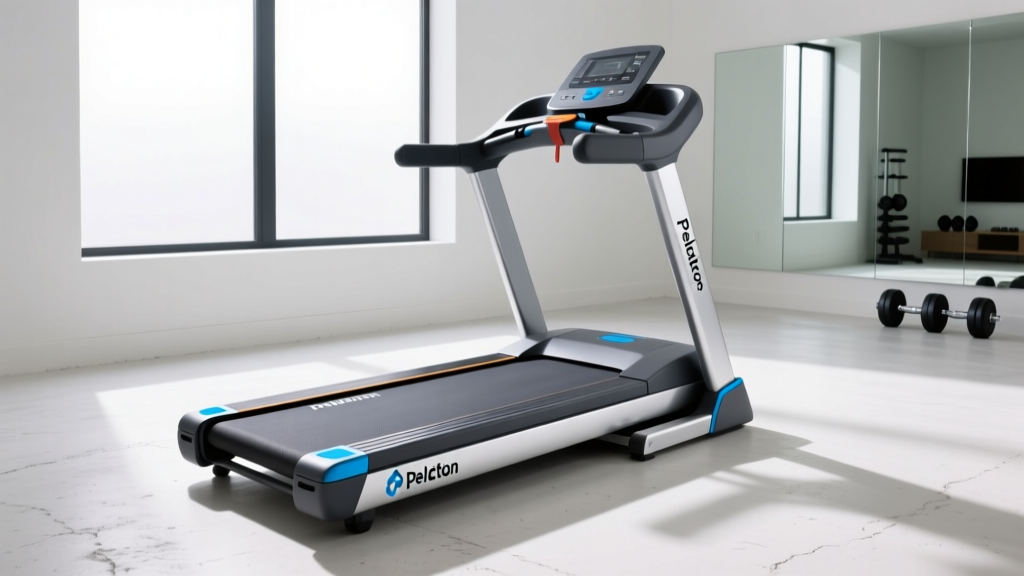
The Bowflex T6 treadmill represents the brand's pivot toward compact, urban-friendly fitness equipment. Unlike the massive commercial decks of the early 2010s, the T6 is engineered for folding convenience without entirely sacrificing motor integrity.
Core Specifications & Engineering
- Motor: 3.0 CHP (Continuous Horsepower) — sufficient for sustained jogging but will experience thermal throttling if subjected to continuous 12 MPH sprinting by users over 200 lbs.
- Running Surface: 20' x 55' belt. This is a critical edge case: while 55 inches is adequate for walking and light jogging, users taller than 6'1' will experience stride-clipping at speeds above 8 MPH.
- Incline & Speed: 0-12% motorized incline and a 12 MPH top speed.
- Footprint: 70' L x 30' W (deployed), folding down to a 45' vertical storage profile.
- Pricing: Typically retails between $699 and $799, positioning it as a mid-tier entry point.
Contender Profile: The Home Stair Climber Market
Unlike treadmills, 'stair climbers' for home use are not a monolith. To provide an accurate comparison against the Bowflex T6, we must split the stair climber category into the two most common home configurations: the premium magnetic hybrid and the budget mechanical step-mill.
The Premium Hybrid: Bowflex Max Trainer M9
The Max Trainer series combines the motion of an elliptical with the vertical resistance of a stair climber. The M9 utilizes a magnetic resistance system, making it virtually silent. It features 20 resistance levels and a connected JRNY ecosystem. However, the pedal stroke is shorter than a true step-mill, meaning it relies on resistance rather than gravity to induce muscle failure. Retail: ~$2,299.
The Budget True-Step: Sunny Health & Fitness SF-S9002
For those seeking the authentic 'stairmaster' experience at home, the SF-S9002 utilizes a physical chain-drive and piston-resistance system. It forces the user to lift their actual body weight against gravity with every step. It is mechanically rugged but acoustically loud. Retail: ~$350 - $400.
Head-to-Head Specification Matrix
| Feature | Bowflex T6 Treadmill | Magnetic Hybrid (Max M9) | Chain-Drive Climber (Sunny) |
|---|---|---|---|
| Acoustic Output | 65-75 dB (Footstrike impact) | 45-50 dB (Magnetic whir) | 70-80 dB (Chain rattle) |
| Ceiling Clearance Req. | User Height + 14 inches | User Height + 15 inches | User Height + 18 inches |
| Primary Muscle Focus | Calves, Hamstrings, Core | Glutes, Quads, Shoulders | Glutes, Quads, Calves |
| Maintenance Interval | Belt lube every 150 miles | Dust removal (Monthly) | Chain grease every 100 hrs |
| Average Cost (2026) | $699 - $799 | $2,299 | $350 - $400 |
Biomechanics, Caloric Burn, and Joint Health
When evaluating a stair climber machine for home use against a standard treadmill, the caloric and joint-impact differences are stark. According to data published by Harvard Health Publishing, a 155-pound individual utilizing a stair-treadmill or step-mill will burn approximately 216 calories in 30 minutes, compared to roughly 133 calories walking at a brisk 3.5 MPH pace on a flat treadmill.
"While stair climbing yields a higher metabolic equivalent of task (MET) due to the vertical displacement of body mass, treadmills offer superior impact-loading benefits for maintaining bone mineral density, provided the user is free from acute patellofemoral pain syndrome."
However, the American Heart Association recommends 150 minutes of moderate-intensity aerobic activity per week. The Bowflex T6 treadmill excels at sustaining this moderate 'Zone 2' heart rate zone without the rapid localized muscle fatigue (lactic acid buildup in the quads) that often forces stair climber users to terminate their workouts prematurely.
Space, Noise, and the 'Ceiling Math' Reality
The most frequent failure in home cardio equipment purchasing is ignoring spatial geometry. Here is the exact math you must perform before buying:
The Treadmill Incline Factor
The Bowflex T6 treadmill deck sits roughly 8 inches off the floor. When elevated to its maximum 12% incline, the front cowl rises an additional 6 inches. Therefore, to avoid head-strikes or ceiling fan collisions, your room must have a ceiling height of at least User Height + 14 inches.
The Stair Climber Vertical Factor
True stair climbers like the Sunny SF-S9002 require the user to step up to 15 inches above the base platform at the peak of the stride. Furthermore, users naturally bob their heads upward while climbing. You must allocate User Height + 18 inches of vertical clearance. If you are 6'0' and have standard 8-foot (96-inch) ceilings, a true stair climber will result in immediate head trauma. In this scenario, the Bowflex T6 or a low-profile magnetic hybrid is the only viable option.
Maintenance and Failure Modes: What Breaks First?
Every cardio machine has a specific point of mechanical failure. Understanding these edge cases will save you hundreds in repair costs.
- Bowflex T6 Treadmill: The primary failure mode is belt-to-deck friction. If users neglect to apply 100% silicone lubricant under the belt every 150 miles, the static friction will draw excess amperage, eventually frying the motor control board (a $250+ replacement part).
- Chain-Drive Stair Climbers: The pivot bearings on the pedal arms and the main drive chain are subject to immense sheer force. Failure to wipe down sweat (which is highly corrosive) and re-grease the chain every 100 hours results in a grinding noise and eventual chain-snap.
- Magnetic Hybrids: Because they lack physical friction brakes, the main failure point is usually the console electronics or the reed sensor (which counts RPMs) getting knocked out of alignment by aggressive mounting/dismounting.
Final Verdict: Matching the Machine to Your Goals
The decision between the Bowflex T6 treadmill and a home stair climber ultimately hinges on your physiological targets and architectural constraints.
Buy the Bowflex T6 Treadmill if: You are a runner or walker looking to maintain your gait mechanics indoors, you live in an apartment where impact noise must be managed with a mat, or your ceiling clearance is strictly limited to standard 8-foot heights. It remains one of the most reliable sub-$800 smart decks on the market.
Buy a Stair Climber if: Your primary goal is lower-body muscular endurance, you want to maximize caloric burn in sub-20-minute HIIT windows, and you have a dedicated basement or garage gym with 9-foot ceilings to accommodate the vertical stride.
More gear to consider
All reviews
Rowing Machine Buying Guide: Technique & ProForm 505 CST Manual Fixes

NordicTrack Commercial 1250 Treadmill vs. Walking Pads: Common Mistakes

Treadmill Motor Guide: Picking the Right CHP for Free Treadmill Apps
Arm Treadmill vs Stationary Bike Types: 2026 Trends

Head-to-Head: Best Treadmill Buttons & Consoles (2026)