Bike vs Treadmill: Step-by-Step Feature Buying Guide
Undecided on bike vs treadmill? Follow our step-by-step beginner's guide to comparing features, motor sizes, and belt dimensions for your first treadmill.

The Great Cardio Dilemma: Bike vs Treadmill for Beginners
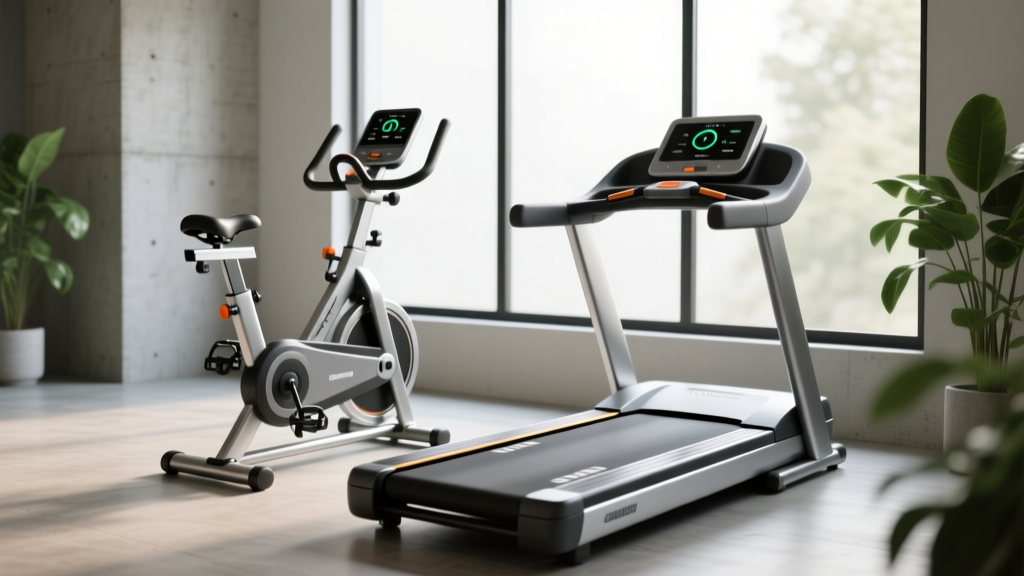
Stepping into the world of home fitness often begins with a single, paralyzing question: bike vs treadmill? Which machine actually deserves the premium floor space in your home? While stationary bikes offer fantastic low-impact cardiovascular conditioning, treadmills remain the undisputed kings of functional, weight-bearing exercise. According to the American Heart Association, engaging in weight-bearing aerobic activities like walking or running on a treadmill is crucial for maintaining bone density and joint health as we age—benefits that seated cycling simply cannot replicate.
If you have weighed the biomechanics and decided that a treadmill is the right path for your fitness journey, the next hurdle is navigating the overwhelming sea of specifications. This step-by-step beginner’s guide will decode treadmill features, helping you avoid expensive mistakes and find a machine that matches your exact stride, budget, and living space in 2026.
Step 1: Compare the Biomechanics and Space Footprint
Before diving into motor sizes, let's solidify why you are choosing a treadmill over a bike, and what spatial commitments you are making. Bikes generally have a smaller footprint, but modern folding treadmills have largely closed this gap.
| Feature | Stationary Bike | Treadmill |
|---|---|---|
| Joint Impact | Very Low (Seated, non-weight-bearing) | Moderate to High (Weight-bearing, requires cushioning) |
| Bone Density | Minimal improvement | High improvement (stimulates osteogenesis) |
| Average Footprint | 4 sq. ft. (Compact) | 12 to 16 sq. ft. (Requires ceiling clearance) |
| Entry-Level Cost | $300 - $600 | $500 - $900 |
Step 2: Sizing the Motor (Avoid the "Peak HP" Trap)
The most common failure point for beginner treadmill buyers is misunderstanding motor terminology. Manufacturers often advertise Peak Horsepower (HP), which is the maximum power the motor can hit for a few seconds before overheating. You must look exclusively for Continuous Horsepower (CHP), which measures the motor's ability to sustain power during a 45-minute workout.
CHP Guidelines by Activity Level:
- Walking Only (Under 4 MPH): 2.0 to 2.5 CHP is sufficient. (e.g., Horizon Fitness T202 at $799).
- Jogging / Light Running (4 - 6 MPH): 2.75 to 3.0 CHP is mandatory to prevent belt lag.
- Serious Running (7+ MPH or Sprints): 3.5 to 4.0+ CHP. (e.g., Sole F80 2026 Edition at $999).
Buying a 2.0 HP peak motor treadmill for running is a guaranteed path to equipment failure. Within 3 to 6 months, the DC motor's internal brushes will wear out from sustained friction, leading to a burnt-out control board. If you plan to run, never settle for less than 3.0 CHP.
Step 3: Belt Dimensions and Deck Cushioning
Unlike a bike where your feet are clipped into pedals, a treadmill requires you to stay within a moving boundary. If the belt is too short, you will naturally shorten your stride, leading to hip flexor tightness and knee pain.
The Golden Rules of Belt Sizing:
- For Walking: A minimum of 20 inches wide by 55 inches long.
- For Running: A minimum of 22 inches wide by 60 inches long. Taller users (over 6'0") should look for 62-inch belts to accommodate longer strides safely.
Deck Cushioning Technologies
Running on asphalt generates ground reaction forces equal to 2.5 times your body weight. A quality treadmill deck absorbs this shock. Look for elastomer cushioning (rubber grommets placed under the deck) rather than cheap metal springs. For example, Sole's Cushion Flex Whisper Deck reduces joint impact by up to 40% compared to outdoor running, while NordicTrack's FlexSelect allows you to turn the cushioning off if you are training for a road marathon and want to simulate pavement hardness.
Step 4: Navigating Consoles and Hidden Subscription Traps
The modern treadmill market has shifted heavily toward connected fitness. When comparing features, you must calculate the Total Cost of Ownership, which includes mandatory software subscriptions.
- Basic LCD Consoles: Found on budget models (under $600). They track time, speed, distance, and heart rate via grip sensors. No Wi-Fi, no monthly fees. Perfect for beginners who just want to listen to their own podcasts and walk.
- Interactive Touchscreens: Found on mid-to-premium tiers ($1,000+). Brands like NordicTrack (iFIT) and Bowflex (JRNY) offer stunning 22-inch HD screens with global route mapping and live trainers. However, these machines often lock manual mode behind a paywall after a 30-day trial, costing $39 to $49 per month.
Pro Tip: If you want a premium feel without the subscription trap, look for models with robust Bluetooth FTMS (Fitness Machine Service) protocols. This allows you to connect the treadmill to third-party apps like Zwift or Kinomap using your own tablet, bypassing the manufacturer's proprietary paywalls.
Step 5: Evaluating Folding Mechanisms and Weight Limits
Space is a premium, and folding treadmills are a staple of home gyms. However, not all folding mechanisms are created equal.
Hydraulic Soft-Drop vs. Manual Kickstands
Cheap treadmills use a manual kickstand release. When you unlock the deck, gravity takes over, and the heavy running surface slams into the floor—a massive safety hazard for children and pets. Always look for a Hydraulic Soft-Drop System, which gently lowers the deck to the floor with a light nudge.
The Weight Capacity Rule of Thumb
Never buy a treadmill where your body weight is near the maximum listed capacity. The Centers for Disease Control and Prevention (CDC) emphasizes the importance of consistent, uninterrupted physical activity for long-term health. If you weigh 220 lbs and buy a treadmill with a 250 lb limit, the motor and belt will operate at maximum stress, leading to premature delamination of the belt and motor strain. Always add a 50 lb buffer to your body weight when reading spec sheets.
Walking Pads vs. Traditional TreadmillsIn 2026, ultra-slim "walking pads" (under-desk treadmills) are incredibly popular. While excellent for getting steps in while working, they lack handrails, incline motors, and shock absorption. They should be viewed as a supplement to a healthy lifestyle, not a replacement for a traditional treadmill if your goal is dedicated cardiovascular training or running.
Final Beginner Checklist for Treadmill Shopping
Before you click "Add to Cart," run your chosen model through this final checklist to ensure it meets the gold standard for beginner safety and longevity:
- Motor: Is it rated in CHP (Continuous) and not just HP? Is it at least 2.5 CHP for walking or 3.0 CHP for running?
- Belt Size: Is it at least 20" x 55" (walking) or 22" x 60" (running)?
- Weight Capacity: Is the max user weight at least 50 lbs more than your current body weight?
- Safety Features: Does it include a magnetic safety key that instantly stops the belt if you fall?
- Warranty: Does the manufacturer offer at least a Lifetime warranty on the frame and motor, and 1 to 3 years on parts and labor?
Choosing between a bike vs treadmill ultimately comes down to your joint health, space, and fitness goals. But if the treadmill wins your vote, prioritizing continuous motor power, adequate belt length, and structural weight limits will ensure your new machine survives the transition from a shiny new purchase to a trusted, daily pillar of your health routine.
More gear to consider
All reviews
Calculate Treadmill Speed to Test Belt Slip: Expert Lube Reviews

Cardio Machine Noise: Treadmill Heels Impact & Troubleshooting

Nautilus T618 Treadmill Review: Small Space Folding Trends 2026

FTMS Treadmill Walking Pad Review: Fix Connectivity Mistakes

Does Holding the Treadmill Burn Less Calories? Top Models Compared