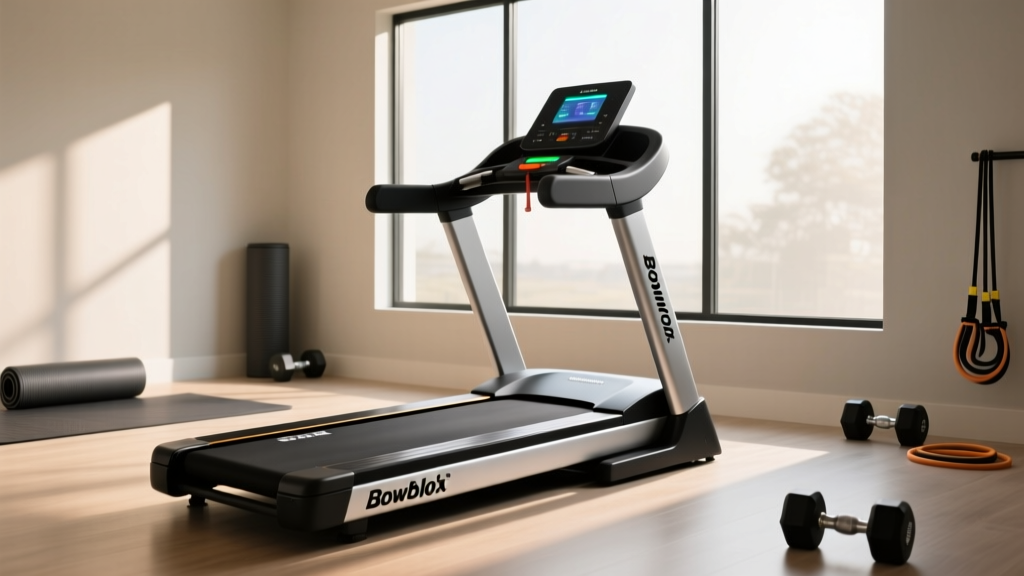
Stationary Bike Types vs. NordicTrack Treadmill Weight Limit
Compare stationary bike types against the NordicTrack treadmill weight limit. Discover budget breakdowns, value analysis, and high-capacity cardio picks.

The Cross-Shopping Dilemma: Treadmills vs. Bikes for Heavier Users
When outfitting a home gym on a strict budget, structural integrity and weight capacity are just as critical as the initial purchase price. Many multi-user households and heavier individuals begin their equipment search by investigating the NordicTrack treadmill weight limit, assuming that a premium running machine is the only path to serious cardiovascular health. However, as of 2026, the fitness equipment market has evolved, and cross-shopping stationary bike types—specifically upright, recumbent, and spin bikes—reveals massive value discrepancies, lower maintenance costs, and often superior weight capacities for the price.
This comprehensive budget breakdown analyzes the true cost of ownership, weight limits, and failure modes of treadmills versus stationary bikes, helping you maximize your cardio investment without compromising on safety or durability.
💡 The 2026 Subscription Shift: Unlike previous years where hardware was heavily discounted in exchange for mandatory app lock-ins, today's savvy buyers are prioritizing 'dumb' or open-ecosystem bikes to avoid $39-$45/month subscription fees, drastically altering the 5-year total cost of ownership (TCO).Deconstructing the NordicTrack Treadmill Weight Limit & Costs
NordicTrack remains a titan in the cardio space, but their weight limits are strictly tiered by price point. Understanding these tiers is crucial for budget analysis:
- Entry-Level (T Series 6.5Si): Priced around $599, this model features a 300 lbs weight limit. While budget-friendly, users nearing this limit often report deck flexing and premature belt wear.
- Mid-Tier (Commercial 1750): At $1,799, the weight limit increases to 350 lbs. It boasts a 3.5 CHP motor, but continuous running at max capacity can lead to motor control board overheating in poorly ventilated rooms.
- Flagship (Commercial X22i Incline): Costing $2,999 with a 350 lbs limit. The extreme 40% incline puts immense torque on the lift motor when used by heavier individuals, a known failure point outside of warranty.
The Budget Reality: To safely accommodate a 325 lb user on a treadmill without risking deck delamination or motor burnout, you are forced into the $1,800+ tier. Furthermore, treadmills require ongoing maintenance: belt replacements ($150-$250), deck lubrication, and higher electricity draw. According to the American Heart Association, achieving optimal cardiovascular health requires 150 minutes of moderate-intensity aerobic activity weekly—a tall order if your machine is sidelined for motor repairs.
Stationary Bike Types: A High-Capacity, High-Value Alternative
When we pivot to stationary bike types (upright, recumbent, spin), the budget-to-weight-capacity ratio improves dramatically. Bikes eliminate the high-impact strike forces of running, which the Mayo Clinic notes is highly beneficial for preserving joint cartilage and reducing lower-back shear forces in heavier users.
1. Recumbent Bikes: The High-Capacity Budget Kings
Recumbent bikes feature a bucket seat and extended pedals, distributing the user's weight across a larger surface area rather than concentrating it on a small saddle or a treadmill deck.
- Exerpeutic Gold 525XLR: At just $229, this folding recumbent boasts a staggering 400 lbs weight limit. It is the undisputed king of budget capacity. The trade-off? It lacks advanced digital integration and uses a basic tension strap that may need replacing every 2-3 years.
- Sole Fitness R92: Priced at $1,099 with a 300 lbs limit. While the capacity is lower than the Exerpeutic, the R92 offers a 40 lb heavy-duty flywheel and commercial-grade ball bearings in the pedal cranks, eliminating the squeaking and wobbling common in budget models.
2. Spin Bikes (Indoor Cycles): Durability and High-Intensity ROI
Spin bikes mimic road cycling geometry and are built for high-torque, out-of-the-saddle sprints. Because they lack complex incline motors or folding hinges, their structural integrity is exceptionally high.
- Schwinn IC4: Retailing for $799 with a 330 lbs weight limit. The IC4 uses magnetic resistance and a belt drive, meaning there are zero friction pads to replace. It also features open Bluetooth connectivity, allowing you to use third-party apps like Zwift or Rouvy without being locked into a proprietary ecosystem.
- Keiser M3i: The premium standard at $1,595 (350 lbs limit). Its rear-mounted, V-shaped aluminum frame is virtually indestructible. The failure rate on Keiser magnetic resistance units is near zero, making it a lifetime investment.
3. Upright Bikes: The Middle Ground
Upright bikes mimic traditional bicycles but with a wider, more comfortable seat and a compact footprint.
- ProForm Studio Bike Pro: At $999 (350 lbs limit). While it offers a solid weight capacity and a 10-inch pivoting touchscreen, the mandatory iFIT integration makes it a poor choice for budget-conscious buyers who resent recurring monthly fees. If the subscription lapses, the bike's resistance features are severely limited.
Head-to-Head Value Matrix (2026 Market Data)
To truly understand the value proposition, we must look at the 'Cost Per Pound of Capacity' and the 5-year maintenance forecast.
| Equipment Type | Example Model | 2026 Price | Weight Limit | Cost / lb Capacity | Primary Failure Mode |
|---|---|---|---|---|---|
| Entry Treadmill | NordicTrack T Series 6.5Si | $599 | 300 lbs | $1.99 | Deck flex & belt slip |
| Premium Treadmill | NordicTrack Commercial 1750 | $1,799 | 350 lbs | $5.14 | Motor control board heat |
| Budget Recumbent | Exerpeutic Gold 525XLR | $229 | 400 lbs | $0.57 | Tension strap wear |
| Mid-Tier Spin | Schwinn IC4 | $799 | 330 lbs | $2.42 | Pedal crank threading |
| Premium Spin | Keiser M3i | $1,595 | 350 lbs | $4.55 | Sweat corrosion (if uncleaned) |
Hidden Costs: Subscriptions, Maintenance, and Biomechanics
When calculating your budget breakdown, the sticker price is only the beginning. Here is where stationary bike types outshine treadmills in long-term value:
The Subscription Tax
NordicTrack heavily subsidizes its hardware costs by requiring an iFIT subscription (currently $39/month or $468/year) to unlock automatic trainer-controlled resistance and incline. Over five years, a $1,799 Commercial 1750 actually costs $4,139. Conversely, a $799 Schwinn IC4 spin bike allows manual resistance adjustments and open Bluetooth for a one-time hardware cost, saving you over $3,000 in the same timeframe.
Maintenance and Edge Cases
Treadmills are high-impact, high-friction machines. A 300 lb user running at 6.0 mph generates thousands of pounds of cumulative strike force per workout. This leads to:
- Deck Delamination: The wooden deck beneath the belt splinters, requiring a $200 replacement.
- Roller Bearing Failure: The front and rear rollers seize under heavy, sustained loads.
Stationary bikes, particularly those with magnetic resistance and belt drives (like the Schwinn IC4 or Keiser M3i), are virtually maintenance-free. The only moving parts are the bottom bracket bearings and the pedal threads. According to calorie expenditure data from Harvard Health Publishing, vigorous stationary cycling burns a comparable amount of calories to running at a 6 mph pace, but with a fraction of the mechanical wear and tear on both the machine and the user's knees.
Expert Insight: If your primary goal is high caloric expenditure and cardiovascular conditioning, but you are constrained by a strict budget and require a weight capacity over 325 lbs, a heavy-duty recumbent or a mid-tier magnetic spin bike will always offer a superior return on investment compared to an entry-level treadmill.
Final Verdict: Maximizing Your Cardio Budget
If you are strictly a runner and must have a treadmill, respect the NordicTrack treadmill weight limit by leaving a 15% safety margin (e.g., a 300 lb user should buy a 350 lb capacity machine like the Commercial 1750) and factor in the mandatory $468 annual subscription cost.
However, if your goal is general cardiovascular health, weight management, and joint preservation, pivoting to stationary bike types is the smarter financial move. The Exerpeutic Gold 525XLR offers unbeatable high-capacity value for under $250, while the Schwinn IC4 provides the perfect blend of durability, open-ecosystem connectivity, and high-intensity interval training (HIIT) capabilities for under $800. By choosing the right bike type, you secure a higher weight limit, eliminate subscription fatigue, and drastically reduce your 5-year maintenance budget.
More gear to consider
All reviews
Elliptical vs Treadmill: Is a Treadmill 30 Minutes a Day Better?

Curved vs Motorized Treadmills: Calorie Burn Incline Treadmill Guide
ProForm 995 Treadmill Setup & Noise Level Comparison Guide

Under Desk Treadmill Review: Office Layouts & Reading on Treadmill
Best Treadmill That You Power: 2026 Walking Pad Review