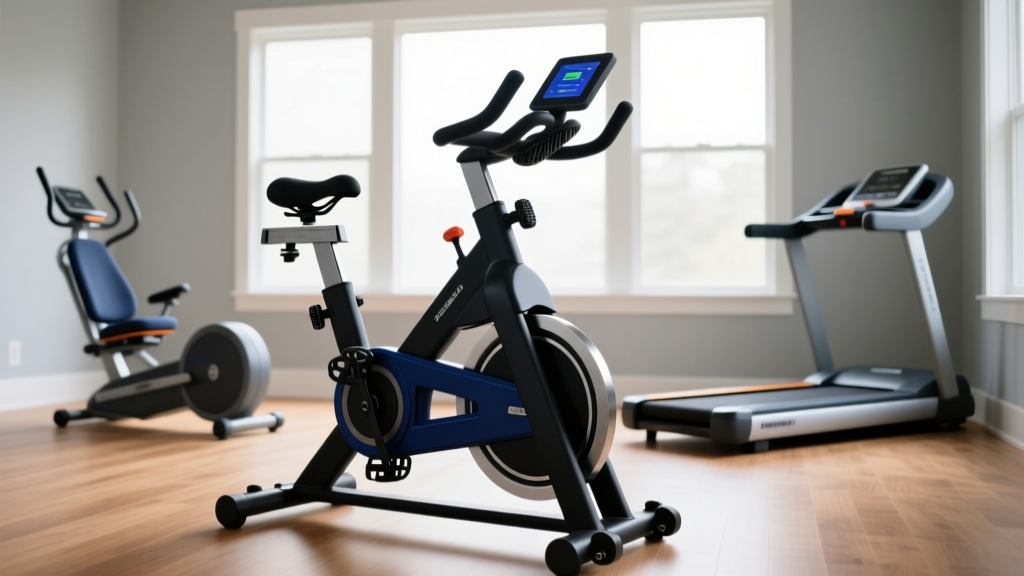
Treadmill Making Noise? Budget Guide to Quiet Stationary Bikes
Frustrated by a treadmill making noise? We break down the budget, hidden costs, and value of upright, recumbent, and spin bikes for a quiet home gym.

The Acoustic Problem: Why Your Treadmill Making Noise is a Dealbreaker
If you are reading this, you are likely dealing with the frustration of a treadmill making noise. Whether it is the high-pitched squeak of a misaligned running belt, the grinding of worn motor bearings, or the rhythmic thud of footstrikes transferring low-frequency vibrations through your floor joists, treadmill noise is a primary reason home gym enthusiasts abandon their equipment. According to acoustic testing in residential environments, a standard 3.0 CHP treadmill motor operates between 65 and 75 decibels (dB), while the impact of a 180-pound runner can generate transient spikes exceeding 85 dB. In multi-story homes or apartments, this structural impact noise is a dealbreaker.
Transitioning to stationary bikes offers a high-value, low-decibel alternative. The Centers for Disease Control and Prevention recommends at least 150 minutes of moderate-intensity aerobic activity weekly, a goal easily met on a bike without disturbing your household. However, not all stationary bikes are created equal. To help you reallocate your fitness budget, we have conducted a comprehensive value analysis of the three primary stationary bike types: upright, recumbent, and spin (indoor cycling). This guide breaks down upfront costs, mechanical longevity, and the hidden expenses that dictate true value in 2026.
Stationary Bike Types: Value & Noise Profile Matrix
Before diving into specific models, it is crucial to understand the baseline differences in acoustics, spatial footprint, and market pricing across the three main categories. The following matrix provides a snapshot of what to expect when shopping for a quiet cardio alternative.
| Bike Type | Avg. Noise Output | 2026 Price Range | Footprint | Primary Value Proposition |
|---|---|---|---|---|
| Upright | 40 - 50 dB | $400 - $1,200 | Compact (2x3 ft) | Traditional cardio, small space, budget-friendly |
| Recumbent | 45 - 55 dB | $800 - $2,800 | Large (3x5 ft) | Joint rehabilitation, lumbar support, comfort |
| Spin / Indoor | 40 - 65 dB | $600 - $2,500 | Medium (2x4 ft) | High-intensity intervals, athletic performance |
Upright Bikes: The Compact Cardio Workhorse
Upright bikes mimic the geometry of a traditional outdoor bicycle but feature a heavier flywheel and a fixed base. They are the most common entry point for home cardio due to their relatively low cost and compact footprint.
Top Value Pick & Pricing
The Schwinn 170 Upright (retailing around $599) remains a benchmark for budget value. It utilizes a poly-V belt drive and magnetic resistance, ensuring a near-silent 45 dB operation. For those willing to stretch the budget to $999, the Schwinn IC4 bridges the gap between a standard upright and a spin bike, offering dual-sided pedals (SPD and toe cages) and Bluetooth connectivity to third-party apps like Zwift and Peloton, bypassing the need for expensive proprietary subscriptions.
Mechanical Edge Cases & Maintenance
When evaluating upright bikes, pay close attention to the resistance mechanism. Budget models under $300 often use manual tension knobs with physical brake pads that degrade and require replacement. Mid-tier and premium models use electromagnetic resistance, where a servo motor adjusts the proximity of magnets to the flywheel. This eliminates physical friction, meaning zero wear-and-tear on the resistance components. The only mechanical failure point to monitor is the belt tension; if the belt stretches beyond a 5mm deflection under moderate thumb pressure, it will slip and require a $25 replacement belt and a 10mm socket wrench for recalibration.
Recumbent Bikes: Ergonomic Value for Joint Health
Recumbent bikes feature a bucket seat with a backrest and a forward pedal position. This design shifts the user's weight off the sit bones and lumbar spine, making it the premier choice for seniors, individuals recovering from lower-body injuries, or those with chronic back pain. The World Health Organization emphasizes the importance of accessible, low-impact physical activity for aging populations, a niche where recumbent bikes excel.
Top Value Pick & Pricing
Recumbent bikes require more steel and larger shipping footprints, pushing their baseline price higher. The Sunny Health SF-RBE4201 offers a no-frills, magnetic recumbent experience for roughly $350, but its 5-pound flywheel limits high-resistance training. For true long-term value, the NordicTrack Commercial VR25 ($1,199) provides a 26-pound flywheel, a motorized step-through design, and an auto-adjusting seat rail. While the upfront cost is steep, the VR25's build quality prevents the seat-rail wobble that plagues cheaper models after 12 months of use.
Biomechanical Benefits vs. Spatial Cost
The primary trade-off with recumbent bikes is spatial. You must dedicate a 3x5 foot area, and the elongated frame makes them difficult to move without transport wheels. However, the value proposition lies in injury prevention. By maintaining a 10-to-15-degree recline, the sheer force on the patellofemoral joint is reduced by up to 30% compared to upright cycling. If physical therapy costs average $150 per session, preventing a single knee flare-up effectively pays for the premium price of a high-end recumbent bike.
Spin Bikes: High-Performance Indoor Cycling
Spin bikes (or indoor cycling bikes) are designed for aggressive, out-of-the-saddle riding and high-cadence interval training. They feature a heavy flywheel (often 30 to 50 lbs) and a geometry that allows for steep saddle-to-handlebar drops.
Top Value Pick & Pricing
The indoor cycling market is heavily bifurcated. On the budget end, the Sunny Health SF-B1805 ($450) offers a heavy 44-pound flywheel but relies on a friction felt pad for resistance. On the premium end, the Keiser M3i ($2,395) is the gold standard. It uses a rear-mounted, 8-pound aluminum flywheel driven by a poly-V belt and eddy current magnetic resistance. While the Keiser's upfront cost is massive, its mechanical value is unparalleled: there are no friction pads to replace, no heavy flywheel to strain your back when moving, and it operates at a whisper-quiet 40 dB.
Drivetrain & Resistance Tech: The Hidden Noise Factor
If your goal is to escape a treadmill making noise, you must avoid chain-drive spin bikes. Chain drives require regular lubrication and generate a metallic hum that amplifies at high cadences. Always opt for a Gates Carbon Drive or a reinforced poly-V belt. Furthermore, avoid friction-resistance models if acoustic isolation is your priority. The physical scraping of a felt pad against a steel flywheel generates a distinct 55-60 dB swishing sound that can be irritating during long endurance rides.
Expert Callout: Belt vs. Chain Drive
Always check the drivetrain specification before purchasing. Chain drives mimic outdoor bikes but require monthly degreasing and tensioning. Belt drives are virtually maintenance-free and absorb high-frequency vibrations, making them the mandatory choice for shared living spaces and apartment home gyms.
The 3-Year Total Cost of Ownership (TCO) Breakdown
When conducting a budget breakdown, the sticker price is only the beginning. The modern fitness equipment market relies heavily on connected screens and mandatory software subscriptions. Here is a realistic 3-year TCO analysis comparing a budget upright, a premium recumbent, and a connected spin bike.
- Budget Upright (Schwinn 170): $599 (Hardware) + $0 (No mandatory sub, uses free apps) + $25 (One belt replacement) = $624 over 3 years.
- Premium Recumbent (NordicTrack VR25): $1,199 (Hardware) + $1,404 (iFIT Family Plan at $39/mo for 36 months) = $2,603 over 3 years.
- Connected Spin (Peloton Bike+): $2,495 (Hardware) + $1,584 (All-Access Membership at $44/mo for 36 months) + $150 (Delta cleat replacements) = $4,229 over 3 years.
As demonstrated by the Consumer Reports Exercise Equipment Buying Guide, proprietary ecosystems drastically inflate the long-term cost of home fitness. If your budget is strict, prioritize 'hardware-first' bikes that allow you to mount your own tablet and subscribe to third-party services like Kinomap or Zwift ($19.99/mo), or simply ride while watching standard streaming services.
Final Verdict: Which Bike Offers the Best Value in 2026?
If you are replacing a treadmill making noise because of acoustic complaints or neighbor disputes, the upright bike with electromagnetic resistance (like the Schwinn IC4) offers the highest immediate value. It eliminates impact noise, bypasses expensive proprietary subscriptions, and fits into tight corners.
However, if your budget allows for a higher ceiling and your primary goal is joint longevity and daily comfort, the recumbent bike provides unmatched ergonomic value, turning grueling cardio into a sustainable, pain-free daily habit. For the competitive athlete who misses the intensity of a treadmill sprint, a belt-driven spin bike with magnetic resistance is the only logical choice, provided you are willing to absorb the higher upfront hardware costs. Ultimately, by shifting your budget from a noisy, high-maintenance treadmill to a precision-engineered stationary bike, you are investing in both your cardiovascular health and your household's peace and quiet.
More gear to consider
All reviews
Hitting a 7.2 Treadmill Pace on Compact Portable Cardio Gear

Elliptical vs Treadmill: 2026 Market Trends & Sole Treadmills Reviews

Sole F80 Treadmill vs Walking Pads: Beginner Setup Guide
Treadmill Distance Accuracy vs Garmin Watch: Walking Pad Mistakes

Compact Portable Cardio & How to Use Curved Treadmill Models: 2026
