Stationary Bike Types vs 13 3 30 Treadmill: Space Guide
Compare upright, recumbent, and spin bike footprints against the 13 3 30 treadmill trend to optimize your 2026 home gym layout and maximize space.

The 2026 Home Gym Dilemma: Footprint vs. Function
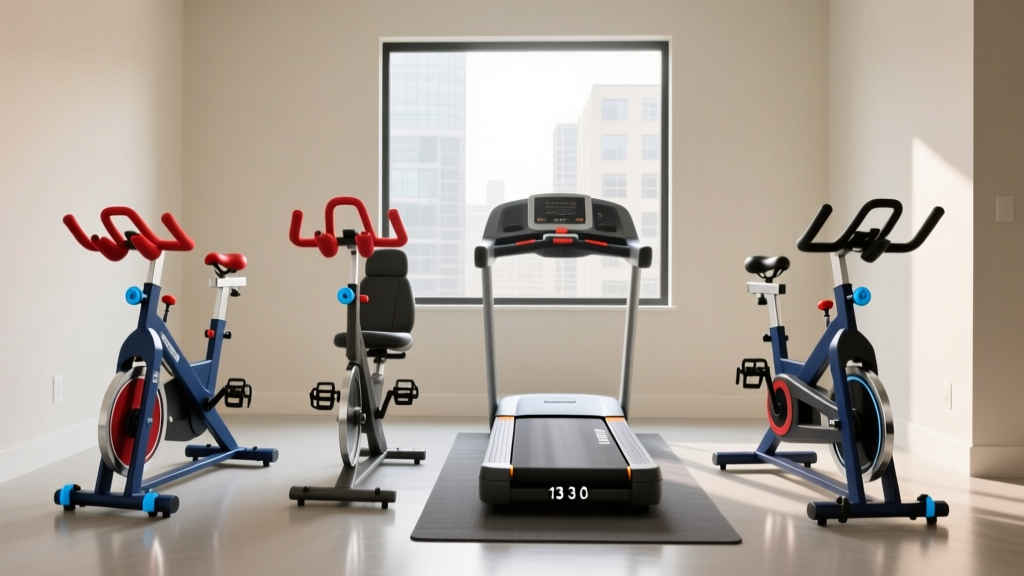
As home fitness spaces evolve in 2026, the battle for square footage has become the primary constraint for cardio enthusiasts. Whether you are converting a 10x10 spare bedroom or carving out a corner in a finished basement, selecting the right cardio anchor requires a ruthless evaluation of spatial geometry. The recent surge in high-incline walking protocols has brought the 13 3 30 treadmill workout to the forefront of fitness trends, demanding heavy, expansive machinery. Conversely, the stationary bike market offers diverse alternatives—specifically upright, recumbent, and spin models—that promise rigorous cardiovascular conditioning with vastly different spatial footprints. This guide deconstructs the layout requirements of these machines, providing exact dimensions, clearance metrics, and architectural considerations to help you design a highly optimized home gym.
Deconstructing the 13 3 30 Treadmill Space Requirement
The viral 12-3-30 walking trend has matured into the more aggressive 13 3 30 treadmill protocol (13% incline, 3 mph, 30 minutes). Executing this specific routine safely and effectively requires a treadmill with a high-torque motor and a reinforced incline mechanism. Budget folding models simply cannot sustain a 13% grade at continuous use without overheating the drive belt or warping the deck.
To support this workout, you need a premium machine like the Sole F85 or the NordicTrack Commercial 1750. These units boast 4.0 CHP motors and heavy-gauge steel frames. However, their spatial demands are immense:
- Machine Footprint: Approximately 80 inches long by 38 inches wide.
- Vertical Clearance: The deck sits 8 to 10 inches off the ground. Add the user's height, and you require a minimum ceiling height of 8.5 feet to prevent head strikes during high-incline walking.
- Safety Clearance: According to industry safety standards, you must maintain 24 inches of lateral clearance on both sides and a minimum of 48 inches of rear clearance to prevent severe friction burns in the event of a fall.
In total, dedicating a zone for a 13 3 30 treadmill protocol consumes roughly 80 inches by 86 inches (about 48 square feet) of unusable floor space, making it a massive commitment for smaller rooms.
Stationary Bike Types: Upright, Recumbent, and Spin
If your room cannot accommodate the sprawling footprint and vertical demands of a high-incline treadmill, stationary bikes offer compelling alternatives. However, not all bikes are created equal regarding space optimization. Let us break down the three primary stationary bike types.
Spin Bikes: The Compact Powerhouses
Spin bikes, such as the Schwinn IC4 or Bowflex C6, are the undisputed champions of space efficiency. Designed to mimic the aggressive geometry of outdoor road bikes, they feature a compact, triangular frame footprint.
- Dimensions: Typically 48 inches long by 21 inches wide.
- Spatial Advantage: They require zero rear safety clearance because the user is clipped in or resting on a stationary saddle; there is no risk of being ejected backward onto a moving belt.
- Layout Tip: Spin bikes can be tucked into corners or placed directly facing a window, requiring only 12 inches of side clearance for handlebar width and mounting/dismounting.
Upright Bikes: The Ergonomic Middle Ground
Upright bikes like the Nautilus U618 offer a more relaxed, seated posture with a wider, padded saddle and a larger console. They are ideal for users who want moderate-intensity steady-state (MISS) cardio without the aggressive forward lean of a spin bike.
- Dimensions: Generally 43 inches long by 20 inches wide.
- Spatial Advantage: While slightly shorter than spin bikes, the wider seat and extended handlebars mean they still require about 15 inches of lateral clearance.
- Edge Case: The step-through design of many modern uprights makes them easier to mount in tight spaces, but the larger plastic shrouds can make them feel visually bulky in a minimalist room.
Recumbent Bikes: The Space-Consuming Rehab Anchors
Recumbent bikes, such as the Nautilus R618, feature a bucket seat with a backrest and forward-mounted pedals. They are medically recommended for users with lumbar spine issues, sciatica, or those undergoing cardiac rehabilitation.
- Dimensions: A sprawling 65 inches long by 28 inches wide.
- Spatial Disadvantage: They consume nearly as much floor length as a treadmill. Furthermore, their 90-to-100-pound weight and low center of gravity make them difficult to move for cleaning or room reconfiguration.
- Layout Tip: Never place a recumbent bike in the center of a room. Anchor it against a load-bearing wall to manage its visual weight and prevent floor joist deflection in second-story rooms.
Comparative Footprint and Clearance Matrix
To visualize the spatial trade-offs, refer to the 2026 layout matrix below. This data assumes standard safety clearances as recommended by fitness facility guidelines.
| Machine Type | Model Example | Base Footprint (L x W) | Total Zone Required | Ceiling Min. |
|---|---|---|---|---|
| 13 3 30 Treadmill | Sole F85 | 80" x 38" | 80" x 86" (48 sq ft) | 8.5 Feet |
| Spin Bike | Schwinn IC4 | 48" x 21" | 60" x 45" (19 sq ft) | 7.0 Feet |
| Upright Bike | Nautilus U618 | 43" x 20" | 55" x 44" (17 sq ft) | 7.0 Feet |
| Recumbent Bike | Nautilus R618 | 65" x 28" | 75" x 52" (27 sq ft) | 7.0 Feet |
Architectural Layout: Flooring, HVAC, and Traffic Flow
Space optimization extends beyond mere square footage; it encompasses the environmental systems of your room. When designing your layout, you must account for impact loads, thermal output, and traffic flow.
Expert Insight: A 13 3 30 treadmill workout generates immense repetitive impact force. If placed on a second-floor room with standard 3/4-inch plywood subflooring, the vibration will transfer to the rooms below. Always use a 3/8-inch thick vulcanized rubber mat (minimum 80 sq ft) to distribute the point-load and dampen acoustic vibration. Bikes, conversely, exert static weight and require only a thin PVC equipment mat to protect hardwood finishes.
HVAC and Thermal Management:
Treadmills generate significant heat, both from the user's body and the friction of the 4.0 CHP motor. According to the CDC physical activity guidelines, maintaining a safe core temperature during vigorous indoor exercise is critical. A treadmill zone requires dedicated airflow; position it near a ceiling fan or an HVAC supply vent. Spin bikes generate less ambient heat, allowing them to be placed in stagnant corners or enclosed alcoves without risking heat exhaustion.
Traffic Flow and Door Swings:
A common layout failure is placing a recumbent bike or treadmill in the swing path of a door. Map out a 36-inch primary walking lane through your gym space. If your room is 10x12, place the treadmill on the longest solid wall, and use the spin bike as a secondary anchor in the opposite corner, leaving the center of the room open for yoga mats or kettlebell work.
Final Verdict: Choosing Your Primary Cardio Anchor
If your primary fitness goal is mastering the 13 3 30 treadmill protocol and you possess a dedicated room with 8.5-foot ceilings and at least 50 square feet of unbroken floor space, the investment in a heavy-duty incline treadmill is unmatched for posterior chain development and low-impact fat oxidation.
However, if you are optimizing a multi-use space, a guest room, or an apartment with strict noise and vibration constraints, stationary bike types offer superior spatial efficiency. A high-quality spin bike delivers comparable cardiovascular benefits, requires less than half the square footage, eliminates the need for rear safety clearances, and allows for aggressive interval training without the structural and spatial penalties of a motorized treadmill deck. Measure your space, respect the clearance zones, and choose the machine that serves both your physiology and your floor plan.
More gear to consider
All reviews
Elliptical vs Treadmill: Is Walking on a Treadmill Good for You?
Dizzy After Treadmill? 2026 Compact Portable Cardio Market Trends

Rowing Machine Guide: Technique & Universal Remote for Treadmill Tech
Upgrading From ProForm Treadmill Older Models: Stair Climber Guide

Boots and Muscle Compared: How Footwear Design Impacts Driving Precision, Fatigue, and Vehicle Control
