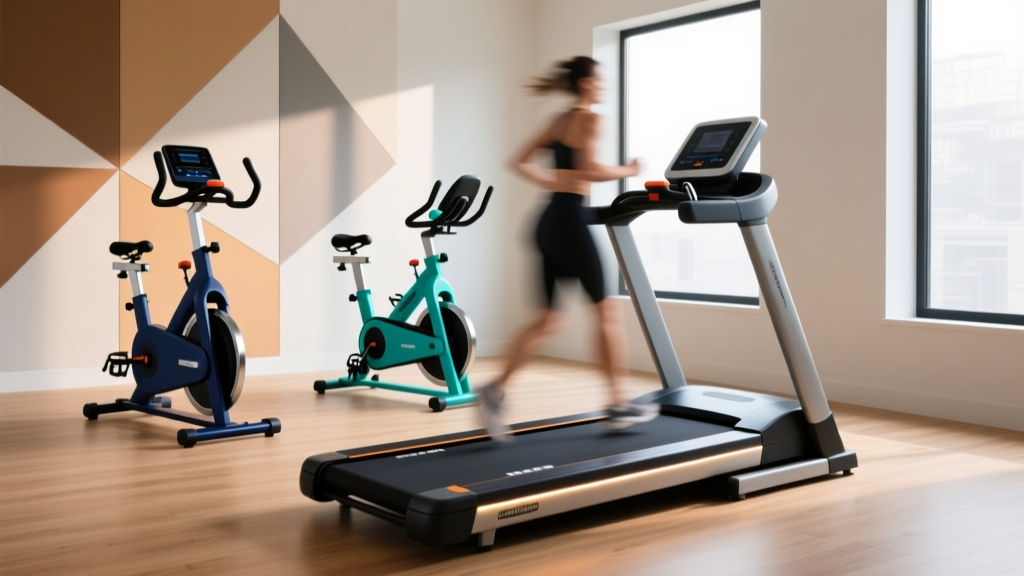
Bike Types vs Benefits of Inclined Treadmill Walking: Value Analysis
Compare upright, recumbent, and spin bikes against the benefits of inclined treadmill walking. Discover the best 2026 cardio budget breakdown and ROI.

The 2026 Cardio Dilemma: Pedaling vs. Incline Walking
Building a home gym in 2026 requires a ruthless evaluation of floor space, upfront capital, and long-term biomechanical value. When consumers begin researching cardiovascular equipment, the debate frequently narrows down to two distinct modalities: the varied stationary bike types (upright, recumbent, and spin) versus the rapidly surging popularity of incline walking. While cycling has long been the default for low-impact endurance training, the specific benefits of inclined treadmill walking have disrupted the market, offering high-yield glute activation and Zone 2 heart rate conditioning without the saddle discomfort associated with biking.
To determine which machine truly earns your hard-earned money, we must break down the exact pricing, mechanical failure modes, and physiological ROI of upright, recumbent, and spin bikes, and weigh them directly against the budget requirements for an incline-capable treadmill. This value analysis strips away marketing fluff to reveal the true cost-per-use of your daily cardio.
Stationary Bike Types: Upright, Recumbent, and Spin
Not all stationary bikes are created equal. The engineering differences between an upright, a recumbent, and a dedicated spin bike dictate everything from your Q-factor (pedal stance width) to the machine's overall lifespan. Here is how the three primary categories break down in the current market.
1. Upright Bikes: The Space-Saving Workhorse
Upright bikes mimic the geometry of a traditional road bike but utilize a heavier, stabilized base and magnetic resistance. The Schwinn IC4 (retailing around $799 in 2026) remains the benchmark for budget-conscious buyers. It features 100 micro-levels of silent magnetic resistance and a compact 48-by-21-inch footprint. Upright bikes are exceptional for users who want to engage their core and upper body stabilizers while cycling. However, the aggressive forward lean can cause lumbar fatigue during 60+ minute sessions, and the smaller seats often require aftermarket gel covers for riders over 200 lbs.
2. Recumbent Bikes: Joint-Friendly Comfort
Recumbent bikes place the rider in a reclined position with a full backrest, shifting the workload almost entirely to the quadriceps and hamstrings while eliminating lumbar strain. The Nautilus R618 ($1,199) offers 29 levels of eddy-current magnetic resistance and a ventilated lumbar mesh backrest. According to the American College of Sports Medicine (ACSM), recumbent cycling is highly recommended for individuals recovering from lower-extremity joint issues or those with compromised balance. The trade-off? A massive 65-by-28-inch footprint and a lower caloric expenditure per hour compared to upright cycling, as the core and upper body remain completely passive.
3. Spin Bikes: High-Intensity ROI
Indoor cycling (spin) bikes are engineered for high-cadence intervals and out-of-the-saddle sprints. The Keiser M3i ($2,295) is the premium standard, utilizing a rear-mounted 8 lb magnetic flywheel and an aluminum V-shaped frame that resists sweat corrosion. Spin bikes offer the highest cardiovascular ceiling, allowing for anaerobic threshold training that upright and recumbent bikes struggle to facilitate. However, the steep learning curve for proper bike fit and the high upfront cost make them a risky investment for casual users who may abandon the machine after a few months.
Weighing the Benefits of Inclined Treadmill Walking
While bikes dominate the low-impact conversation, the benefits of inclined treadmill walking have made it a premier alternative for fat oxidation and posterior chain development. Walking on a 12% to 15% grade at a brisk 3.0 to 3.5 MPH forces the glutes, hamstrings, and calves to work against gravity, significantly elevating the heart rate into Zone 2 (60-70% of max HR) without the joint-pounding impact of running.
Data from Harvard Health Publishing indicates that a 155-pound individual burns approximately 252 calories walking at a moderate pace on a flat surface. However, introducing a 15% incline can push that caloric expenditure past 400 calories per hour—rivaling moderate cycling while simultaneously improving bone density through weight-bearing stress, something cycling completely fails to provide.
For budget seekers, the Sunny Health & Fitness SF-T723016 ($389) offers a motorized 15% auto-incline, making the benefits of inclined treadmill walking accessible without the $3,000+ price tag of commercial-grade incline trainers. The Mayo Clinic frequently highlights walking as the most sustainable long-term cardiovascular habit, and adding an incline amplifies those results without requiring complex skill acquisition or bike-fitting expertise.
Expert Tip: The Zone 2 Sweet SpotWhether you are pedaling a recumbent bike or utilizing the benefits of inclined treadmill walking, targeting Zone 2 for 45 minutes yields the highest mitochondrial adaptation per dollar spent on joint recovery. Use a chest-strap heart rate monitor (like the Polar H10) to ensure your incline walking pace doesn't accidentally push you into Zone 3, which requires longer recovery times.
2026 Budget Breakdown: Cost Per Use & Long-Term Value
To evaluate true value, we must look beyond the sticker price. A $400 treadmill that breaks in 14 months is a worse investment than a $1,200 recumbent bike that lasts a decade. Below is a comparative matrix of 2026 market leaders, estimating lifespan based on 5 hours of weekly use.
| Machine Type | Top 2026 Model | Upfront Cost | Est. Lifespan | Cost Per Year | Primary Failure Mode |
|---|---|---|---|---|---|
| Upright Bike | Schwinn IC4 | $799 | 7 Years | $114 | Pedal bearing wear / Console glitches |
| Recumbent Bike | Nautilus R618 | $1,199 | 12 Years | $99 | Seat rail roller degradation |
| Spin Bike | Keiser M3i | $2,295 | 15+ Years | $153 | Sweat corrosion on seat post |
| Incline Treadmill | Sunny SF-T723016 | $389 | 4 Years | $97 | Incline motor burnout / Belt friction |
Hidden Costs and Mechanical Failure Modes
When conducting a budget breakdown, amateur buyers ignore maintenance. As a domain expert, I evaluate equipment based on how it fails. Here are the non-obvious edge cases and hidden costs associated with these cardio machines:
- Treadmill Incline Motor Burnout: Budget treadmills under $500 use small, high-torque DC motors for the incline lift. If a user weighing over 220 lbs frequently adjusts the incline while actively standing on the belt, the motor will overheat and strip its internal plastic gears. Fix: Always step onto the side rails before changing the incline grade.
- Bike Poly-V Belt Snapping: Many mid-tier upright and spin bikes use a Poly-V ribbed belt to connect the pedals to the flywheel. Over 3 to 4 years, rubber oxidation causes these belts to crack and snap. Replacing them requires disassembling the flywheel casing, and sourcing OEM parts from budget brands can take weeks.
- Recumbent Seat Rail Grinding: The adjustable seat on a recumbent bike rolls on small plastic or metal bearings along a steel track. If dust and pet hair accumulate in the track, the bearings will grind, creating a loud clicking noise and eventually warping the rail. Fix: Wipe the seat rails with a dry microfiber cloth weekly; never use liquid lubricants that attract more dust.
- Subscription Paywalls: Many modern bikes (and some smart treadmills) lock manual resistance adjustments or basic metrics behind a monthly app subscription. Always verify if the machine's base LCD screen allows full manual operation without Wi-Fi or a paid tier.
Final Verdict: Which Machine Earns Your Floor Space?
The decision between stationary bike types and the benefits of inclined treadmill walking ultimately hinges on your biomechanical needs, space constraints, and budget flexibility.
- Choose a Recumbent Bike if: You have lower back pain, vertigo, or are rehabilitating a knee injury. The Nautilus R618 offers the highest long-term reliability and the lowest cost-per-year for users requiring seated, zero-impact cardio.
- Choose a Spin or Upright Bike if: You are training for outdoor cycling events, want to incorporate high-intensity interval training (HIIT), or have a very small apartment. The Schwinn IC4 provides massive value at under $800 without requiring a monthly subscription to function manually.
- Choose an Incline Treadmill if: You prioritize bone density, posterior chain development (glutes/calves), and the simplicity of walking. The Sunny SF-T723016 proves that you do not need to spend thousands to access a 15% grade, making the benefits of inclined treadmill walking the most cost-effective, low-skill-entry cardio investment for general fat loss and Zone 2 conditioning in 2026.
By matching the machine's mechanical reality to your physiological goals, you ensure that your cardio equipment remains a daily tool for health, rather than an expensive clothing rack.
More gear to consider
All reviews
Calibrating a Good Speed for Treadmill & Stationary Bike Types Care

Motor Comparison & How to Fix Motor in Treadmill That's Belt is Stuck

Curved Manual vs Motorized Treadmill: ProForm XP 550e Compared

PitPat Treadmill vs Rivals: 2026 Beginner Buying Guide
Life Fitness Treadmills vs Stationary Bikes: 2026 Market Analysis
