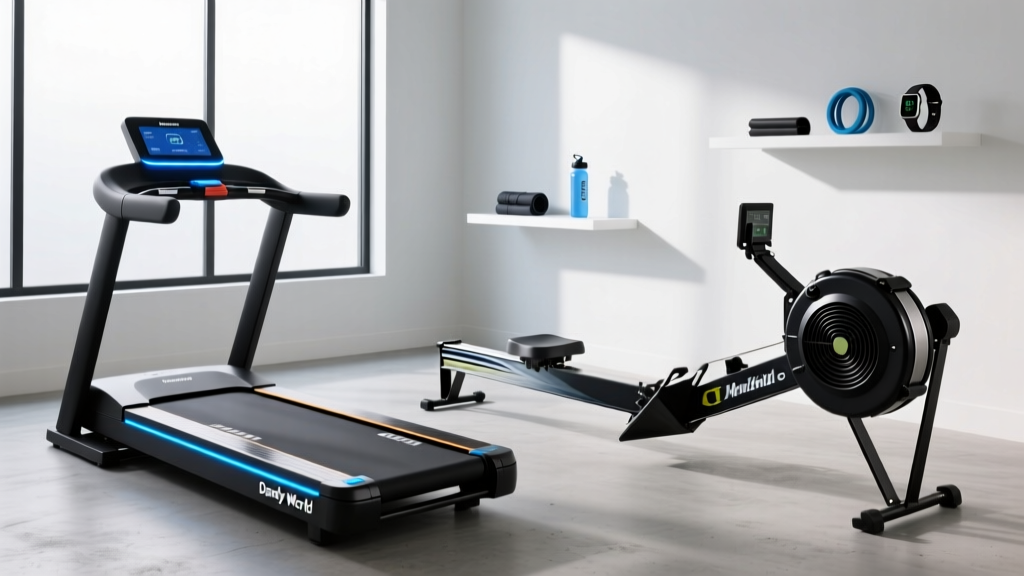
Beyond Barry's Treadmills: 2026 Stationary Bike Market Trends
Discover how the 2026 home cardio market is shifting beyond Barry's treadmills to upright, recumbent, and spin bikes. Deep dive into trends and pricing.

The Boutique Treadmill Plateau vs. The Home Cycling Surge
For years, the cultural zeitgeist of premium cardio was defined by the red-lit, high-decibel environment of boutique studios, where Barry's treadmills set the gold standard for high-intensity interval training (HIIT). However, as we navigate the 2026 fitness landscape, a significant market correction is underway. The relentless pounding of daily treadmill sprints is taking a biomechanical toll on aging millennials and Gen X consumers, driving a massive pivot toward low-impact, high-yield alternatives. Enter the modern stationary bike.
According to recent data from Grand View Research, the global stationary bike market has surged past the $1.8 billion mark, driven by an aging demographic prioritizing joint longevity and a younger cohort seeking data-rich, immersive home cycling experiences. While the cultural cachet of Barry's treadmills remains a benchmark for calorie-torching studio classes, the home hardware market has evolved to offer comparable cardiovascular conditioning without the patellofemoral joint stress associated with repetitive running.
2026 Market Matrix: Spin vs. Upright vs. Recumbent
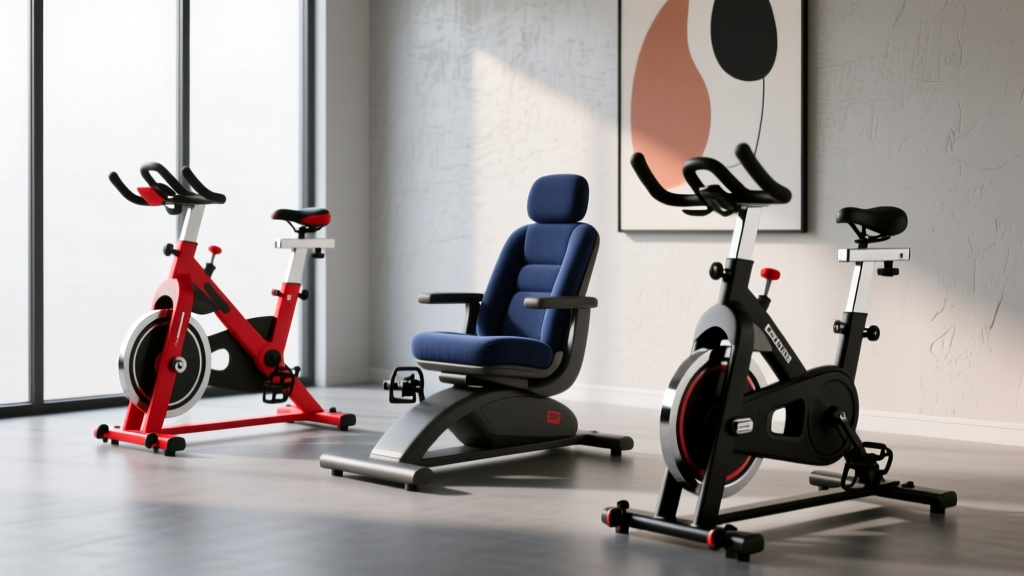
To understand where the capital is flowing, we must segment the stationary bike market into its three primary categories. Each serves a distinct biomechanical need and demographic profile.
| Feature | Spin Bikes (Indoor Cycling) | Upright Bikes | Recumbent Bikes |
|---|---|---|---|
| Primary Demographic | Millennials/Gen Z, Athletes | Gen X, Casual Fitness, Multi-taskers | Seniors, Rehab, Chronic Pain |
| Avg. Price Range (2026) | $899 - $2,495 | $699 - $1,800 | $1,200 - $3,500 |
| Footprint | ~4 sq. ft. | ~5 sq. ft. | ~8 sq. ft. |
| Joint Impact | Low (Knee/Ankle) | Very Low | Ultra-Low (Spine/Knee) |
| Tech Integration | High (Zwift, FTMS, iFIT) | Moderate (JRNY, Peloton App) | Moderate (Heart-rate focus) |
Spin Bikes: The Direct Rivals to Studio Treadmills
Spin bikes are the closest functional equivalent to the high-intensity output generated on Barry's treadmills. Designed to mimic the biomechanics of outdoor road cycling, these machines feature a forward-leaning geometry, a heavier flywheel (typically 30 to 40 lbs), and a performance saddle. In 2026, the market has largely abandoned friction-pad resistance in favor of magnetic resistance systems.
Models like the Schwinn IC4 ($899) and the premium Peloton Bike+ ($2,495) utilize electromagnetic braking that offers up to 100 micro-levels of resistance, completely eliminating the wear-and-tear and dust accumulation of physical brake pads. Furthermore, the integration of FTMS (Fitness Machine Service) Bluetooth protocols allows these bikes to seamlessly connect to third-party apps like Zwift and Wahoo RGT, giving users the competitive edge of a studio class from their living room.
Expert Insight: The Criticality of Q-Factor
A critical metric often ignored by casual buyers is the Q-factor—the horizontal distance between the pedal attachment points. High-end 2026 spin bikes maintain a Q-factor of 160mm to 168mm, perfectly mirroring standard road bikes. This alignment prevents lateral knee tracking issues during high-cadence intervals (100+ RPM), a common failure mode and source of IT band syndrome in cheaper, wide-stance indoor cycles that boast Q-factors exceeding 200mm.
Upright Bikes: The Traditionalist's Smart Evolution
Upright bikes occupy the middle ground of the cardio market. They feature a step-through frame design, a wider and more cushioned seat, and a vertical riding posture that reduces the core and lower back engagement required by spin bikes. This category has seen a renaissance in the home market, largely driven by consumers who want the cardiovascular benefits of a studio class but require a more forgiving ergonomic footprint.
The 2026 upright market is heavily focused on interactive programming and adaptive resistance. The NordicTrack S15i ($1,599) and Sole SB700 ($1,299) dominate this space. The step-through design is particularly crucial for users with limited hip mobility or those recovering from lower-body injuries, allowing them to mount the bike without lifting their leg over a high top tube. Additionally, upright bikes often feature integrated upper-body resistance bands or dumbbell holsters, catering to the 'hybrid' fitness consumer who wants to blend cardio with light resistance training.
Recumbent Bikes: Capturing the Silver Economy and Rehab Market
If spin bikes are the market's answer to HIIT, recumbent bikes are the answer to longevity and rehabilitation. Featuring a bucket-style seat with a full backrest and pedals positioned in front of the user, recumbent bikes eliminate spinal loading entirely.
"Low-impact aerobic exercises are essential for maintaining cardiovascular health while managing conditions like osteoarthritis, as they minimize the ground reaction forces that degrade cartilage over time." — Mayo Clinic Guidelines on Aerobic Exercise
Recumbent bikes reduce patellofemoral joint stress by up to 40% compared to upright cycling. Premium models like the NuStep T4r Recumbent Cross-Trainer (approx. $3,500) and the Life Fitness RS1 ($2,400) integrate mesh lumbar support and step-through heights of under 12 inches. The defining 2026 trend in this category is the integration of biometric feedback loops. Using chest straps or handlebar pulse sensors, machines like the RS1 automatically adjust magnetic resistance if the user's heart rate exceeds safe thresholds defined by their age and medical profile, ensuring users stay in the optimal Zone 2 cardio range for mitochondrial efficiency.
Market Drivers: Why the Shift from Treadmills to Bikes?
The transition away from high-impact running toward cycling hardware is not merely a fad; it is rooted in three distinct market realities:
- The Biomechanical Toll of HIIT: While the caloric burn of Barry's treadmills is undeniable, the repetitive ground reaction forces (up to 3x body weight) lead to high rates of shin splints, plantar fasciitis, and meniscus wear among daily practitioners. Cycling offers a closed-chain kinetic environment that preserves cartilage.
- The Gamification of Endurance: Platforms like Zwift have transformed indoor cycling from a solitary chore into a global e-sport. The ability to race against avatars in virtual worlds provides a dopamine-driven engagement loop that traditional treadmill running struggles to replicate at home.
- Spatial and Acoustic Efficiency: A motorized treadmill requires a dedicated 20-amp circuit, generates significant acoustic vibration (often angering downstairs neighbors in multi-family dwellings), and demands regular belt lubrication. Magnetic spin bikes are virtually silent, draw zero continuous power, and require minimal maintenance.
ROI Analysis: Studio Memberships vs. Home Hardware
From a purely financial perspective, the 2026 consumer is highly sensitive to recurring subscription fatigue. Let's run the numbers on studio running versus home cycling.
A premium boutique studio membership (comparable to the Barry's treadmill experience) averages $35 to $45 per class, or roughly $350 per month for an avid attendee hitting three sessions a week. Over three years, that equates to $12,600.
Conversely, a top-tier home spin bike setup (e.g., Peloton Bike+ at $2,495) plus a $40/month all-access app subscription ($1,440 over three years) totals $3,935. The break-even point is reached in just under 11 months. When factoring in the secondary resale value of premium hardware—which typically retains 40-50% of its value on the secondhand market—the financial argument for home stationary bikes becomes overwhelming.
Final Verdict: The Future of Home Cardio
While boutique run studios will always hold a special place in the fitness industry for their communal energy and curated environments, the 2026 data is clear: the home cardio market has matured. Whether you are chasing the high-cadence thrills of a spin bike, the ergonomic balance of an upright, or the joint-preserving longevity of a recumbent, today's stationary bikes offer a biomechanically superior, financially sound alternative to the treadmill grind.
For more in-depth reviews and biomechanical breakdowns, consult industry resources like Club Industry to stay ahead of the latest hardware releases and fitness market shifts.
More gear to consider
All reviews
The Long Walk Treadmill Setup: Motor Size & Horsepower Guide
Stair Climber Guide: Simulating a Stress Treadmill Test Protocol

Exerpeutic 2 in 1 Treadmill with Folding Handlebar: 2026 Compact Review
Stationary Bike Types: Budgeting to Improve Treadmill Times (2026)

Is It Bad to Hold Onto the Treadmill While Walking in Small Spaces?