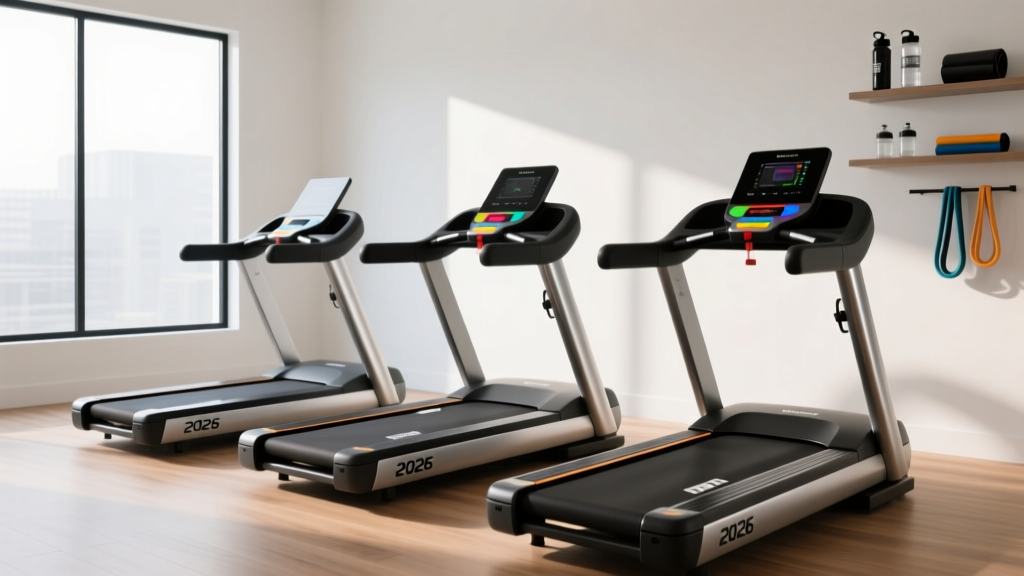
Beginner Treadmill Operator Guide: Walking Pads vs Standard (2026)
Master your home cardio setup with our beginner treadmill operator guide. We compare walking pads vs. standard treadmills to help you choose the right fit.

Becoming a confident treadmill operator at home means more than just pressing the start button. It requires understanding your spatial constraints, biomechanical needs, and the mechanical limits of the equipment you choose. In 2026, the home fitness market is heavily divided between ultra-compact walking pads and traditional, full-sized treadmills. Both serve the primary goal of increasing your Non-Exercise Activity Thermogenesis (NEAT) and cardiovascular health, but they cater to vastly different types of users.
If you are a beginner looking to establish a daily walking or running routine, choosing the wrong machine can lead to frustration, joint discomfort, or a broken motor. This step-by-step guide will walk you through the critical differences between walking pads and standard treadmills, helping you make an informed, data-driven purchase.
Step 1: Measure Your Space and Understand Clearance
The most common mistake a new treadmill operator makes is ignoring the machine's operational footprint. A walking pad is designed to slide under a desk or bed, while a standard treadmill requires a dedicated room or corner.
- Walking Pads (e.g., UREVO Strol 2E, KingSmith X21): Typically measure around 55 inches long by 20 inches wide when unfolded. They weigh between 40 and 60 lbs, making them easy to move.
- Standard Treadmills (e.g., Sole F63, NordicTrack T Series 10): Usually span 70 to 80 inches in length and 30 inches in width, weighing upwards of 150 lbs.
Step 2: Compare the Core Mechanics and Specifications
When evaluating cardio machines, the motor, belt dimensions, and incline capabilities dictate what kind of workouts you can actually perform. Below is a direct comparison of a top-tier 2026 walking pad versus a reliable entry-level standard treadmill.
| Specification | UREVO Strol 2E (Walking Pad) | Sole F63 (Standard Treadmill) |
|---|---|---|
| Motor Type | 2.0 HP (Peak) | 3.0 CHP (Continuous) |
| Belt Dimensions | 16.5' x 41.3' | 20' x 60' |
| Top Speed | 7.6 MPH | 15 MPH |
| Incline Range | Fixed (0%) | 0% - 15% Motorized |
| Max User Weight | 240 lbs | 325 lbs |
| Avg. Price (2026) | $299 | $1,199 |
Understanding Motor Ratings: HP vs. CHP
Notice the difference between HP (Horsepower) and CHP (Continuous Horsepower). Walking pads advertise peak HP, which is the maximum power the motor can hit for a few seconds before overheating. Standard treadmills use CHP, meaning the motor can sustain that power output indefinitely. If you weigh over 200 lbs and plan to walk at 3.5 MPH for more than 45 minutes, a walking pad's 2.0 HP motor will experience thermal throttling and eventual failure.
Step 3: Analyze Biomechanics and Stride Length
The physical size of the belt directly impacts your natural gait. According to the Centers for Disease Control and Prevention (CDC), adults should aim for at least 150 minutes of moderate-intensity aerobic activity per week, which translates to roughly 7,000 to 8,000 steps daily. Doing this on a restrictive belt can alter your biomechanics.
- The Walking Pad Constraint: With a belt length of roughly 41 inches and a width of 16 inches, walking pads force you to take shorter, choppier strides. If you are taller than 5'8', your natural walking stride will likely exceed the belt length at speeds above 3.0 MPH, forcing you to constantly look down to avoid stepping on the front motor housing.
- The Standard Treadmill Advantage: A 60-inch long by 20-inch wide belt allows for full stride extension. This is critical if you plan to transition from walking to jogging, as running requires significantly more belt length to accommodate the flight phase of your gait cycle.
Step 4: Evaluate the User Interface and Tech Ecosystem
How you control the machine matters for your daily workflow.
Walking Pads: Remote and App Dependent
Most walking pads, like the KingSmith WalkingPad series, rely entirely on a physical remote control or a Bluetooth smartphone app. There is no console to display your heart rate, cadence, or distance while you are working at your standing desk. While this keeps the profile slim, it means you must mount your TV or tablet separately if you want to follow guided fitness classes.
Standard Treadmills: Integrated Consoles and FTMS
Full-sized treadmills feature robust consoles with built-in screens or tablet holders. More importantly, premium 2026 models include Bluetooth FTMS (Fitness Machine Service) protocols. This allows the treadmill to automatically adjust speed and incline when connected to virtual training apps like Zwift or Kinetic Fit, a feature entirely absent in the walking pad category.
💡 Pro Tip for Desk Workers: If you buy a walking pad for a standing desk, ensure your desk height is adjustable between 40 and 46 inches. The American Heart Association emphasizes that breaking up prolonged sitting with light movement reduces cardiovascular risk, but poor ergonomics while walking at a desk can lead to shoulder and neck strain.Step 5: Maintenance and Common Failure Modes
Every treadmill operator must perform routine maintenance to protect their investment. The friction between the belt and the deck generates heat and wears down the motor.
- Belt Lubrication: Both walking pads and standard treadmills require 100% silicone treadmill lubricant. Apply 15ml under the belt every 3 months or every 150 miles. Failure mode: Ignoring this will cause the deck to warp and the motor control board to blow a capacitor due to excessive amp draw.
- Belt Tensioning: If the belt slips when you plant your foot, it needs tightening. Use the included Allen wrench to turn the rear roller bolts a quarter-turn clockwise. Failure mode: Over-tightening the belt on a walking pad will immediately strip the plastic drive gears, a common issue in sub-$300 models.
- Motor Dust Accumulation: Standard treadmills have exposed motor hoods that suck in pet hair and dust. Vacuum the motor compartment every 6 months to prevent the internal cooling fan from clogging and overheating the windings.
Step 6: Make Your Final Purchase Decision
Your choice ultimately comes down to your primary use case, budget, and physical dimensions.
Choose a Walking Pad If:
- You live in an apartment or small room and need to store the machine under a bed or sofa.
- Your primary goal is achieving 8,000+ daily steps while working at a standing desk.
- You are under 5'9' tall, weigh less than 200 lbs, and have no intention of running.
- Your budget is strictly under $400.
Choose a Standard Treadmill If:
- You have a dedicated home gym space or a spare bedroom with adequate clearance.
- You want to mix walking, jogging, and high-incline interval training (12-3-30 method).
- You are taller than 5'9' and require a full 60-inch belt to maintain a natural, safe stride.
- You want to integrate your machine with virtual cycling/running ecosystems via Bluetooth FTMS.
Frequently Asked Questions (FAQ)
Can I run on a folded walking pad?
No. Walking pads with foldable handrails (like the UREVO Strol 2E) are engineered with a locking hinge that is only rated for walking forces. Running introduces vertical ground reaction forces equal to 2.5 times your body weight, which will snap the hinge mechanism and void your warranty.
Do walking pads consume a lot of electricity?
Walking pads are highly energy-efficient. A 2.0 HP walking pad operating at 3.0 MPH draws roughly 300 to 400 watts. Running it for two hours a day will cost less than $1.50 per month on the average US electrical grid.
Is a manual treadmill a better alternative to a walking pad?
Manual (curved) treadmills are excellent for high-intensity sprinting and self-paced biomechanics, but they are heavy, expensive (often $3,000+), and lack the compact footprint that makes walking pads so appealing for home office integration. For casual daily step counts, a motorized walking pad remains the superior choice.
Conclusion
Becoming a proficient treadmill operator starts with selecting the right tool for your specific lifestyle. Walking pads are revolutionary for sedentary office workers looking to seamlessly integrate low-intensity steady-state (LISS) cardio into their workday. However, for those seeking a comprehensive fitness machine capable of handling running, incline training, and heavy use, a traditional treadmill like the Sole F63 remains the undisputed champion. Measure your space, respect the mechanical limits of your chosen machine, and commit to your daily steps.
More gear to consider
All reviews
Free Tax Treadmill Guide: HSA/FSA Compact Cardio & Maintenance
Elliptical vs Treadmill: Space Design & Treadmill Movie Setups

ProForm Pro 5000 Treadmill vs Rowing: Beginner Step-by-Step Guide

Elliptical vs Treadmill: Designing Space for Treadmill Walks

Best Step Beginner: A Practical, Data-Driven Guide to Choosing Your First Automotive Step Stool