
Beginner Incline Treadmill Workout & Cardio Noise Guide
Discover the best beginner incline treadmill workout for quiet apartments. Compare cardio machine noise levels and learn step-by-step silent walking.

The Apartment-Dweller’s Dilemma: Fitness vs. Noise
If you live in an apartment, share a home with light sleepers, or prefer late-night fitness sessions, the acoustic footprint of your cardio equipment is just as important as its performance metrics. Many beginners assume all cardio machines are equally loud, but the reality of cardio machine noise level comparison reveals massive differences in decibel (dB) output. More importantly, you don't need to sacrifice calorie burn for silence. A well-structured beginner incline treadmill workout leverages steep grades rather than high speeds, allowing you to achieve a high heart rate with minimal footstrike impact noise.
In this comprehensive 2026 guide, we will break down the exact decibel levels of popular cardio machines, recommend the quietest treadmills for home use, and provide a step-by-step, apartment-friendly incline walking routine designed to maximize fat oxidation while keeping your neighbors happy.
Cardio Machine Noise Level Comparison
To understand why an incline walking strategy is superior for noise reduction, we first need to look at the data. Noise in cardio equipment comes from two primary sources: motor/mechanical noise (the hum of the machine) and impact noise (your body striking the equipment, which transfers vibration through the floor).
| Cardio Machine | Mechanical Noise (dB) | Impact Noise (dB) | Total Average (dB) | Apartment Friendly? |
|---|---|---|---|---|
| Treadmill (Running 6+ mph) | 55 - 65 | 75 - 85 | 80 - 85 | No (High vibration) |
| Treadmill (Incline Walking 3 mph) | 50 - 55 | 55 - 65 | 60 - 65 | Yes (With mat) |
| Elliptical Cross-Trainer | 40 - 45 | 20 - 30 | 40 - 45 | Yes (Very quiet) |
| Magnetic Rowing Machine | 35 - 40 | 30 - 40 | 40 - 45 | Yes |
| Air Bike (e.g., Assault Bike) | 50 - 75 (Wind) | 0 | 65 - 75 | Borderline (Air whoosh) |
| Stair Climber (Stepper) | 45 - 55 | 50 - 60 | 55 - 60 | Yes (Low impact) |
Why Incline Walking is the Ultimate "Quiet" Cardio
Running generates a ground reaction force equal to 2.5 to 3 times your body weight. When your heel strikes a treadmill deck at 6 mph, that kinetic energy travels through the machine's frame and directly into your subfloor. Incline walking, however, changes the biomechanics entirely.
By raising the treadmill deck to a 10% to 15% grade and dropping your speed to 2.5 - 3.5 mph, you eliminate the "flight phase" of running. Your foot stays closer to the belt, resulting in a softer mid-foot strike. The American Heart Association notes that walking at a steep incline elevates your heart rate into the vigorous-intensity zone, providing the same cardiovascular and metabolic benefits as jogging, but with a fraction of the joint and structural impact.
Top 3 Quiet Treadmills for Incline Workouts (2026 Market)
If you are shopping for a machine specifically for quiet incline work, you need a treadmill with a high-torque motor (which operates at lower, quieter RPMs during slow walks) and superior deck cushioning. Here are the top performers in the current market:
1. Sole F80 (Best Overall for Quiet Durability)
- Price: ~$1,199
- Motor: 3.5 CHP (Continuous Horsepower)
- Incline: 0% - 15%
- Acoustic Profile: The Sole F80 features a heavy-duty 350 lb frame and a thick, multi-ply running belt. The mass of the machine absorbs low-frequency vibrations, making it exceptionally quiet for slow, steep climbs.
2. Horizon 7.8 (Best Value for Apartment Dwellers)
- Price: ~$1,299
- Motor: 3.5 CHP
- Incline: 0% - 15%
- Acoustic Profile: Horizon's three-zone cushioning system is specifically tuned to soften the impact zone at the front of the deck. Paired with a quiet DC motor, the mechanical hum is barely noticeable over a standard TV volume.
3. NordicTrack Commercial 1750 (Best Tech & Cushioning)
- Price: ~$1,999
- Motor: 3.5 CHP
- Incline: -3% to 15%
- Acoustic Profile: Features the Runners Flex™ cushioning system. While the interactive touchscreen and cooling fan add slight ambient noise, the deck's shock absorption drastically reduces the "thud" transferred to the floor below.
Step-by-Step: The "Apartment-Friendly" Beginner Incline Treadmill Workout
This 30-minute routine is designed to keep your heart rate in Zone 2 and Zone 3 (optimal for fat oxidation and cardiovascular health, per CDC Physical Activity Guidelines) while maintaining a low-impact, low-noise footprint. Do not hold the handrails; holding on ruins your posture and reduces calorie burn by up to 20%.
Phase 1: The Silent Warm-Up (Minutes 0-5)
- Speed: 2.5 mph
- Incline: 0% (Flat)
- Focus: Establish a heel-to-toe walking gait. Let your arms swing naturally to loosen the shoulder joints.
Phase 2: Base Climb (Minutes 5-15)
- Speed: 3.0 mph
- Incline: 5%
- Focus: Transition to a mid-foot strike. Imagine you are walking up a long driveway. Your breathing should be elevated, but you should still be able to speak in short sentences.
Phase 3: Peak Silent Burn (Minutes 15-25)
- Speed: 2.8 mph (Slower speed compensates for the steep grade)
- Incline: 10% to 12%
- Focus: Lean slightly forward from the ankles, not the waist. Drive your knees up and push through your glutes. This is where the magic happens: your heart rate will spike into vigorous territory, but the slow belt speed means your feet are gently placing onto the deck rather than striking it.
Phase 4: Active Recovery & Cool Down (Minutes 25-30)
- Speed: 2.0 mph
- Incline: Drop to 2%
- Focus: Deep, diaphragmatic breathing. Allow your heart rate to gradually return to baseline before stepping off the machine.
Pro-Tip for Noise Reduction: Wear running shoes with thick, plush foam midsoles (like the Hoka Bondi 9 or Brooks Ghost 16). Shoes with hard EVA foam or carbon-plated racing shoes will create a loud "clacking" sound on the treadmill belt, regardless of your walking speed.
Crucial Setup: Soundproofing Your Cardio Space
Even the quietest beginner incline treadmill workout will generate some low-frequency vibration. To ensure you don't receive a noise complaint, you must decouple the machine from your floor.
🛠️ The Ultimate Vibration Isolation Stack
- Layer 1 (Base): A 3/8-inch thick heavy-duty rubber horse stall mat (cut to 4x6 feet). Cost: ~$50. This provides mass to block airborne sound.
- Layer 2 (Isolation): Four anti-vibration rubber isolation pads (rated for at least 150 lbs each) placed under the treadmill's feet. Cost: ~$30. This breaks the physical connection between the machine frame and the floor, stopping structure-borne vibration dead in its tracks.
Frequently Asked Questions
Will walking on a high incline damage my treadmill motor?
No, provided you have a machine with a minimum 3.0 CHP (Continuous Horsepower) motor. Incline walking actually places less sudden torque on the motor than running, because the belt speed is slower and there is no repetitive high-impact pounding that causes the belt to momentarily snag and pull the motor out of alignment.
Is an elliptical quieter than an incline treadmill?
Strictly speaking, yes. An elliptical generates near-zero impact noise because your feet never leave the pedals. However, an elliptical takes up more lateral space and doesn't perfectly mimic the natural biomechanics of hiking or walking. For pure silence, the elliptical wins; for functional, real-world leg strength and glute activation, the incline treadmill is superior.
How often should I do this beginner incline treadmill workout?
For beginners, aim for 3 to 4 sessions per week. Because incline walking is low-impact, it is gentle on the joints, allowing for more frequent training sessions compared to running. Ensure you take at least one full rest day or active recovery day (like light stretching) between intense incline sessions to allow your calf muscles and Achilles tendons to adapt to the new range of motion.
More gear to consider
All reviews
Curved Manual vs Motorized & GoYouth 2-in-1 Walking Pad and Treadmill
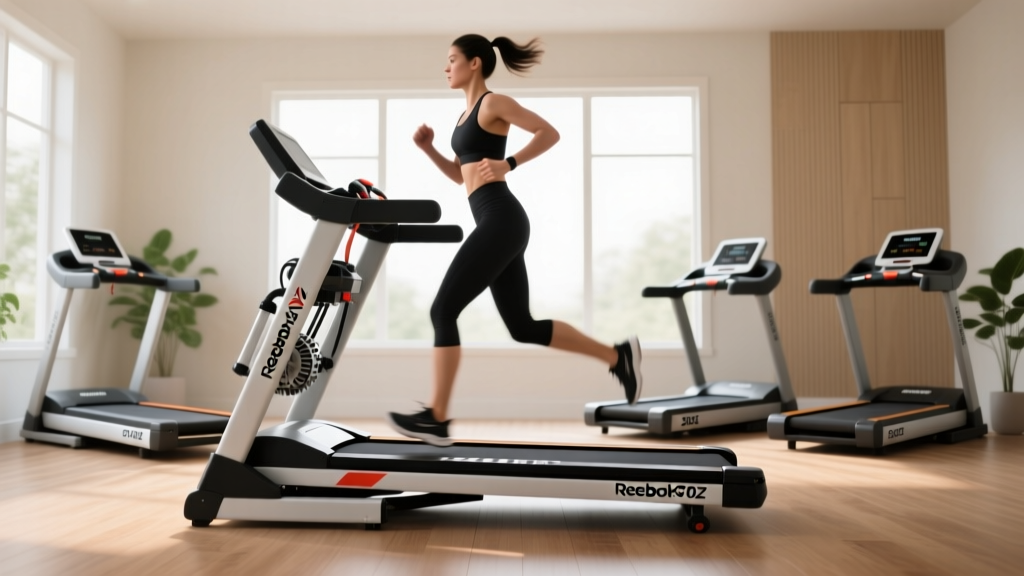
Reebok GT40Z Folding Treadmill: 2026 Feature Comparison

Treadmill Victorian Times to Walking Pads: Portable Cardio Care

Does Goodwill Take Treadmills? Care for Upright & Spin Bikes

Encore 1500 Treadmill Review & 2026 Small-Space Market Trends
