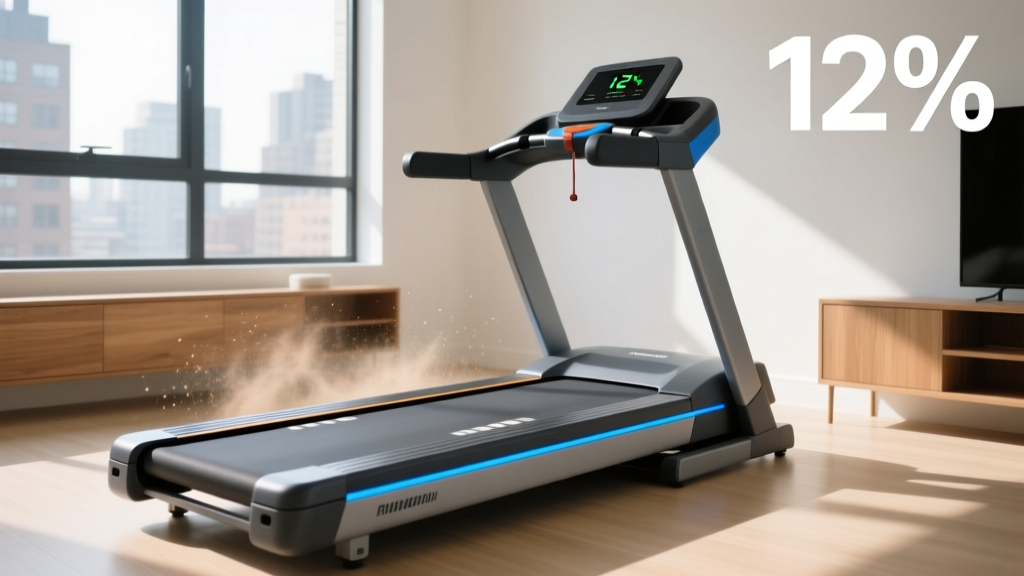
True Cost of a Treadmill That Connects to Apple Watch: Belt Care
Is a smart treadmill worth the upkeep? We break down the long-term belt maintenance costs of a treadmill that connects to Apple Watch.

The Intersection of Smart Tech and Mechanical Wear
In 2026, the demand for a treadmill that connects to Apple Watch has reached an all-time high. Runners want seamless biometric syncing, auto-adjusting inclines based on Apple Fitness+ cues, and unified activity rings. Models utilizing the FTMS (Fitness Machine Service) Bluetooth protocol or proprietary GymKit integrations—like the Sole F80, NordicTrack Commercial series, and Peloton Tread—dominate the premium home gym market. However, while consumers heavily research screen resolution and software ecosystems, the physical mechanics of the machine are often an afterthought.
As a domain expert in cardio equipment longevity, I frequently see owners of $2,500+ smart treadmills face catastrophic hardware failures simply because they neglected the most basic, low-cost maintenance task: belt lubrication. When you invest in advanced connectivity, you are not just buying a screen; you are buying a complex network of lower control boards, voltage regulators, and Bluetooth transmitters. This budget breakdown and value analysis explores the true long-term maintenance costs of high-tech treadmills, proving that a $15 bottle of silicone lubricant is the most critical investment you can make to protect your smart ecosystem.
The Hidden Link: Belt Friction and Bluetooth Dropouts
How does a dry treadmill belt affect your Apple Watch connection? The answer lies in electrical engineering, specifically voltage sag.
When a treadmill belt lacks proper 100% silicone lubrication, the kinetic friction between the belt and the wooden deck increases exponentially. To maintain your set speed (e.g., 7.5 mph), the drive motor must draw significantly more amperage. According to Treadmill Doctor's Belt Lubrication Guide, a dry belt can cause motor amp draw to spike from a normal 4-6 amps up to 12-15 amps.
Expert Insight: The FTMS Dropout Phenomenon
On a standard 'dumb' treadmill, high amp draw just makes the motor hot. On a smart treadmill, this massive power draw from the lower control board causes a voltage drop across the machine's internal power supply. The Bluetooth/FTMS module, which requires a stable 5V DC rail to maintain a handshake with your Apple Watch, experiences a micro-brownout. The result? Your Apple Watch drops the connection mid-run, your pacing data desyncs, and the console may hard-reboot. Before blaming the software or Apple's servers, check your belt lubrication.
Budget Breakdown: Maintenance and Replacement Costs
To understand the value proposition of maintaining a smart treadmill, we must compare the routine upkeep costs against the catastrophic failure costs. The following matrix outlines the real-world pricing for treadmill belt care and associated hardware repairs in the current market.
| Maintenance / Repair Item | Estimated Cost (2026) | Frequency / Trigger |
|---|---|---|
| 100% Silicone Lubricant (Liquid/Gel) | $12 - $22 | Every 130-150 miles or 3 months |
| Replacement Drive Belt (Motor to Roller) | $25 - $45 | Every 3-5 years (if tensioned correctly) |
| Replacement Walking Belt & Deck | $180 - $350 | When deck shows burn marks or grooves |
| Drive Motor Replacement | $350 - $650 | When windings burn out from friction strain |
| Smart Console / Lower Board Repair | $400 - $1,200 | Voltage spike damage / component failure |
As highlighted in the Consumer Reports Treadmill Buying Guide, the total cost of ownership for premium cardio equipment is heavily skewed by how well the user manages friction. Spending $60 a year on silicone and replacement belts protects a $1,500 motor and an $800 smart console.
Step-by-Step: Lubricating a Connected Treadmill Safely
Maintaining a treadmill that connects to Apple Watch requires the same mechanical steps as a standard machine, but with added precautions to protect the sensitive optical sensors and wiring harnesses located near the deck.
- Power Down and Unplug: Never apply lubricant while the machine is on. Unplug the unit to prevent accidental starts and protect the lower control board from static discharge.
- The Lift Test (Tension Check): Reach under the center of the walking belt and lift. You should achieve exactly 3 to 4 inches of lift. If it's tighter, loosen the rear roller adjustment bolts by a quarter-turn. A belt that is too tight will mimic the symptoms of a dry belt, straining the motor bearings.
- Loosen the Belt: Loosen the rear roller bolts just enough so you can easily slide your hand and the lubricant applicator wand under the belt.
- Apply 100% Silicone: Use only 100% pure silicone lubricant (brands like Spot On or LiquidSilicone). Never use WD-40, petroleum-based oils, or aerosol sprays containing propellants. Propellants can degrade the rubber backing of the belt and damage the optical speed sensors near the front roller.
- Distribute the Lube: Squeeze a zig-zag pattern of about 1 oz of silicone onto the deck. Plug the machine in, stand on the side rails, and run the treadmill at 2.0 mph for 3 minutes to distribute the fluid evenly.
- Retension and Calibrate: Turn the machine off, retension the belt to the 3-4 inch lift specification, and perform a quick FTMS calibration run to ensure your Apple Watch pacing data remains accurate.
Wax vs. Silicone: Knowing Your Machine's Factory Spec
A common budget mistake is applying the wrong type of lubricant. While 90% of modern residential treadmills (including Sole, Horizon, and NordicTrack) require liquid 100% silicone, some older or specialized commercial models use a dry wax coating or a Teflon-infused belt that requires zero liquid lubrication.
Applying liquid silicone to a wax-coated or Teflon deck will create a gummy residue that traps dust and hair, ultimately ruining the deck and voiding your warranty. Always consult your specific model's owner manual before the first application.
Warning Signs Your Smart Treadmill is Suffering from Friction
Don't wait for the belt to snap or the console to die. Your treadmill will give you early warning signs that maintenance is overdue. Watch for these specific indicators:
- Seam Stuttering: When the belt seam passes over the deck, you feel a slight hesitation or 'bump' underfoot. This indicates the deck is wearing unevenly due to lack of lubrication.
- Console Dimming: When you increase the incline or speed, the smart screen dims momentarily. This is a classic sign of the motor drawing excessive amps, starving the console's power supply.
- Burning Odor: A distinct smell of hot rubber or melting plastic near the front motor hood. This means the drive belt is slipping or the walking belt is generating extreme heat.
- Apple Watch Desyncs: As mentioned earlier, if your FTMS connection repeatedly drops at higher speeds (e.g., above 8 mph) but stays stable during walks, voltage sag from motor strain is the likely culprit.
The Value Verdict: Is the Upkeep Worth the Tech?
When evaluating the budget breakdown of owning a treadmill that connects to Apple Watch, the mechanical maintenance costs are remarkably low compared to the value gained. For less than $50 a year in silicone lubricant and basic cleaning supplies, you can easily extend the life of a $2,500 smart treadmill by 5 to 8 years.
The true cost arises when users treat smart treadmills purely as consumer electronics rather than heavy machinery. By understanding the delicate relationship between mechanical friction, electrical amperage, and Bluetooth data transmission, you can ensure your machine delivers flawless, synced workouts for years to come. For more insights on integrating home gym gear with your digital ecosystem, check out Wired's comprehensive guide to the best smart treadmills on the market.
More gear to consider
All reviews
12 30 Treadmill vs Stationary Bike Types: Budget Breakdown

Under-Desk Treadmill Belt Length Trends & 2026 Office Market Review
Air Bike vs Assault Bike: Strength Training on Treadmill Alternatives

Curved vs Motorized: Average Treadmill Weight and Troubleshooting
Compact Cardio Care: Tips for People Running on Treadmill Alternatives