Air Bike vs Assault Bike & Vikingastryr Treadmill Care
Compare Air Bike and Assault Bike maintenance for longevity. Plus, essential Vikingastryr treadmill care tips to maximize your cardio equipment lifespan.

The Longevity Battle: Fan-Based Cardio vs. Heavy-Duty Treadmills
As home gym setups evolve in 2026, mixed-modal cardio has become the gold standard for athletes and fitness enthusiasts alike. Pairing a high-intensity fan bike with a heavy-duty treadmill provides unparalleled cardiovascular conditioning. According to the CDC Physical Activity Guidelines, incorporating both vigorous interval training and steady-state aerobic work yields optimal heart health benefits. However, the mechanical demands of these machines are vastly different. This guide serves as your definitive air bike vs assault bike comparison guide from a maintenance perspective, while also covering the specialized upkeep required for the premium Vikingastryr treadmill.
Expert Insight: The primary killer of home cardio equipment is not mechanical wear, but environmental corrosion. Human sweat has a pH ranging from 4.5 to 7.0, making it highly acidic and corrosive to untreated steel and aluminum components. Wiping down your machine is not just about hygiene; it is a critical anti-corrosion protocol.Air Bike vs. Assault Bike: Core Mechanical Differences
While often used interchangeably in casual conversation, "Air Bike" (typically associated with belt-driven models like the Rogue Echo Bike) and "Assault Bike" (the chain-driven Assault Fitness Elite) operate on fundamentally different drivetrains. Understanding these differences is the first step in establishing a proper longevity protocol.
| Feature | Rogue Echo Bike (Gen 2) | Assault Fitness Elite | Titan Fitness Air Bike |
|---|---|---|---|
| Drivetrain | Poly-V Belt | Steel Roller Chain | Steel Roller Chain |
| Bottom Bracket | External Sealed Bearing | ISIS Spline Sealed | Square Taper (Standard) |
| Primary Failure Mode | Belt slipping under max RPM | Chain stretch & dust accumulation | Bottom bracket lateral seizure |
| Maintenance Interval | Every 100 hours | Every 50 hours | Every 40 hours |
Belt-Driven vs. Chain-Driven Maintenance Protocols
The ExRx.net Biomechanics Database notes that the lateral forces generated during standing air bike sprints place immense stress on the drivetrain. Here is how to maintain both systems:
- Poly-V Belt Systems (Rogue Echo): Belts do not require lubrication, which keeps your gym floor clean. However, they do stretch. If you experience slipping during high-wattage sprints, use a 15mm wrench to loosen the rear axle nuts. Apply exactly 40 Nm of torque when re-tensioning the belt. Inspect the belt ribs for micro-cracking annually; a replacement belt costs roughly $45.
- Chain-Driven Systems (Assault & Titan): Chains require regular lubrication to prevent metal-on-metal wear. Avoid wet lubes, which attract dust and create a grinding paste. Instead, use a dry PTFE chain lubricant (such as Finish Line Dry). Apply it to the inner rollers, let it set for 10 minutes, and wipe off the excess. Use a chain-checker tool to measure stretch; replace the chain if it exceeds 0.75% elongation to prevent premature wear on the front chainring.
Bottom Bracket Longevity: The Hidden Failure Point
Across all fan-based bikes, the bottom bracket (BB) is the most frequently replaced component. The side-to-side rocking motion during arm-push intervals introduces lateral loads that standard square-taper bottom brackets simply cannot handle over time. If you hear a rhythmic clicking or feel a grinding sensation through the pedals, your BB bearings are likely compromised.
Pro-Tip for Titan & Budget Air Bikes: If your bike uses a standard square-taper BB, consider upgrading to an external bearing system or a heavy-duty ISIS spline BB. This single $35 upgrade can triple the lifespan of your crankset junction and eliminate the most common squeak associated with budget air bikes.
Expanding the Fleet: Vikingastryr Treadmill Longevity
While fan bikes dominate the HIIT space, steady-state and incline work often fall to heavy-duty treadmills. The Vikingastryr treadmill has gained significant traction in 2026 for its commercial-grade 4.0 HP continuous-duty motor and reinforced steel deck. However, maintaining the Vikingastryr treadmill requires a completely different matrix of care compared to your air bikes.
Deck Lubrication and Belt Tracking
The friction between the running belt and the wooden deck is the primary source of heat and motor strain on the Vikingastryr treadmill. Failure to lubricate the deck will cause the motor to draw excess amperage, eventually tripping the internal thermal breaker or frying the motor control board (MCB).
- Test for Lubrication: Slide your hand under the belt. It should feel slightly slick. If it feels dry or gritty, it is time to lubricate.
- Apply 100% Silicone: Use only manufacturer-approved 100% liquid silicone. Never use WD-40 or petroleum-based products, as they will melt the belt backing. Apply 1 oz of silicone in a zig-zag pattern across the center of the deck.
- Track the Belt: If the Vikingastryr treadmill belt drifts to the left, locate the rear roller adjustment bolts. Tighten the left bolt by exactly 1/4 turn clockwise, and loosen the right bolt by 1/4 turn counter-clockwise. Run the treadmill at 3 MPH for two minutes to let the belt center itself. Never adjust more than 1/2 turn at a time.
Motor Hood and Incline Motor Calibration
Dust is the enemy of the Vikingastryr treadmill's electronics. Every 90 days, unplug the machine, remove the four Phillips-head screws securing the motor hood, and use a vacuum with a soft brush attachment to clear dust from the motor fan and the MCB heat sink. Additionally, if you notice the incline stuttering, the incline motor potentiometer may need recalibration via the hidden engineering menu (accessed by holding the 'Incline Up' and 'Speed Down' buttons simultaneously for 5 seconds on the Vikingastryr console).
Environmental Control: Managing Sweat and Humidity
According to the National Strength and Conditioning Association (NSCA), proper facility maintenance is crucial for equipment longevity, a principle that applies directly to home gyms. To protect both your air bikes and the Vikingastryr treadmill:
- Use Equipment Mats: A 3/4-inch thick rubber horse stall mat under your treadmill dampens vibration and prevents micro-debris from being sucked into the motor hood.
- Anti-Corrosion Treatment: Once a month, spray the exposed steel frame of your air bike and the deck bolts of your Vikingastryr treadmill with a light coating of Boeshield T-9 or a similar rust-inhibitor. Wipe it down immediately to leave a protective micro-film.
- Climate Control: Keep your gym's humidity below 50%. High humidity accelerates the oxidation of the air bike's chain and the treadmill's internal wiring harnesses.
Summary Matrix: 5-Year Projected Maintenance Costs
Understanding the total cost of ownership helps you budget for the inevitable wear and tear of high-performance cardio gear.
| Equipment | Consumables Needed | 5-Year Est. Cost | Time Investment |
|---|---|---|---|
| Belt-Drive Air Bike | Replacement Belt, Console Batteries | $65 | 2 hours total |
| Chain-Drive Assault Bike | PTFE Lube, Replacement Chain, BB | $110 | 6 hours total |
| Vikingastryr Treadmill | Silicone Lube, Replacement Belt | $180 | 4 hours total |
Final Thoughts on Cardio Equipment Longevity
Whether you are pushing 800 watts on an Assault Bike Elite or logging a 10-mile steady-state run on the Vikingastryr treadmill, proactive maintenance is the difference between a machine that lasts three years and one that lasts a decade. By respecting the unique mechanical requirements of belt drives, roller chains, and heavy-duty treadmill decks, you ensure your cardio equipment remains a reliable engine for your fitness journey.
More gear to consider
All reviews
Rowing Machine Buying Guide: Beating 6.5 Speed on Treadmill
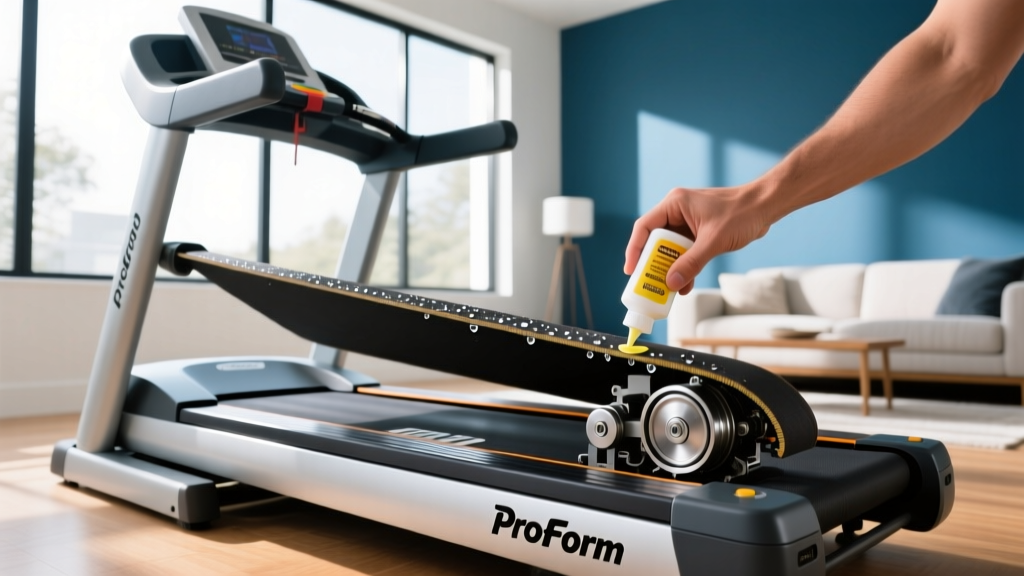
How to Maintain and Lubricate Your ProForm 350 Treadmill Belt
Is a Treadmill Helpful in Losing Weight? Walking Pad Setup & Review

Pro Form Treadmill vs Stair Climber: 2026 Home Guide

Curved Manual vs Motorized: Gold's Gym Crosswalk 570 Treadmill Guide