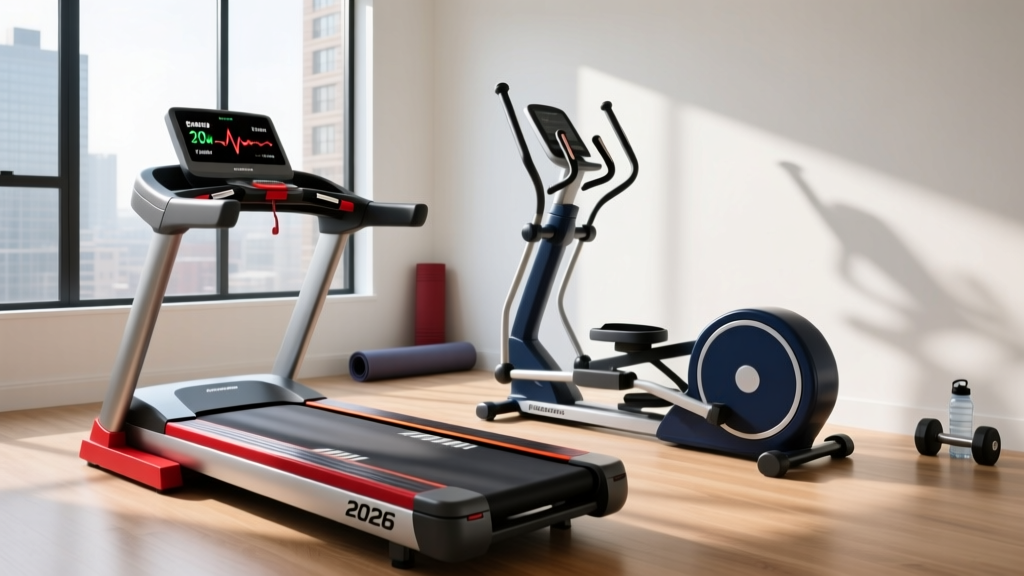
Air Bike vs Assault Bike: Is Upkeep Easier Than Treadmill Maintenance?
Compare the Rogue Echo and AssaultBike Elite, exploring drive systems, durability, and how air bike upkeep stacks up against standard treadmill maintenance.

The Heavyweights: Rogue Echo Bike V2 vs. AssaultBike Elite
When outfitting a home gym or commercial box in 2026, the air bike remains the undisputed king of high-intensity interval training (HIIT) and metabolic conditioning. But choosing between the two market leaders—the Rogue Echo Bike V2 and the AssaultBike Elite—requires looking past the burn and examining the mechanics. Both machines retail between $1,350 and $1,800, but their approach to engineering, longevity, and daily upkeep differs drastically.
While the Rogue Echo V2 relies on a custom belt-drive system and a 14-gauge steel frame, the AssaultBike Elite utilizes a heavy-duty chain drive and 4130 chromoly steel. From a longevity and maintenance perspective, these mechanical choices dictate everything from the tools you keep in your gym drawer to the time you spend servicing the equipment. Let us break down how these two titans compare, and more importantly, how their mechanical demands stack up against the notoriously tedious world of motorized cardio equipment.
Drive System Mechanics: Belt vs. Chain
The most significant divergence between the Echo and the AssaultBike lies in how power transfers from the crank to the fan.
The Rogue Echo V2: Belt-Drive Simplicity
Rogue engineered the Echo V2 with a reinforced polyurethane belt drive. Belt drives are inherently quieter, require zero lubrication, and do not stretch in the same manner as metal chains. The trade-off? If the belt does snap or severely degrade after years of extreme torque, replacing it requires disassembling the side covers and ordering a proprietary OEM part. However, under normal to heavy use, a high-quality belt will easily last 5 to 7 years without intervention.
The AssaultBike Elite: Chain-Drive Raw Power
Assault Fitness sticks to a traditional roller chain. This provides a raw, immediate power transfer that many purists prefer, but it introduces friction, noise, and the need for regular tensioning. Chains stretch over time, and a loose chain will skip teeth on the sprocket, leading to catastrophic derailment during a max-effort sprint. Chain maintenance is a recurring chore, but replacing a standard bicycle-style chain is cheap and can be done at any local bike shop.
Mechanic's Insight: If you are deploying an air bike in a humid garage gym, the chain on the AssaultBike will require frequent degreasing and re-lubrication to prevent rust. The Rogue's belt drive is completely impervious to ambient moisture, giving it a distinct longevity advantage in unclimate-controlled spaces.The Core Question: Air Bike Upkeep vs. Treadmill Maintenance
Many home gym owners hesitate to buy motorized treadmills because of the long-term upkeep. How does the mechanical care of an air bike compare to standard treadmill maintenance? The difference is night and day, primarily because air bikes lack the complex electrical and friction-based systems found in runners.
According to industry repair specialists at Treadmill Doctor, a motorized treadmill requires strict adherence to a maintenance schedule to prevent motor burnout and deck warping. You must apply 100% silicone lubricant to the deck every 3 months (or every 130 miles), vacuum the motor hood bi-annually to prevent static buildup on the control board, and constantly monitor belt alignment to prevent edge fraying. Failure to perform this treadmill maintenance routinely will result in a $400+ motor replacement or a melted deck.
Air bikes, by contrast, are entirely human-powered and mechanically analog. There are no control boards to fry from static shock, no walking decks to warp from friction heat, and no motor brushes to wear down. You are maintaining moving joints and bearings, not managing electrical thermodynamics.
Maintenance Matrix: Air Bike vs. Motorized Treadmill
| Maintenance Task | Air Bike (Echo/Assault) | Motorized Treadmill | Cost of Neglect |
|---|---|---|---|
| Belt/Deck Lubrication | None (Belt) / Occasional (Chain) | 100% Silicone every 3 months | Treadmill deck/motor burnout ($300+) |
| Dust & Debris Removal | Wipe fan blades monthly | Vacuum motor hood bi-annually | Control board short circuit ($200+) |
| Tension & Alignment | Chain tensioning (Assault only) | Rear roller belt alignment | Belt shredding and seam failure |
| Electrical Components | AA Batteries / Simple alternator | Complex PCBs, incline motors | Total system failure, proprietary parts |
Step-by-Step Longevity Protocol for Your Air Bike
While air bikes are lower maintenance than treadmills, they are not no-maintenance. The immense torque generated during air bike sprints puts extreme lateral stress on the bottom bracket and crank arms. Follow this protocol to ensure your machine lasts a decade.
- Crank Arm Torque and Threadlocking (Every 6 Months): The most common failure point on any air bike is the crank arm working itself loose from the bottom bracket spindle. Remove the crank bolts, clean the threads, and apply a medium-strength threadlocker like Loctite 243 (Blue). Torque the bolts to the manufacturer's specification (usually around 35-40 Nm). Never use Red Loctite, or you will never get the cranks off for bearing service.
- Fan Blade Dusting (Monthly): The massive 25-inch fan blades pull in tremendous amounts of air, acting like a vacuum for dust, pet hair, and chalk. If dust accumulates unevenly on the blades, it creates a rotational imbalance. Over time, this micro-vibration will destroy the bottom bracket cartridge bearings. Wipe the blades down with a damp microfiber cloth monthly.
- Chain Care for AssaultBike Owners (Every 100 Hours): If you own the Elite model, use a dedicated bicycle chain cleaner tool with a citrus degreaser, followed by a dry PTFE (Teflon) lubricant. Avoid wet lubes or heavy greases, as they will attract abrasive gym chalk and accelerate sprocket wear.
- Monitor Battery Removal (As Needed): If you are going on vacation or plan to leave the gym unheated in the winter, remove the AA batteries from the LCD console. Battery acid corrosion on the motherboard contacts is the number one reason for air bike monitor failure.
Real-World Failure Modes and Edge Cases
To truly understand longevity, we have to look at what actually breaks when these machines reach the 3-to-5-year mark in a busy environment.
"In commercial CrossFit gyms, we rarely see the frames of either the Echo or the Assault fail. The steel is overbuilt. What we do see is the death of the bottom bracket bearings from sweat intrusion, and the shattering of plastic chain guards from users kicking them during dismounts." — Independent Gym Equipment Technician
Edge Case: The Sweat Corrosion Factor
Air bikes are typically used for max-effort, high-sweat intervals. Human sweat is highly corrosive. On the AssaultBike Elite, the exposed chain and steel sprockets will develop surface rust within weeks if not wiped down. The Rogue Echo V2 mitigates this by enclosing the belt drive in a plastic shroud, keeping the sweat off the primary drivetrain. If you are a heavy sweater, the Echo's enclosed system offers a distinct longevity advantage.
Edge Case: Lateral Sway
During standing sprints, users often sway the bike side-to-side. The Rogue Echo V2 features a wider footprint and heavier overall weight (approx. 161 lbs) compared to the AssaultBike (approx. 125 lbs). The heavier footprint reduces the lateral walking effect, saving the floor stabilizers and leveling feet from premature stripping.
Expert Verdict: Choosing Your Maintenance Reality
If your primary goal is to minimize ongoing upkeep and avoid the rigorous, schedule-driven demands of treadmill maintenance, both air bikes represent a massive upgrade in reliability. You are trading electrical complexity for simple mechanical wear-and-tear.
Between the two, the Rogue Echo Bike V2 wins the longevity and low-maintenance crown. Its belt-drive system, enclosed drivetrain, and heavier frame mean you can largely ignore it for months at a time, save for a quick wipe-down and an annual crank bolt check. The AssaultBike Elite is a phenomenal machine that offers a slightly more traditional, aggressive feel, but its exposed chain drive demands a user who is willing to act as their own bike mechanic. Choose the Rogue for a "set it and forget it" garage gym, and choose the Assault if you enjoy the tactile, mechanical nature of chain-driven equipment and do not mind getting your hands dirty.
More gear to consider
All reviews
Retro Walking Treadmill Belt Maintenance & Lubrication Guide
Bowflex T16 Treadmill vs Under Desk Models: 2026 Office Review
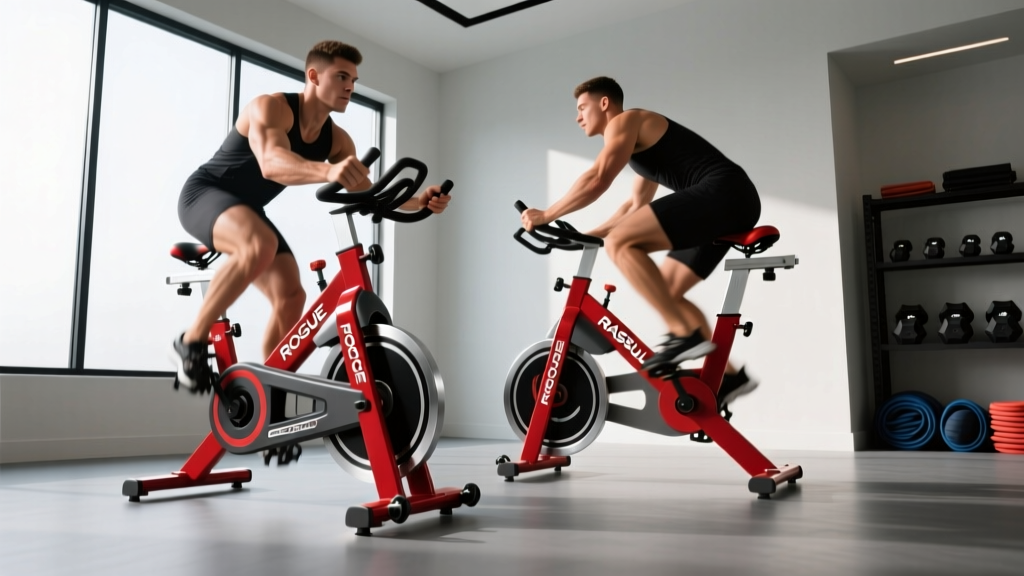
Air Bike vs Assault Bike: Budget & Lifetime Treadmill ROI

Walking Barefoot on a Treadmill: Is It Safe?
Treadmill Manual: Budgeting for Manual Treadmill Belt Care