
Treadmill Safety Key Not Working? Motor Size & HP Guide
Is your treadmill safety key not working? Discover how motor size, CHP ratings, and electrical overload cause console errors, plus our 2026 HP buying guide.

The Hidden Link: Treadmill Safety Key Not Working & Motor Overload
Stepping onto your treadmill, attaching the magnetic clip, and seeing a blank or unresponsive console is one of the most frustrating cardio interruptions. When your treadmill safety key not working error occurs, most users immediately blame the magnet or the console display. However, as fitness equipment technicians frequently note, the root cause often traces back to an undersized or failing treadmill motor and its associated control board.
⚠️ Technical Warning: An undersized motor forced to pull a heavier load will draw excessive amperage. This over-amping creates voltage sags and back-electromotive force (back-EMF) spikes that can scramble the console's microcontroller or permanently damage the reed switch circuit responsible for reading your safety key.In this comprehensive guide, we will bridge the gap between advanced console troubleshooting and our definitive 2026 treadmill motor size and horsepower buying guide. Understanding how continuous horsepower (CHP) impacts your machine's electrical ecosystem is critical for both fixing your current machine and buying a replacement that won't fail under pressure.
Demystifying Treadmill Motors: Peak HP vs. Continuous Horsepower (CHP)
To understand why motor strain destroys console components, you must first understand how manufacturers rate treadmill motors. According to Consumer Reports, the fitness industry relies heavily on Continuous Horsepower (CHP) rather than Peak HP to determine a machine's true capability.
- Peak HP: The absolute maximum power the motor can generate for a fraction of a second before tripping the internal breaker. It is largely a marketing gimmick.
- Continuous Horsepower (CHP): The power the motor can sustain indefinitely during a normal workout without overheating or drawing excessive voltage from your home's electrical circuit.
- Brushless DC Motors: Standard on premium 2026 models, these use electronic commutation rather than physical brushes, reducing friction, heat, and the electrical noise that interferes with console sensors.
| Motor Rating | Ideal Use Case | Max User Weight | Risk of Console Overload |
|---|---|---|---|
| 1.5 - 2.0 CHP | Light walking only | Under 150 lbs | High (if used for jogging) |
| 2.5 - 3.0 CHP | Jogging & regular running | 150 - 220 lbs | Low (Industry Standard) |
| 3.5 - 4.0+ CHP | Sprinting & heavy users | 220 - 350+ lbs | Very Low |
Step-by-Step Troubleshooting: When the Safety Key Fails
Before assuming your motor is dead, follow this precise diagnostic sequence to isolate the failure point. You will need a standard digital multimeter.
1. Inspect the Neodymium Magnet and Reed Switch
The safety key contains a small neodymium magnet. Inside the console, directly behind the key slot, sits a 'reed switch'—a tiny glass tube with two metal contacts that close when exposed to a magnetic field. Over time, the adhesive holding the magnet inside the plastic key housing can fail, or the reed switch can shift out of alignment.
Fix: Remove the console hood. Locate the reed switch. Pass a separate, strong refrigerator magnet over it while the machine is plugged in. If the console beeps or turns on, your safety key magnet is weak or misaligned. Replacement keys cost between $12 and $25.
2. Test for Motor-Induced Voltage Sag
If the console turns on but shuts off the moment you step on the belt (triggering a safety key error code), your motor is likely drawing too many amps due to belt friction or an undersized CHP rating.
Fix: Test the deck friction. Unplug the machine and try to push the belt by hand. If it requires significant force, the deck needs silicone lubrication. A dry belt forces a 2.5 CHP motor to pull 15+ amps, causing the Motor Control Board (MCB) to cut power to the console to protect the circuit.
3. Check the Motor Control Board (MCB) for Back-EMF Damage
If the motor is undersized for your body weight, the resulting electrical spikes can blow the opto-isolator on the MCB that communicates with the console.
Fix: Look at the MCB (located near the motor hood). If you see scorch marks or bulging capacitors, the board is fried. Replacing an MCB typically costs $120 to $280, depending on the brand (e.g., Sole or Horizon).
"As Runner's World advises, matching your treadmill's motor size to your body weight and running style is the single most effective way to prevent catastrophic electrical failures and extend the lifespan of the console components."
2026 Motor Sizing Framework by User Profile
If your current machine's motor has failed or caused irreversible console damage, it is time to upgrade. Use this framework to select the correct motor size for your household in 2026.
The Walker / Light Jogger (Under 160 lbs)
Target Motor: 2.0 to 2.25 CHP
Expected Price Range: $600 - $900
Recommendation: Look for models with integrated cooling fans. Even at 2.0 CHP, heat is the enemy of the lower control board. The Horizon Fitness T101 remains a staple in this tier, offering adequate continuous power without straining the home circuit.
The Daily Runner (160 - 220 lbs)
Target Motor: 2.75 to 3.25 CHP
Expected Price Range: $1,100 - $1,800
Recommendation: This is the sweet spot for longevity. A 3.0 CHP motor running at 6 MPH is operating at roughly 60% capacity, meaning it generates minimal heat and electrical noise, keeping your console and safety key sensors perfectly safe. The Sole F80 features a robust 3.5 CHP motor that easily handles this tier.
The Heavy Sprinter / Multi-User Home (220+ lbs)
Target Motor: 3.5 to 4.0+ CHP
Expected Price Range: $2,200 - $3,500+
Recommendation: You need a massive flywheel and a high-torque brushless motor. Undersizing here guarantees MCB failure within 18 months. Commercial-grade options like the NordicTrack EXP 14i or light-commercial Matrix T7xe utilize heavy-duty copper windings that resist voltage sag entirely.
Preventative Maintenance to Protect Your Console
Whether you are fixing a safety key error or protecting a brand-new 2026 purchase, maintaining the electrical ecosystem is paramount.
- Lubricate the Deck Quarterly: Use 100% silicone treadmill lubricant. Never use WD-40 or petroleum-based oils, which will destroy the deck and cause massive motor amperage spikes.
- Use a Dedicated Circuit: Plug your treadmill directly into a wall outlet on a 15-amp or 20-amp dedicated breaker. Using an extension cord or a shared power strip causes voltage drops that mimic safety key failures and corrupt console memory.
- Surge Protection: Install a UL-listed surge protector rated for at least 4000 Joules to protect the console's delicate reed switch circuitry from grid fluctuations.
By understanding the critical relationship between continuous horsepower, electrical load, and console sensors, you can accurately diagnose a faulty safety key and make an informed, long-lasting investment in your home cardio setup.
More gear to consider
All reviews
Sandpaper Treadmill Troubleshooting and Feature Comparison

Stair Climber Fix & WalkingPad Denise Austin 2.0 Double-Fold Treadmill
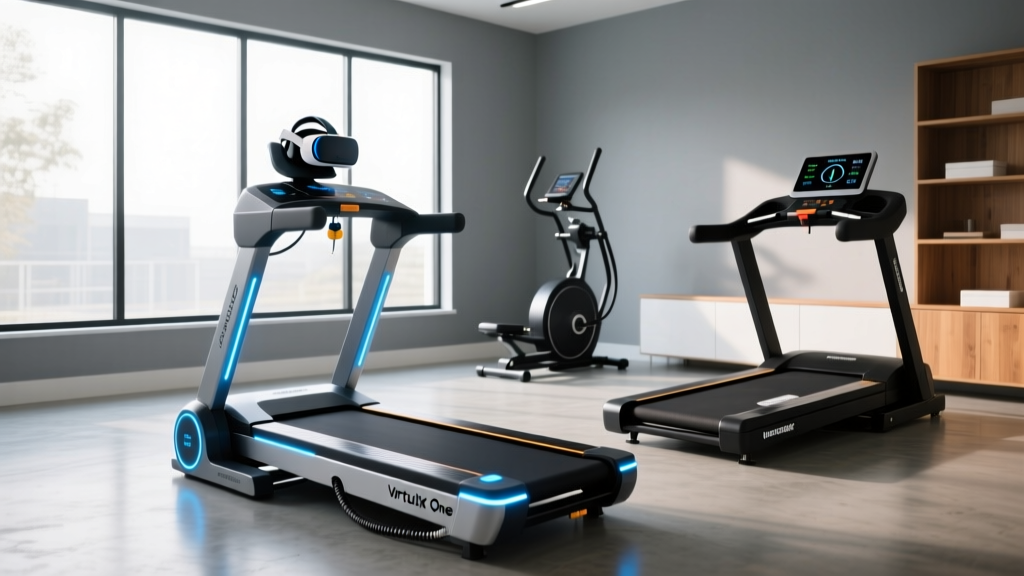
Virtuix Omni One VR Treadmill vs Traditional: Motor HP Guide

Elliptical vs Treadmill: High Blood Pressure During Treadmill Stress Test

ProShox Cushioning Treadmill Showdown: Sole F80 vs. NordicTrack 1750
