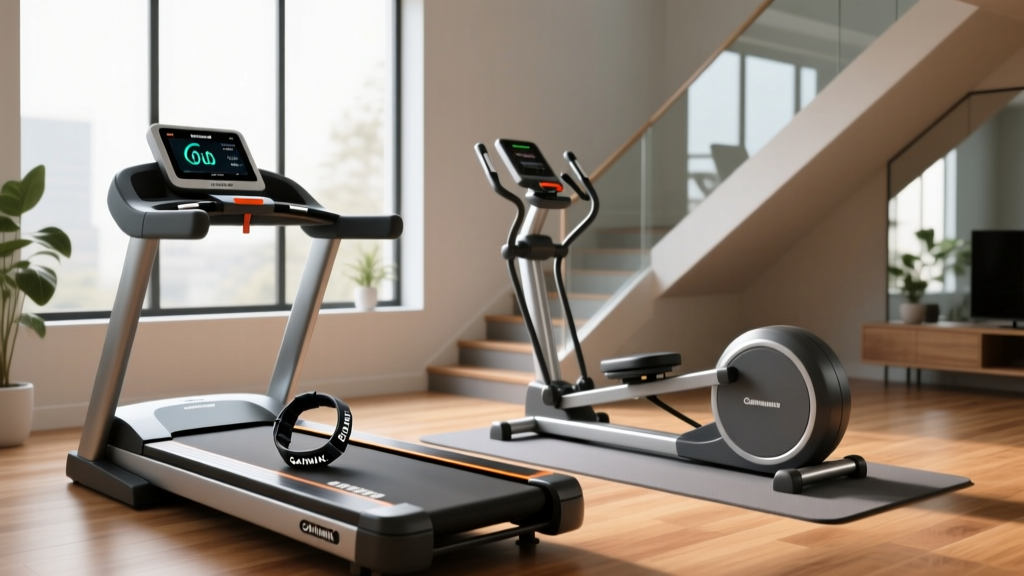
Treadmill Running and Knee Pain? Air Bike vs Assault Bike Guide
Struggling with treadmill running and knee pain? Our 2026 hands-on comparison of top air and assault bikes reveals the best low-impact cardio alternatives.

The Biomechanics of Impact: Why Treadmill Running and Knee Pain Collide
If you are an endurance athlete, a CrossFit competitor, or a weekend warrior, the intersection of treadmill running and knee pain is likely a frustrating reality you have faced. Every time your foot strikes a treadmill belt, your body absorbs ground reaction forces (GRF) equivalent to 2.5 to 3 times your body weight. According to the Mayo Clinic, repetitive loading of this magnitude is a primary catalyst for patellofemoral pain syndrome (runner's knee), IT band friction, and patellar tendinopathy.
When treadmill running and knee pain become a chronic cycle, the standard advice is simply to 'rest.' But for athletes who need to maintain cardiovascular output and metabolic conditioning, rest is often not an option. This is where the air bike (often generically referred to by the trademarked Assault Bike) enters the conversation as the ultimate biomechanical pivot.
The Low-Impact Pivot: Concentric-Only Cardio
Air bikes utilize wind resistance generated by a massive front fan. Because the resistance scales exponentially with your effort, they offer a unique physiological benefit: concentric-only muscle contraction. Unlike the eccentric loading phase of running (where your muscles lengthen under tension to absorb impact), cycling on an air bike eliminates the eccentric pounding. This makes it the gold standard for active joint rehabilitation and maintaining VO2 max without aggravating inflamed knee cartilage or tendons.
Expert Warning: Not all air bikes are created equal for bad knees. The critical metric you must look at is the Q-factor (the horizontal distance between the outside of the pedals). A wide Q-factor forces the knees into a valgus (inward) or splayed tracking pattern, which can actually worsen IT band and lateral knee pain. We evaluate this heavily in our 2026 hands-on reviews below.2026 Hands-On Reviews: The Premium Air Bike Lineup
We have spent the last three months testing the top three premium air bikes on the market, specifically evaluating their suitability for athletes nursing knee injuries.
1. Assault Fitness AssaultBike Pro X
The original Assault Bike was notorious for its rattling chain drive and slightly narrow but unforgiving seat. The 2026 Pro X model, however, is a masterclass in engineering refinement. Priced at approximately $1,099, it features a heavy-duty polyurethane belt drive that is virtually silent and requires zero lubrication.
- Q-Factor: ~15 inches. This is relatively narrow, closely mimicking the natural hip-width stance of running, which promotes excellent patellar tracking.
- Seat: The new 4-way adjustable ergonomic saddle is a massive upgrade, reducing perineal pressure during long Zone 2 rehab sessions.
- Verdict for Knee Pain: Excellent. The narrow Q-factor and smooth belt drive prevent the micro-stutters that can aggravate a sensitive meniscus.
2. Rogue Echo Bike V2
The Rogue Echo Bike V2 (approx. $1,150) is the undisputed tank of the industry. Built with a massive steel frame, it offers zero flex even during max-wattage sprints. However, its design philosophy prioritizes stability over biomechanical narrowness.
- Q-Factor: ~18.5 inches. This is notoriously wide. For athletes with wider hips, this is great. But for runners with narrow hips, this wide stance can create lateral knee stress and IT band friction.
- Drive System: Belt-driven with a highly responsive fan. The console is arguably the best on the market for tracking wattage and heart rate intervals.
- Verdict for Knee Pain: Proceed with caution. If your knee pain is rooted in IT band syndrome or lateral tracking issues, the Echo's wide stance may exacerbate the problem. It is better suited for those with medial knee issues or those with naturally wider hip anatomy.
3. Schwinn Airdyne AD7
The Schwinn Airdyne AD7 (approx. $1,199) is the legacy brand's premium offering. It utilizes a single-stage belt drive that feels incredibly smooth, lacking the initial 'bite' of the Rogue or Assault, making it easier to start from a dead stop with a bad knee.
- Q-Factor: ~14 inches. The narrowest in our test group. This forces a highly upright, natural knee-tracking path that virtually eliminates lateral joint stress.
- Airflow: The 26-blade fan is designed to push air toward the rider, acting as a built-in cooling system during grueling sessions.
- Verdict for Knee Pain: The absolute best choice for severe patellar tendinopathy or post-operative ACL rehab due to the ultra-narrow pedal stance and buttery-smooth belt engagement.
Head-to-Head Comparison Matrix
| Model | 2026 Price | Drive System | Q-Factor | Best For |
|---|---|---|---|---|
| AssaultBike Pro X | $1,099 | Belt | ~15.0' | All-around runners, CrossFit |
| Rogue Echo Bike V2 | $1,150 | Belt | ~18.5' | High-wattage sprinters, wide hips |
| Schwinn Airdyne AD7 | $1,199 | Belt | ~14.0' | Severe knee rehab, narrow hips |
The 4-Week Knee Rehab Air Bike Protocol
Transitioning away from treadmill running and knee pain requires a structured approach. Do not jump onto an air bike and attempt your usual 10K running volume. Follow this 4-week concentric-loading protocol recommended by sports physical therapists to rebuild tendon capacity without triggering inflammation.
Week 1: Blood Flow and Flushing (Zone 2)
Goal: Stimulate synovial fluid production in the knee joint without structural loading.
Protocol: 3 sessions per week. 20-30 minutes of steady-state cycling at 50-60 RPM. Keep your heart rate in Zone 2 (approx. 120-135 BPM). Do not use the arm handles; isolate the legs to focus on smooth, circular pedal strokes.
Week 2: Introduction to Cadence Spikes
Goal: Reintroduce neurological firing rates without heavy resistance.
Protocol: 3 sessions per week. 10-minute warm-up. Then, perform 8 x 10-second 'spin-ups' (increasing RPM to 80-90 without pushing heavy wattage). Rest 50 seconds between efforts. Cool down for 10 minutes.
Week 3: Sub-Threshold Wattage Intervals
Goal: Build lactate threshold capacity to replace lost running fitness.
Protocol: 2 sessions per week. 5 x 3-minute intervals at 85% of your max sustainable wattage, followed by 2 minutes of active recovery. The air bike's wind resistance will naturally cap your top speed, preventing the dangerous over-striding that causes runner's knee on a treadmill.
Week 4: The Run-Bike Integration
Goal: Test the knee's readiness for impact.
Protocol: Warm up for 15 minutes on the air bike to thoroughly heat the joint capsule and surrounding musculature. Immediately transition to a treadmill or track for a 10-minute easy run. If pain remains below a 2/10, you are cleared to begin a progressive return-to-run program. As noted by Assault Fitness's athletic training guidelines, pre-fatiguing the muscles via cycling stabilizes the knee joint before impact loading.
Frequently Asked Questions
Can I use an air bike if I have a meniscus tear?
Yes, but with strict form requirements. Avoid standing up on the pedals (which increases compressive forces on the meniscus) and keep the seat height high enough so that your knee retains a 15-to-20-degree bend at the bottom of the pedal stroke. A seat that is too low will cause deep meniscal pinching.
Why is my IT band hurting more after switching to the Rogue Echo?
This is almost certainly a Q-factor issue. The Rogue Echo's wide 18.5-inch pedal stance forces the tibia into a slight outward angle relative to the femur, increasing tension on the IT band at the lateral femoral epicondyle. If you have IT band syndrome, we strongly recommend the Schwinn AD7 or the AssaultBike Pro X for their narrower stances.
Is wind resistance better than magnetic resistance for bad knees?
Wind resistance (air bikes) is infinite and scales with your effort, meaning you can never 'drop' a heavy gear and shock the knee joint. Magnetic bikes have fixed gear ceilings. For rehab, the smooth, self-limiting nature of an air bike's fan is generally safer and more forgiving on inflamed patellar tendons.
Final Thoughts
You do not have to sacrifice your cardiovascular engine just because you are dealing with treadmill running and knee pain. By strategically swapping high-impact running for concentric-only air bike conditioning, you can maintain your VO2 max while allowing your joint structures to heal. Choose a bike with a Q-factor that matches your hip anatomy, follow a progressive loading protocol, and you will be back on the pavement stronger and pain-free.
More gear to consider
All reviews
Curved vs Motorized: Beginner Guide to Treadmill Weight Capacity

NordicTrack T6.5 Treadmill Setup & Motor Horsepower Guide
SportsArt Fitness Treadmill Setup: Curved vs Motorized

Slatted Belt Treadmill for Under Desk Use: 2026 Value Analysis

Elliptical vs Treadmill: Home Cardio & The Folding Treadmill Manual