Air Bike vs Assault Bike: Space Layouts & 40 Min Treadmill Calories
Compare the Rogue Echo and AssaultBike Elite for space optimization. Learn layout tips and how they stack up against 40 min treadmill calories.

The Spatial Economy: Footprint vs. Caloric Yield
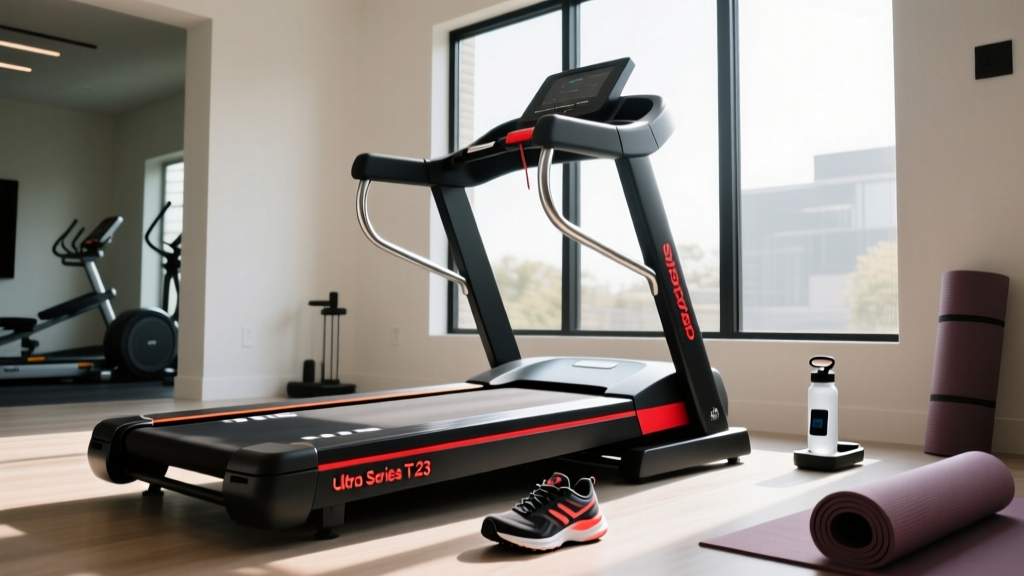
Designing a high-performance home gym in 2026 requires a ruthless approach to spatial economics. Every square foot of your layout must justify its existence through functional yield. For years, the traditional motorized treadmill has been the default anchor for home cardio zones. However, when evaluating the ROI of your floor plan, many home gym owners obsess over maximizing 40 min treadmill calories without realizing they are sacrificing up to 25 square feet of usable space to achieve it.
Enter the modern air bike. By combining upper-body push/pull mechanics with lower-body cycling, fan-resistance bikes offer a vastly superior caloric burn per minute while occupying less than half the footprint of a standard treadmill. But not all air bikes are created equal, and choosing the wrong model can severely disrupt your room's layout, traffic flow, and maintenance access. In this guide, we break down the spatial and metabolic realities of the two market leaders: the Rogue Echo Bike V2 and the Assault Fitness AssaultBike Elite.
Rogue Echo V2 vs. AssaultBike Elite: A Dimensional Breakdown
Before drawing up your gym floor plan, you must understand the exact physical boundaries of your equipment. While both machines look similar at a glance, their engineering differences dictate how they interact with your space.
| Specification | Rogue Echo Bike V2 | AssaultBike Elite |
|---|---|---|
| Dimensions (L x W x H) | 52.2" x 29.8" x 53.5" | 50.9" x 29.5" x 54.0" |
| Total Footprint | ~10.8 sq. ft. | ~10.4 sq. ft. |
| Drive System | Belt Drive (Quiet) | Chain Drive (Loud) |
| Weight | 125 lbs | 145 lbs |
| Approx. Price (2026) | $995.00 | $1,299.00 |
From a purely spatial perspective, the difference in footprint is negligible. However, the operational footprint—defined by the space required for airflow, user mounting, and maintenance—is where layout designers must pay attention.
Designing the Optimal Layout: Clearances and Airflow
A common mistake in home gym layout design is pushing cardio machines flush against walls or adjacent power racks. Air bikes require specific spatial buffers to function correctly and safely.
Wall and Equipment Clearances
- Front Intake Buffer (24 Inches): Air bikes generate massive wind resistance by pulling air through the front fan. You must leave at least 24 inches of clear space in front of the bike to prevent restricted airflow and to ensure the console doesn't suffocate.
- Rear Exhaust Buffer (18 Inches): The air expelled from the back of the fan carries dust and debris. Keep this zone clear of mirrors, drywall, or sensitive electronics.
- Right-Side Maintenance Access (18 Inches): This is critical for the Rogue Echo V2. The Echo utilizes a belt-drive system. To access the belt tensioner and perform routine maintenance, you need a minimum of 18 inches of clearance on the right side of the bike. The chain-driven AssaultBike Elite requires less frequent side-access but still benefits from a 12-inch buffer for chain lubrication.
- Mounting/Dismounting Zone (36 Inches): The lateral swinging motion of the arm handles extends roughly 14 inches on either side of the centerline. Allow a 3-foot radius on both sides for safe mounting, especially when fatigued.
Air bikes displace a high volume of air. If you place your bike in a tight corner or a closed garage gym, the recirculated exhaust air will rapidly increase the ambient temperature of your workout zone. Position the bike so the rear exhaust aligns with an open garage door, a high-velocity floor fan, or an HVAC return vent.
The Caloric Reality Check: Air Bikes vs. 40 Min Treadmill Calories
Why make the spatial sacrifice to swap a treadmill for an air bike? The answer lies in metabolic equivalents (METs) and total energy expenditure. According to the American Heart Association, achieving vigorous-intensity cardiovascular benefits requires significantly less time when utilizing full-body resistance modalities compared to steady-state lower-body cardio.
Let's look at the hard data for a 180 lb (81.6 kg) athlete:
- The Treadmill Baseline: Running at a moderate pace of 6.0 mph (10-minute miles) for 40 minutes yields approximately 450 to 500 calories. This requires a dedicated 25 sq. ft. footprint, a 20-amp electrical circuit, and generates significant impact noise.
- The Air Bike Equivalent: Maintaining a vigorous pace of 60-65 RPM on an air bike engages the chest, back, shoulders, core, and legs simultaneously. The MET value for this intensity spikes to roughly 10.0 - 12.0. In just 25 minutes, the same athlete will burn upwards of 400 to 450 calories.
"When optimizing a home gym for time-efficiency and spatial economy, the air bike is unmatched. You are effectively compressing the caloric yield of a 40-minute treadmill run into a 20-minute high-output interval session, freeing up both floor space and your daily schedule."
If your goal is strictly to hit a specific threshold of 40 min treadmill calories but you lack the square footage for a commercial-grade runner, an air bike allows you to surpass that caloric threshold in half the time, using half the space.
Acoustics, Flooring, and Vibration Dampening
Space optimization isn't just about visual layout; it's about acoustic and structural integration. The Centers for Disease Control and Prevention (CDC) notes that environmental barriers, such as noise pollution, are primary deterrents to consistent home exercise. Your choice of air bike directly impacts your room's acoustic profile.
The Drive System Dilemma
The AssaultBike Elite uses a traditional chain drive. While it offers a raw, mechanical feel preferred by CrossFit competitors, it generates a distinct metallic clatter that can reach 75-80 decibels at high RPMs. If your gym is located on a shared floor or above a living space, this vibration transfer is a major layout constraint.
The Rogue Echo V2 utilizes a polyurethane belt drive. It operates at roughly 60-65 decibels, making it the superior choice for multi-use spaces, apartments, or garage gyms with thin drywall.
Subfloor Protection Strategy
Despite their smaller footprint, air bikes concentrate immense point-load weight and sweat corrosion into a tiny area. Do not place these machines directly on hardwood, carpet, or bare concrete.
- Base Layer: Lay down a 6x4 foot section of 3/4" thick vulcanized rubber horse stall mats. This provides the necessary density to prevent the bike's leveling feet from cracking your subfloor during high-torque sprints.
- Moisture Barrier: Place a specialized PVC equipment mat (at least 4mm thick) directly under the bike's footprint to catch acidic sweat, which will rapidly degrade rubber mats and stain concrete over time.
Final Verdict: Anchoring Your Cardio Zone
When finalizing your home gym layout, the decision between the Rogue Echo V2 and the AssaultBike Elite comes down to your spatial constraints and acoustic tolerance. If you are designing a multi-use room, a basement gym with low ceilings, or a space where maintenance access is tight, the belt-driven Rogue Echo V2 at $995 is the undisputed champion of spatial harmony and low-decibel operation.
However, if you are building a dedicated, high-intensity garage gym where raw mechanical feedback and heavy-duty chain durability are paramount, the AssaultBike Elite justifies its $1,299 price tag. Ultimately, by ditching the bulky treadmill and embracing the compact, brutal efficiency of the air bike, you will easily eclipse your 40 min treadmill calories target while reclaiming the space you need for a power rack, dumbbells, and functional movement.
More gear to consider
All reviews
Air Bike vs Assault Bike Trends: Beyond How Do You Spell Treadmill
Home Stair Climber Fixes & Echelon Stride 50 RCX Treadmill Guide

Under Desk Treadmill Review: Care Tips & 3.0 HP Treadmill Myths
Air Bike vs Assault Bike: Budget & Treadmill Measurements Space Guide

NordicTrack C1650 Treadmill Belt Maintenance Trends