
9 Incline on Treadmill: Is It Good? 2026 Workout Guide
Wondering if a 9 incline on treadmill workouts are effective? Discover the benefits, calorie burn, and best 2026 treadmills for steep incline training.

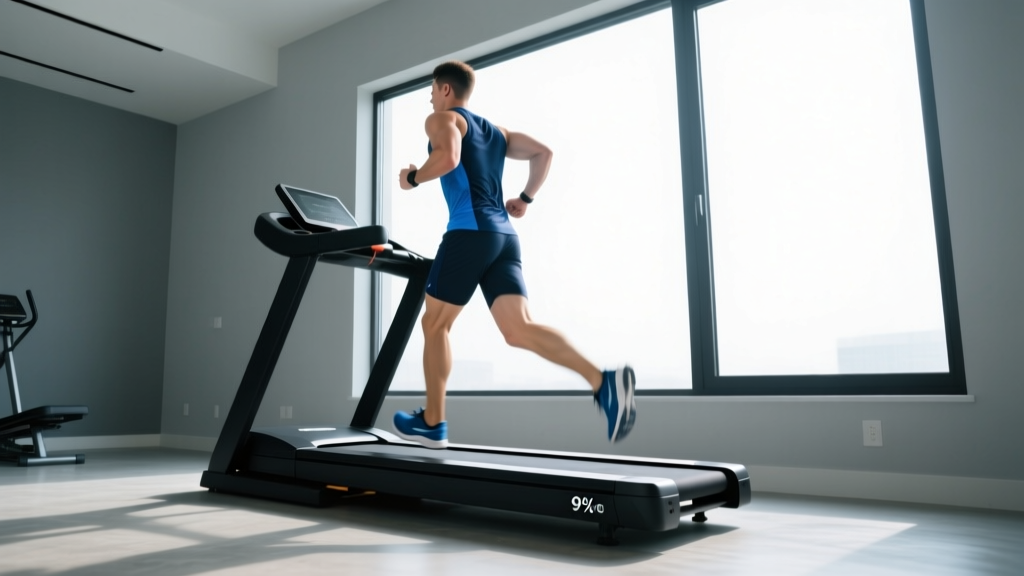
Setting your machine to a 9 incline on treadmill workouts bridges the gap between flat-ground jogging and intense alpine climbing. If you are asking whether this specific gradient is optimal for your fitness journey, the short answer is yes. It maximizes posterior chain activation without the severe Achilles strain associated with maximum 15% grades. In this comprehensive 2026 guide, we break down the biomechanics, calorie expenditure, equipment stress, and the best treadmills engineered to handle this specific load.
What Does a 9% Grade Actually Mean?
Many users confuse treadmill incline percentages with degrees. A 9% grade does not mean the deck is tilted at a 9-degree angle. Instead, it represents a 9-unit vertical rise for every 100 units of horizontal distance. This mathematical distinction is crucial because a 9% grade is actually closer to a 5.14-degree angle. While that might sound modest, in the context of human biomechanics and sustained cardiovascular effort, a 9% grade drastically alters your metabolic demand and muscle recruitment patterns compared to a flat surface.
Is a 9 Incline on Treadmill Good for Your Goals?
When evaluating if a 9 incline on treadmill settings are beneficial, we must look at the physiological adaptations it triggers. According to the American Council on Exercise (ACE), walking on an incline significantly increases the activation of the gluteus maximus, hamstrings, and calves. At exactly 9%, you hit a 'sweet spot' where the cardiovascular system is heavily taxed, but the mechanical load on the lower back remains manageable for extended durations.
Fat Burning vs. Cardio Endurance
Walking at 3.0 mph on a flat surface requires roughly 3.3 METs (Metabolic Equivalent of Task). When you elevate the deck to a 9% grade, that demand skyrockets to approximately 8.5 METs. This is metabolically equivalent to running at 5.5 mph on a flat surface, but it keeps your heart rate in the optimal Zone 2 or Zone 3 fat-oxidation threshold without the high-impact ground reaction forces. For those utilizing the popular '12-3-30' viral workout, dropping the incline to 9 while maintaining the 3.0 mph speed is an excellent regression for beginners or a sustainable daily protocol for advanced athletes avoiding central nervous system burnout.
Joint Impact and Biomechanics
Is a 9 incline on treadmill good for your knees? Biomechanical research published in the National Library of Medicine indicates that incline walking reduces the peak patellofemoral joint stress compared to level walking or running. Because your foot strikes the belt closer to your center of mass and your knee flexion angle is altered, the sheer force on the meniscus and ACL is minimized. However, it does increase the moment arm on the hip extensors, meaning your glutes work significantly harder.
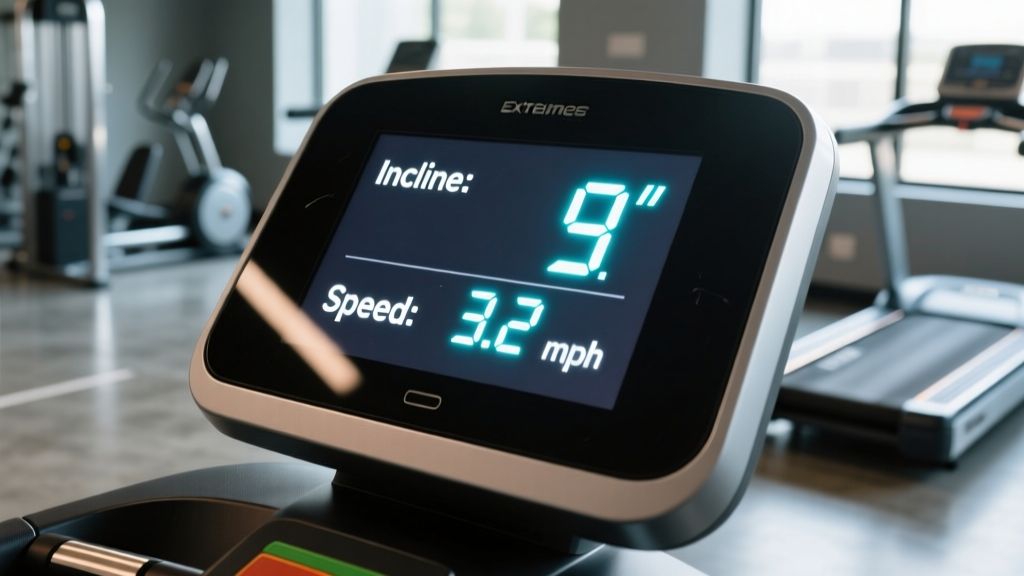
How to Train at Incline 9: Protocols & Routines
Utilizing incline 9 effectively requires structured programming. Simply hopping on and walking until you are fatigued often leads to poor posture, such as holding onto the handrails, which completely negates the caloric and muscular benefits of the gradient. Below is a highly effective 35-minute steady-state protocol designed for 2026 fitness standards.
| Phase | Time | Speed (mph) | Incline | Focus Cue |
|---|---|---|---|---|
| Warm-Up | 0:00 - 5:00 | 2.5 | 2% - 5% | Dynamic ankle mobility, arm swing |
| Ramp Up | 5:00 - 10:00 | 3.0 | 6% - 8% | Engage core, lean slightly forward from ankles |
| The Crucible | 10:00 - 30:00 | 3.0 - 3.2 | 9% | Hands off rails, drive through the heel |
| Flush Out | 30:00 - 35:00 | 2.5 | 3% | Deep breathing, calf stretching |
2026 Treadmill Buyer Matrix: Handling the 9% Grade
Not all treadmills are built for sustained incline work. When you lock in a 9 incline on treadmill settings for 30+ minutes, the gravitational resistance places immense thermal stress on the drive motor. Cheap 2.0 HP motors will overheat, trigger thermal shutdowns, and eventually burn out. For consistent incline training in 2026, you need a minimum of a 3.0 Continuous Horsepower (CHP) motor, a heavily lubricated 2-ply belt, and a reinforced hydraulic lift mechanism.
Here is how the top mid-tier and premium treadmills handle the 9% mark this year:
| Model (2026 Lineup) | Motor (CHP) | Max Incline | Deck Length | Price (MSRP) | Best For |
|---|---|---|---|---|---|
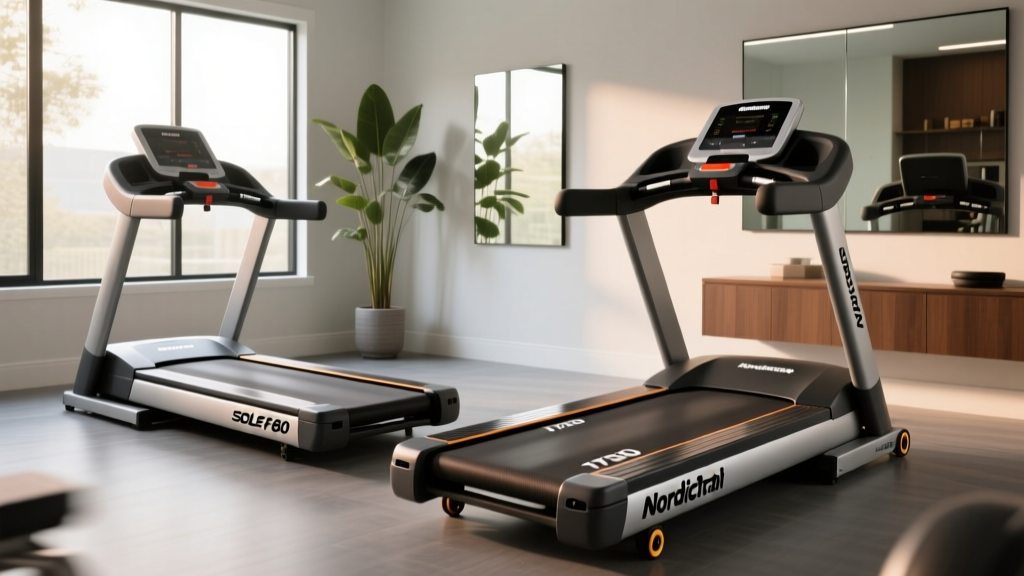
| Sole F80 | 3.5 CHP | 15% | 60 inches | $1,199 | Heavy-duty incline walking & running |
| Horizon 7.4 | 3.0 CHP | 15% | 58 inches | $999 | Budget-conscious incline walkers |
| NordicTrack 1750 | 3.5 CHP | 12% | 60 inches | $1,999 | iFIT auto-adjusting incline routes |
| ProForm Pro 9000 | 3.0 CHP | 12% | 55 inches | $1,299 | Compact spaces, moderate incline |
Equipment Stress and Maintenance at High Gradients
Operating at incline 9 or higher increases the friction between the deck and the belt. In 2026, most premium models feature wax-infused belts or automated silicone dispensers, but if you are doing daily steep incline walks, you must manually check your belt tension every 90 days. A slipping belt at a 9% grade will cause the motor to draw excess amperage, which can fry the lower control board. Always ensure your machine is plugged directly into a dedicated 15-amp or 20-amp wall outlet, never a power strip, to handle the amperage spikes during incline transitions.
Frequently Asked Questions
Is a 9 incline on treadmill good for beginners?
Yes, but it should be approached progressively. For a complete beginner, a 9% grade will cause rapid calf fatigue and potential shin splints if attempted for long durations. Beginners should start at a 3% to 5% grade for 15 minutes, adding 1% to the incline every week until they can comfortably sustain incline 9 for 30 minutes without holding the handrails.
How many calories do you burn at incline 9?
Calorie expenditure is highly dependent on your body weight and speed. A 160 lb person walking at 3.0 mph on a flat surface burns roughly 3.5 calories per minute. At a 9% incline, that same person burns approximately 9.5 calories per minute. Over a 30-minute session, that equates to roughly 285 calories, nearly tripling the caloric output of flat walking while maintaining a low-impact stride.
Does walking at a 9 incline build muscle?
While it will not build muscle mass like heavy barbell squats or deadlifts, walking at a 9% grade induces hypertrophy and significant muscular endurance in the posterior chain. The gluteus maximus, hamstrings, and gastrocnemius (calves) are forced to lift your entire body weight against gravity with every step. Over time, this results in denser, more toned lower-body musculature and improved explosive power for activities like hiking and cycling.
What is the difference between incline 9 and 12?
The jump from 9% to 12% is exponentially more difficult than the jump from 0% to 3%. At 12%, the ankle dorsiflexion required at the top of the stride pushes the limits of average ankle mobility, often forcing users to shorten their stride or lean excessively forward, which can strain the lumbar spine. Incline 9 offers the vast majority of the cardiovascular and glute-building benefits of a 12% grade but allows for a more natural, upright walking posture and a full range of motion.
Should I hold the handrails when walking at a 9% grade?
No. Holding the handrails while the deck is elevated alters your center of gravity, effectively reducing the incline's true mechanical load by up to 30%. It also promotes a hunched thoracic posture, restricting diaphragmatic breathing. If you feel the need to hold on, the speed or the incline is too high. Lower the speed to 2.5 mph, keep your arms pumping naturally, and let your lower body do the work.
More gear to consider
All reviews
Stationary Bikes vs Vacu Therm Treadmill: Budget Breakdown
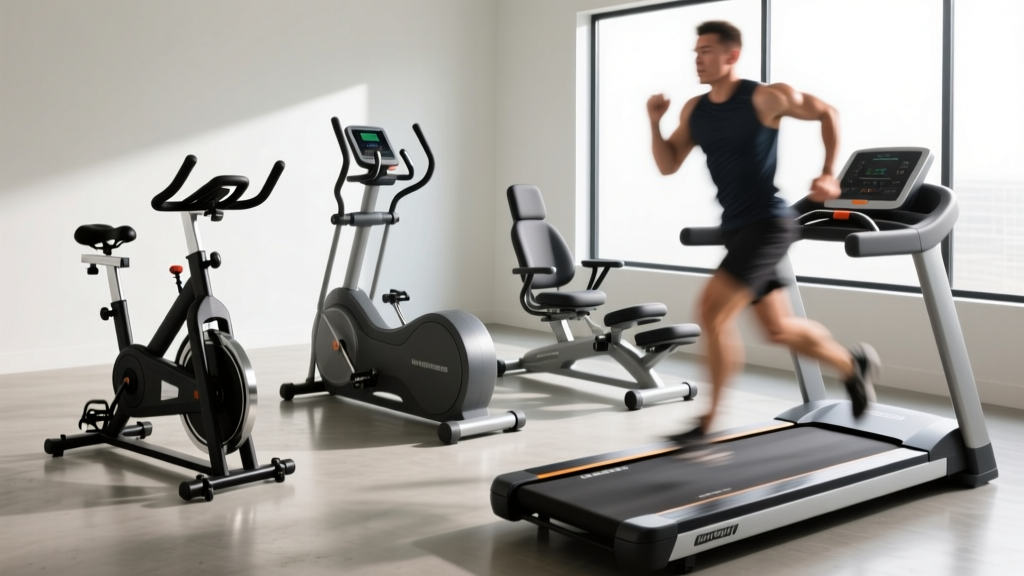
Budget Bikes vs Interval Sprints on Treadmill: Spin & Upright Value
Decibel Showdown: Base Treadmill Noise Levels vs. Traditional Cardio Machines

ProForm Crosswalk 395 Treadmill vs Under Desk Treadmills: 2026 Trends
Treadmill Wheel Noise Showdown: Sole F80 vs. NordicTrack 1750
