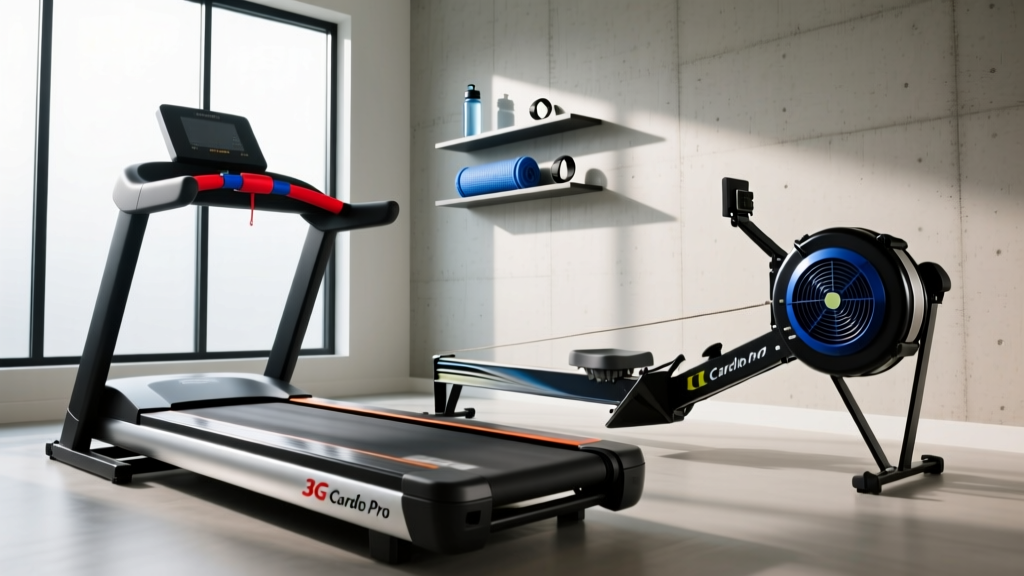
3G Cardio Pro Runner Treadmill vs Rowing: Buying & Technique Mistakes
Transitioning from the 3G Cardio Pro Runner Treadmill to a rowing machine? Avoid common buying pitfalls and technique mistakes with our expert guide.

The Pivot: Why Runners Are Leaving the 3G Cardio Pro Runner Treadmill
The 3G Cardio Pro Runner Treadmill is a highly respected fixture in compact home gyms. With its reliable 3.0 CHP motor, 20" x 48" running surface, and folding mechanism, it delivers excellent value (typically around $1,199) for daily walkers and light runners. However, a growing trend in home fitness is the transition from impact-heavy treadmills to full-body indoor rowing machines. While the 3G Cardio Pro Runner is excellent for lower-body cardiovascular conditioning, repetitive striking forces on a treadmill can exacerbate joint fatigue over time.
Rowing offers a zero-impact, horizontal power-transfer alternative that recruits 86% of the body's musculature. Yet, transitioning from the biomechanics of running to the mechanics of the ergometer (indoor rower) is fraught with errors. Runners often bring treadmill habits to the rowing machine, leading to inefficient strokes, lower back pain, and poor purchasing decisions. This troubleshooting guide dissects the most common buying and technique mistakes made when swapping your treadmill for a rower.
⚠️ Troubleshooting Alert: If you are experiencing sharp lumbar pain after rowing, you are likely "shooting the slide" or rowing with an excessively low damper setting. Do not push through lower back pain; adjust your mechanics immediately.Buying Mistakes: Choosing the Wrong Resistance Type
When users upgrade from a sturdy treadmill like the 3G Cardio Pro Runner, they are accustomed to a certain level of build quality and dynamic resistance. The most common buying mistake is purchasing a cheap, entry-level magnetic rower (often priced between $200–$400) assuming all rowing machines feel the same.
Air vs. Magnetic vs. Water: The Rower's Dilemma
- Air Rowers (e.g., Concept2 RowErg, ~$990): The gold standard. Resistance is dynamically generated by your effort; the harder you pull, the more resistance the flywheel creates. This mimics the natural fatigue curve of running.
- Magnetic Rowers: Use magnets to create quiet, fixed resistance. While whisper-quiet, they often lack the "infinite" resistance ceiling that advanced athletes need, and cheaper models suffer from a jerky catch phase.
- Water Rowers (e.g., WaterRower Natural, ~$1,595): Offer beautiful aesthetics and a soothing swoosh sound, but the resistance curve feels heavier at the catch and lighter at the finish compared to air, which can confuse runners used to a consistent treadmill belt speed.
The Fix: If you want the durability and performance tracking equivalent to a premium treadmill, invest in an air rower. The Concept2 RowErg remains the undisputed benchmark for accuracy and longevity.
Setup Troubleshooting: The Damper Setting Myth
Treadmill users are used to cranking the incline to 8% or 10% on the 3G Cardio Pro Runner to simulate hills. Translating this mindset to a rowing machine leads to the most notorious setup error: pushing the damper lever to 10.
According to Concept2's official training guidelines, the damper is not a "difficulty dial"; it is a gearing mechanism. Setting it to 10 is equivalent to riding a bicycle in the heaviest gear. It forces you to pull slowly and places immense, unnecessary strain on your lumbar spine before your cardiovascular system is even challenged.
| Damper Setting | Drag Factor Equivalent | Best Used For | Treadmill Equivalent |
|---|---|---|---|
| 1 - 3 | 90 - 100 | Lightweight rowers, aerobic endurance, high stroke rate | Flat road, high cadence running |
| 4 - 5 | 110 - 130 | Standard testing, balanced power and speed (Olympic standard) | 1% incline, steady-state tempo run |
| 8 - 10 | 160 - 200+ | Heavy power strokes, strength training, low stroke rate | 8% incline, slow hill climbing |
The Fix: Access the "Drag Factor" menu on your rower's monitor. Adjust the physical damper lever until the screen reads between 110 and 130. This is the sweet spot for 90% of home athletes.
Technique Errors: The Drive Phase Breakdown
Running is a high-cadence, lower-body-dominant activity. When runners first sit on an ergometer, they instinctively try to generate power solely through their legs and arms, completely bypassing the core. This leads to a catastrophic technical flaw known as "shooting the slide."
What is Shooting the Slide?
Shooting the slide occurs when your hips and seat move backward toward the finish, but the handle doesn't move. Your legs extend fully, but your torso remains hinged forward. This dumps all the mechanical load directly onto your lower back, acting as a weak link between your legs and the handle.
"In rowing, the arms are merely ropes connecting the engine (the legs and hips) to the handle. If the ropes go slack or the hips open too early, the power is lost." — British Rowing Technique Guidelines
The Correct Kinematic Sequence
To troubleshoot this, you must rewire your brain to follow the proper sequence. Unlike the simultaneous joint extension in a running stride, the rowing drive is strictly sequential:
- Legs (60% of power): Push through the heels. The torso angle remains completely frozen, and the arms stay perfectly straight.
- Core/Hips (20% of power): Once the knees are nearly flat, swing the hips open (like performing a kettlebell swing).
- Arms (20% of power): Only after the hips have opened do the elbows bend, drawing the handle to the lower ribs.
Isolate the segments to fix shooting the slide. Row using only your arms for 10 strokes. Then, add the hip swing (arms + hips) for 10 strokes. Finally, add the legs (full stroke). This forces your brain to delay the hip hinge until the legs have done their job.
Troubleshooting the Recovery: Pacing and Stroke Rate
On the 3G Cardio Pro Runner Treadmill, a comfortable jogging cadence might be 160 to 180 steps per minute (SPM). Runners naturally gravitate toward high-rhythm, rapid-fire movements. On a rowing machine, this instinct is detrimental.
A common mistake is "rushing the slide." The recovery phase (moving from the finish back to the catch) should be a period of active rest. The ratio of drive to recovery should be 1:2. If your drive takes 1 second, your recovery should take 2 seconds.
Target Stroke Rates (SPM):
- Steady State Aerobic (30-40 mins): 18 - 22 SPM
- Tempo / Threshold Work: 24 - 26 SPM
- Sprint Intervals: 28 - 34 SPM
If you find yourself gasping for air at 30 SPM during a steady-state workout, you are rushing the slide and robbing yourself of the micro-recovery needed to sustain cardiovascular output. Slow down the slide; push harder on the drive.
Maintenance Troubleshooting: Keeping the Machine Pristine
Treadmills require belt lubrication and deck alignment. Air rowers require a different, albeit simpler, maintenance routine. Neglecting these steps will result in a jerky catch and premature wear.
- Chain Maintenance: Wipe the nickel-plated steel chain with a paper towel and apply 1-2 teaspoons of purified mineral oil or 20W motor oil every 50 hours of use. Never use WD-40 or silicone spray, as they attract dust and degrade the internal bungee cord.
- Monorail Cleaning: Wipe the stainless steel rail with a damp cloth after every session. Dust and sweat buildup will cause the seat rollers to stutter, mimicking a technical flaw in your catch phase.
- Monitor Battery Drain: If your PM5 monitor dies quickly, check if the fan cage is clogged with pet hair, preventing the flywheel from spinning fast enough to generate alternator power.
Final Verdict: Making the Switch
The 3G Cardio Pro Runner Treadmill remains an exceptional piece of equipment for vertical, weight-bearing cardio. However, if joint preservation, posterior chain development, and upper-body endurance are your evolving goals, the indoor rower is the ultimate upgrade. By avoiding cheap magnetic resistance models, respecting the drag factor, and meticulously sequencing your drive phase, you can unlock the full physiological benefits of the ergometer without the frustration of preventable errors.
For deeper insights into cardiovascular cross-training and joint preservation, resources from institutions like the Cleveland Clinic highlight how the horizontal nature of rowing drastically reduces orthopedic stress while maintaining elite VO2 max development. Treat the rower not as a treadmill with a seat, but as a heavy barbell that moves on a track, and your home gym results will transform.
More gear to consider
All reviews
Small Space Folding Treadmill Review: 2.0 Incline on Treadmill Care

Treadmill Motor HP Guide: Setup & Treadmill Belt Lube Checklist

Pro Performance 400 Treadmill & Bike Types: Space Layouts
Curved vs Motorized Treadmill: How to Grease a Treadmill Belt

Will a Plane on a Treadmill Takeoff? Curved vs Motorized Mistakes
