
Mastering the CrossFit Treadmill: EMOM and Sprint WOD Techniques
Master the crossfit treadmill with advanced EMOM programming, sprint interval techniques, and biomechanical tips for curved manual runners.


Integrating a crossfit treadmill into your conditioning arsenal requires a fundamental shift in how you approach pacing and biomechanics. Unlike motorized belts that dictate your speed, the manual curved runners standard in modern affiliate gyms demand that you generate the momentum. This self-propelled mechanic fundamentally alters the metabolic cost of your WODs, increasing caloric expenditure by up to 30% compared to flat, motorized counterparts while placing a significantly higher demand on your posterior chain.
Whether you are tackling a 5K endurance chipper or a high-intensity sprint couplet, mastering the physics of the curve is non-negotiable for optimal performance. Below, we break down the exact biomechanical adjustments, EMOM pacing frameworks, and equipment-specific nuances required to dominate manual runner workouts.
Biomechanics: Why Manual Runners Change Your WOD Strategy
The defining feature of any manual curved runner is its 30-degree incline at the front of the belt. To move the belt, you must drive your foot down and back, engaging the glutes and hamstrings far more aggressively than on a motorized treadmill. This eliminates the "pulling" assistance of a motorized belt and forces a strict mid-foot or forefoot strike.
Heel striking on a curved manual runner acts as a braking mechanism, instantly killing your momentum and spiking your heart rate prematurely. According to research published in the CrossFit Journal, optimizing power output in functional fitness requires movements that translate directly to real-world biomechanics. The manual runner mimics overground sprinting mechanics, demanding a forward torso lean of approximately 10 to 15 degrees from the ankles to maintain belt velocity without overstriding.

The 10-Degree Lean Rule
- Ankle Hinge: Lean from the ankles, not the hips. Hinging at the waist restricts diaphragm expansion and limits oxygen intake during Zone 4 and Zone 5 efforts.
- Arm Drive: Because the belt speed is entirely dependent on your force production, aggressive arm drive (cheek-to-hip) is required to sustain speeds above 12 mph on models like the AssaultRunner Elite.
- Cadence over Stride Length: Aim for 170-180 steps per minute. Overstriding on the curve pushes you up the incline, increasing resistance and accelerating lactic acid accumulation.
CrossFit Treadmill EMOM Programming Frameworks
Every Minute on the Minute (EMOM) intervals on a manual runner are notoriously brutal because the belt does not decelerate gradually when you fatigue; you must actively brake it. Designing an EMOM on a crossfit treadmill requires calculating your sustainable meters-per-minute (m/min) output rather than relying on perceived exertion.
Before starting any treadmill EMOM, perform a 3-minute max effort test. Take your total meters and multiply by 0.80. This yields your target EMOM distance per minute. Attempting to pace off your 100% max output will result in a metabolic crash by minute four due to the exponential energy cost of accelerating the heavy flywheel from a dead stop every 60 seconds.
Sample 12-Minute Lactic Threshold EMOM
This protocol targets the lactate threshold, forcing the body to clear hydrogen ions while maintaining a high mechanical output. The National Strength and Conditioning Association (NSCA) notes that intervals targeting 90-95% of VO2 max are optimal for increasing aerobic power in conditioned athletes.
| Minute | Work Interval | Target Distance | Rest Strategy |
|---|---|---|---|
| 1-4 | Build Pace | 140m - 150m | Walk slowly, do not grip handrails tightly |
| 5-8 | Threshold Hold | 160m - 170m | Hands on knees, nasal breathing only |
| 9-12 | Max Sustainable | 175m+ | Active shake-out, focus on arm swing recovery |
Lactic Threshold Sprints: Breaking the 400m Barrier
Sprint intervals on a curved treadmill differ vastly from track sprints due to the absence of wind resistance and the constant friction of the slatted belt. To train the central nervous system (CNS) for explosive WOD transitions (e.g., transitioning from heavy thrusters to a 400m sprint), utilize the 15/15 micro-dosing protocol.
"The transition from a heavy barbell lift to a manual runner requires immediate neuromuscular recalibration. The legs are flooded with blood and stiff from isometric tension; the first 10 seconds on the treadmill must focus entirely on rapid cadence to flush the legs before attempting to drive for distance."
The 15/15 Flywheel Acceleration Protocol
- 0:00 - 0:15 (Work): Explode into a sprint, targeting 110% of your vVO2 max. Focus on driving the belt down aggressively for the first 5 seconds to overcome the inertia of the 28-inch flywheel (standard on the AssaultRunner Elite).
- 0:15 - 0:30 (Rest): Step onto the side rails. Warning: Never step directly onto the side rails while the belt is moving at high speed without first slowing the belt with your feet. Straddling a moving slatted belt at 14 mph is a primary cause of ankle abrasions in affiliate gyms.
- Repeat: 8 to 10 rounds. Total work time is only 2 to 2.5 minutes, but the CNS fatigue will mimic a 20-minute AMRAP.
Equipment Specs: Matching the Runner to the WOD
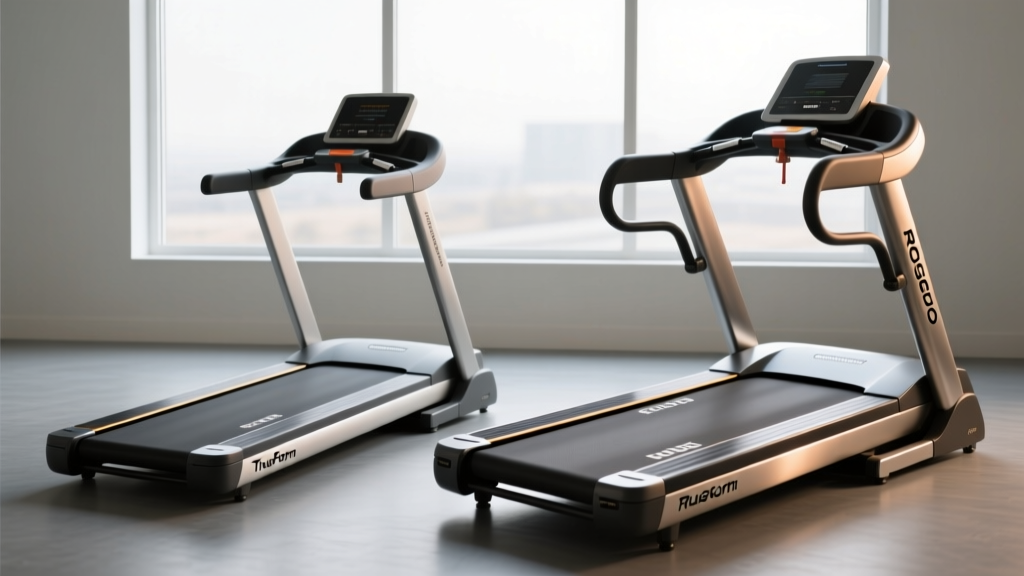
Not all manual treadmills are calibrated equally. The resistance curve, belt weight, and flywheel mass dictate how the machine feels during a WOD. Understanding these specifications allows you to adjust your pacing strategy based on the equipment available at your gym or in your home garage setup.
Top Tier Manual Runners Compared
| Model | Belt Type | Flywheel/Resistance | Best WOD Application | Approx. Price (2026) |
|---|---|---|---|---|
| Rogue Echo Runner | 63 Vulcan Slat Rubber | Medium-High Inertia | Longer distance (1-mile to 5K) due to smooth momentum retention. | $4,995 |
| AssaultRunner Elite | 70 Slat Rubber | High Inertia (Heavy Flywheel) | Short, explosive sprints and heavy interval couplets. Harder to start, easier to maintain. | $3,499 |
| TrueForm Runner | 60 Slat Rubber | Low Inertia (No heavy flywheel) | Agility drills, lateral movements, and rapid pace changes. Highly responsive to foot placement. | $5,395 |
Edge Cases and Troubleshooting
A common failure mode during high-volume treadmill WODs is "belt stuttering," where the runner's cadence falls out of sync with the belt's momentum, causing a jarring halt. This occurs when the athlete shifts their weight too far back, moving up the curve and increasing the gravitational resistance. To fix this mid-WOD, aggressively pump your arms and consciously drive your knees forward, not up, to push your center of mass back down to the lowest, flattest part of the belt curve.
Furthermore, grip fatigue is a hidden tax on manual runners. Gripping the handrails during recovery intervals restricts thoracic expansion. Practice hovering your hands an inch above the rails during your rest periods to maintain an open chest cavity, ensuring maximum oxygen uptake before the next work interval begins.
More gear to consider
All reviews
Bath Homegym Compare Essentials: Space-Smart Strength Training for Small Bathrooms & Compact Homes

How To Organize Massage: A Practical, Step-by-Step System for Clinics and Solo Practitioners

CrossFit Treadmill Duel: AssaultRunner Elite vs Rogue Echo Runner

Buying Alternatives to Analysis: Practical, Evidence-Based Substitutes for Lab-Driven Fitness Assessment

CrossFit Treadmill Maintenance: Belt, Bearing, and Slat Care
