
Standing vs Seated Calf Raises on an Inexpensive Leg Press Machine
Fix common calf training mistakes on an inexpensive leg press machine. Compare standing vs seated biomechanics, troubleshoot sled slip, and maximize growth.

The Biomechanics: Standing (Leg Press) vs. Seated Calf Raises
In the 2026 home gym landscape, space and budget constraints frequently lead lifters to purchase dual-function equipment. Many opt for an inexpensive leg press machine that features a secondary calf raise block or allows for toe presses on the main footplate. However, treating a leg press calf raise as a complete replacement for dedicated standing and seated calf machines is a fundamental error in lower-body programming.
To troubleshoot your calf development, you must first understand the anatomical division of the calf complex. According to kinesiology data from ExRx.net, the calf is primarily composed of two muscles: the gastrocnemius and the soleus. The gastrocnemius crosses the knee joint, meaning it is maximally stretched and activated when the leg is completely straight (the biomechanical equivalent of a standing calf raise). The soleus, however, lies underneath and does not cross the knee; it is best targeted when the knee is bent at a 90-degree angle (a seated calf raise).
When you perform calf raises on a 45-degree or horizontal sled, your legs remain straight. Therefore, an inexpensive leg press machine exclusively targets the gastrocnemius. Recognizing this limitation is the first step in troubleshooting stagnant calf growth and preventing overuse injuries.
Top 4 Mistakes When Using an Inexpensive Leg Press Machine for Calves
Budget-friendly fitness equipment often cuts corners on carriage travel, bearing smoothness, and footplate ergonomics. Here are the most common failure modes we see when lifters use budget sleds for calf work.
1. Knee Hyperextension on Budget Sleds
Commercial leg presses feature micro-adjustments and smooth linear bearings that allow for a soft, controlled lockout. In contrast, an inexpensive leg press machine (typically priced between $400 and $700) often utilizes rudimentary guide rods or heavy friction-based tracks. Lifters frequently lock their knees out aggressively to stabilize the sled before initiating the calf raise. This transfers the immense load directly into the knee joint capsule and popliteal artery rather than the muscle belly, risking severe hyperextension injuries.
2. Ignoring the Stretch Deficit
Muscle hypertrophy in the gastrocnemius requires a deep, loaded eccentric stretch (dorsiflexion). Many budget leg presses have a carriage travel distance of only 12 to 14 inches. If the calf block is poorly positioned, the sled bottoms out on the frame before your heel can drop below the toe plate, entirely eliminating the stretch-mediated hypertrophy response.
3. Footplate Slippage and Diamond-Plate Failures
To keep costs down, manufacturers often use stamped steel with a painted diamond-plate texture for the footplate. When sweat accumulates, this surface becomes essentially frictionless. Attempting a heavy toe press with socks or smooth-soled shoes on these budget plates results in micro-slippage, forcing the Achilles tendon to absorb erratic shock loads. The Cleveland Clinic notes that sudden, erratic loading on a fatigued Achilles is a primary catalyst for severe calf strains and tendinopathy.
4. Neglecting the Soleus (The 'Seated' Gap)
Because the leg press only facilitates straight-leg movements, lifters who rely solely on this machine completely neglect the soleus. The soleus makes up roughly 60% of the calf's total muscle volume. Ignoring it guarantees that your lower legs will lack depth and width, regardless of how much weight you move on the sled.
⚠ SAFETY WARNING: Budget Sled Safety CatchesNever perform calf raises on an inexpensive leg press machine without engaging the secondary safety latches. Budget sleds are notorious for 'carriage jump'—if your foot slips off the block during the eccentric phase, the sled can free-fall down the guide rods. Always set the safety stops just two inches below your maximum range of motion.
Troubleshooting Guide: Maximizing Budget Equipment
You do not need to buy a $3,000 commercial calf machine to build impressive lower legs. You can troubleshoot and fix the inherent flaws of budget equipment with a few targeted modifications.
- The Grip Tape Fix: Peel off any factory rubber pads on the calf block and apply 3M Safety-Walk heavy-duty grip tape. This $15 investment completely eliminates foot slippage and allows you to push to true muscular failure safely.
- The 2x6 Wooden Block Hack: If your machine's carriage bottoms out before you feel a deep stretch in your Achilles, place a standard 2x6 piece of lumber (wrapped in a yoga mat for comfort) horizontally across the lower edge of the footplate. This artificially extends the drop zone, granting you an extra 1.5 inches of crucial dorsiflexion.
- Hip Stabilization: Budget seats often feature thin, high-density foam that compresses entirely under heavy loads, causing your hips to slide forward. Wedge a rolled-up towel behind your lumbar spine and grip the machine's side handles tightly to anchor your pelvis.
Comparison Matrix: Budget 2-in-1 Leg Press & Calf Units (2026 Market)
Not all inexpensive leg press machines are created equal. Below is a breakdown of the most popular budget dual-function units on the market, evaluated specifically for their calf-training viability.
| Model | Est. Price | Carriage Travel | Calf Block Design | Verdict for Calves |
|---|---|---|---|---|
| Valor Fitness DE-10 | $649 | 14 Inches | Adjustable, knurled steel | Good, but requires grip tape. |
| Body-Solid GCLP1000 | $899 | 16 Inches | Padded, multi-angle | Excellent stretch deficit. |
| Titan Fitness Vertical | $599 | 12 Inches | None (Use edge plate) | Poor; requires wooden block mod. |
Bridging the Gap: The Seated Soleus Protocol
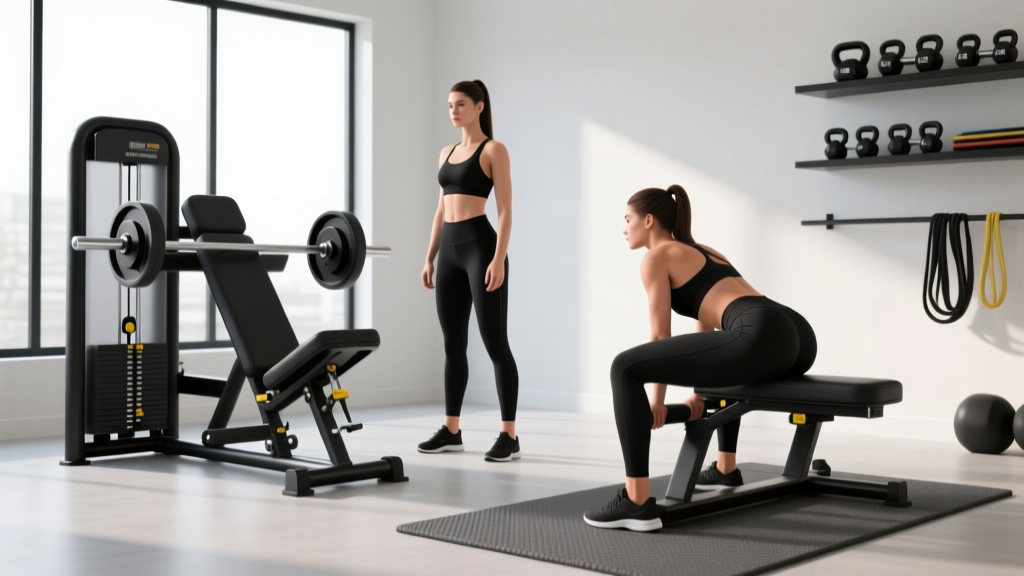
Since your inexpensive leg press machine cannot replicate a seated calf raise, you must manually program a soleus-focused movement into your routine. The most effective workaround for home gyms is the Seated Dumbbell Calf Raise off a Bench.
- Sit on the edge of a flat bench with your feet resting on a 45-pound plate or a dedicated wooden block to elevate the toes.
- Place a heavy dumbbell (or two) vertically on your thighs, just above the knees. Use a folded towel for padding.
- Execute a controlled 3-second eccentric drop, pause for 1 second at the bottom to eliminate the stretch reflex, and drive up explosively.
- Perform 4 sets of 15-20 repetitions immediately following your heavy gastrocnemius leg press work.
"The soleus is highly oxidative and responds best to metabolic stress and longer time-under-tension. Do not try to load it with 3-rep maxes; instead, chase the burn with higher repetitions and strict pauses."
Step-by-Step Fix: The 3-Second Eccentric Leg Press Protocol
To extract maximum hypertrophy from a budget sled, you must manipulate tempo to compensate for the machine's lack of cambered resistance profiles. Follow this exact execution sequence:
- The Setup: Load the sled with 70% of your 1RM. Position the balls of your feet on the edge of the block, shoulder-width apart. Keep a 5-degree micro-bend in the knees to protect the joint capsule.
- The Eccentric (3 Seconds): Lower your heels below the block at a strict, counted pace. One-Mississippi, Two-Mississippi, Three-Mississippi.
- The Amortization (1 Second): Hold the bottom position. This pause dissipates elastic energy from the Achilles tendon, forcing the gastrocnemius muscle fibers to initiate the concentric contraction from a dead stop.
- The Concentric (1 Second): Drive the sled up explosively, stopping just short of ankle plantarflexion lockout to maintain continuous tension on the muscle belly.
Expert Verdict: Do You Need a Dedicated Calf Machine?
If you are strictly limited by budget and floor space, an inexpensive leg press machine is a highly viable tool for gastrocnemius development—provided you troubleshoot the grip and stretch deficits outlined above. However, you must remain disciplined about supplementing your routine with bent-knee soleus work. By combining a modified leg press toe-raise with heavy seated dumbbell raises, you can build complete, diamond-shaped calves without ever stepping foot in a commercial gym.
More gear to consider
All reviews
Beyond For Beginners: Advanced Fit Principles, Material Science, and Real-World Legwear Performance
Best Compact Leg Press Machine or Hip Thrust Rig? 2026 Budget Breakdown

Squat Rack vs Hammer Strength Leg Press Machine Space Layouts

Single Leg Leg Press Machine vs Sled Push: Beginner Guide

Cable Leg Attachments Care: Hack Squat Machine vs Leg Press
