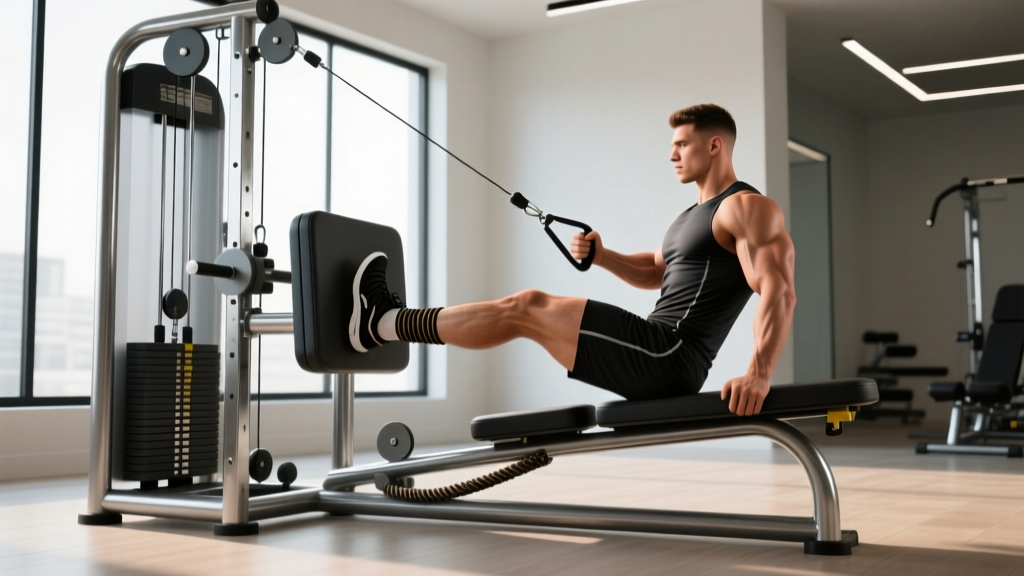
Cable Leg Attachments & Leg Press Machine Physical Therapy Care
Master cable machine leg attachment maintenance for rehab, providing a functional alternative to traditional leg press machine physical therapy protocols.

As clinical rehabilitation protocols evolve in 2026, physical therapists and strength coaches are increasingly supplementing or replacing traditional fixed-path machines with functional cable systems. While leg press machine physical therapy remains a gold standard for early-stage, bilateral quad isolation and controlled load progression, late-stage rehab demands multi-planar resistance. Cable machine leg exercises and attachments bridge this gap, offering dynamic, closed- and open-kinetic chain movements that mimic real-world biomechanics. However, the high-frequency use of cable attachments in clinical and home gym settings requires rigorous maintenance to ensure patient safety and equipment longevity.
The Shift: Leg Press Machine Physical Therapy vs. Cable Modalities
Before diving into maintenance, it is crucial to understand why clinics are investing heavily in cable attachments. The American Physical Therapy Association (APTA) frequently highlights the importance of progressive, functional loading in late-stage ACL and meniscus rehabilitation. While the leg press locks the pelvis into a fixed sagittal plane, cable systems allow for rotational and frontal plane stability training.
| Feature | Leg Press Machine Physical Therapy | Cable Machine Leg Exercises |
|---|---|---|
| Plane of Motion | Strictly Sagittal (Fixed Path) | Multi-Planar (Unrestricted) |
| Stabilizer Recruitment | Minimal (Machine stabilized) | High (Core and hip stabilizers active) |
| Attachment Wear & Tear | Low (Padded sled, minimal moving parts) | High (Straps, D-rings, pulleys, cables) |
| Maintenance Complexity | Low (Grease sled rails monthly) | High (Daily wipe-downs, cable inspections) |
Essential Cable Leg Attachments & Material-Specific Care
When transitioning a patient from a leg press to cable-based hip extensions, adductions, or hamstring curls, the interface between the patient and the machine—the attachment—takes the brunt of the mechanical stress and biological wear.
1. Neoprene and Cordura Ankle Cuffs
Ankle cuffs (such as the Rogue Fitness Ankle Strap or Spud Inc. Cobra Strap, typically priced between $15 and $25) are essential for cable hip abductions and hamstring curls.
- The Failure Mode: Saline from sweat degrades neoprene foam, causing it to crumble. Meanwhile, the steel D-rings are highly susceptible to oxidation (rust) when exposed to moisture and skin oils.
- Longevity Protocol: Wipe down neoprene with a 50/50 distilled water and white vinegar solution after every clinical session. Never machine wash them, as the agitation destroys the internal foam matrix. For the D-rings, apply a micro-drop of 3-IN-ONE Professional Dry Lube to the hinge point monthly to prevent seizing without attracting dust.
2. Swivel Low-Row Bars and V-Handles
Often used for wide-stance cable pull-throughs and deep groin adductions, these chrome-plated steel attachments feature aggressive knurling and swivel eyelets.
- The Failure Mode: Chalk, dead skin, and sebum pack into the knurling valleys, creating a breeding ground for bacteria and accelerating chrome pitting. The swivel carabiner eyelet can develop micro-fractures from repetitive lateral torque.
- Longevity Protocol: Use a stiff nylon brush (never wire, which strips chrome) with a mild degreaser weekly. Inspect the swivel eyelet for asymmetric wear. If the metal groove exceeds 2mm of depth, retire the handle immediately to prevent catastrophic snapping under load.
3. Multi-Function Hip Thrust & Pull-Through Belts
Heavy-duty 1000D Cordura nylon belts with padded neoprene backing are replacing the leg press for targeted glute max hypertrophy in rehab settings.
- The Failure Mode: The nylon webbing frays at the metal tri-glide adjusters, and the carabiner gates lose their spring tension, risking detachment during a heavy pull-through.
- Longevity Protocol: Inspect the stitching at the D-ring junction monthly. Test carabiner gate tension; if it fails to snap shut audibly and instantly, replace the carabiner (a $4 fix) rather than risking a $40 belt replacement or patient injury.
The 2026 Longevity Protocol for Cable Tracks and Pulleys
According to biomechanical data tracked by ExRx.net, inconsistent cable tension can alter the resistance curve of a rehabilitation exercise by up to 18%, compromising the therapeutic intent. Maintaining the machine's internal hardware is just as critical as caring for the attachments.
⚠️ CRITICAL WARNING: The WD-40 MythNever use standard petroleum-based WD-40 on cable machine guide rods. Petroleum products attract microscopic dust and chalk particles, creating an abrasive grinding paste that will destroy the linear bearings inside the weight stack carriage within six months. Always use a 100% silicone-based spray, such as CRC Heavy Duty Silicone Spray.
Step-by-Step Guide Rod and Bearing Maintenance
- De-grease: Wipe the guide rods with a microfiber cloth dampened with isopropyl alcohol to remove old lubricant and dust.
- Lubricate: Spray 100% silicone lubricant onto a clean cloth (never spray directly onto the machine to avoid overspray on the cables) and wipe the rods from top to bottom.
- Cycle: Move the weight stack up and down 10 times to distribute the silicone into the linear bearings.
- Buff: Wipe away excess silicone. The rods should feel slick, not wet.
Identifying Critical Failure Modes in Aircraft Cables
Modern commercial cable machines utilize 3/16-inch, 7x19 strand galvanized aircraft cable, rated for approximately 2,000 lbs of tensile strength. In a physical therapy setting, cables rarely snap from sheer overload; they fail from fatigue and friction.
| Visual Cue | Underlying Issue | Action Required |
|---|---|---|
| 'Fishhooks' | Individual wire strands snapping due to repetitive bending over a worn pulley. | Replace cable immediately. Inspect and replace the offending pulley. |
| White Powdery Residue | Galvanized zinc coating wearing off due to lack of pulley rotation or misalignment. | Clean cable, check pulley bearings for seizing. |
| Stretching / Slack | Normal initial bedding-in of 7x19 cable, or swage fitting slippage. | Adjust tensioner bolt at the base. If slippage persists, replace cable. |
Routine Maintenance Schedule Matrix
To ensure your cable system remains a safe alternative for leg press machine physical therapy progressions, implement this strict clinical maintenance schedule:
- Daily: Wipe down all neoprene and nylon attachments with antibacterial solution. Check carabiner gates.
- Weekly: Brush knurling on metal handles. Inspect cables for 'fishhooks' by running a cotton cloth along the length (snags indicate broken wires).
- Monthly: Clean and re-silicone guide rods. Lubricate D-ring hinges on ankle cuffs.
- Annually: Replace all OEM cables (budget $65-$120 per cable) regardless of visible wear, as internal core fatigue is invisible to the naked eye. Re-tension all structural frame bolts.
Frequently Asked Questions
Can I use cable machines for heavy bilateral leg presses?
While you can simulate a leg press using a multi-function belt and a low pulley, cables are not designed to replicate the sheer bilateral load (often 400+ lbs) of a dedicated sled. Cables excel in unilateral work, adduction/abduction, and hip hinging. For heavy bilateral loading, stick to the leg press machine or a barbell hack squat.
How often should physical therapy clinics replace cable attachments?
High-traffic clinical environments should budget for replacing neoprene ankle cuffs and padded belts every 12 to 18 months. The constant exposure to sweat, cleaning chemicals, and friction degrades the structural integrity of the stitching and foam long before the metal D-rings fail.
What is the best resource for cable-based rehab exercise selection?
The National Strength and Conditioning Association (NSCA) provides extensive literature on integrating cable resistance for functional rehab, particularly for athletes transitioning from fixed machines like the leg press back to sport-specific movements.
More gear to consider
All reviews
Best Leg Press Machine for Home Gyms: 2026 Titan vs Rogue
Horizontal vs 45° Press: The Compact Leg Press Hack Squat Machine

Matrix Leg Press Machine vs Hack Squat: Setup & Installation

Best Equip Recovery for Guns: Tactical Recoil Management Systems Tested and Rated

How Much Does a Leg Press Machine Weigh? Horizontal vs 45° Guide
