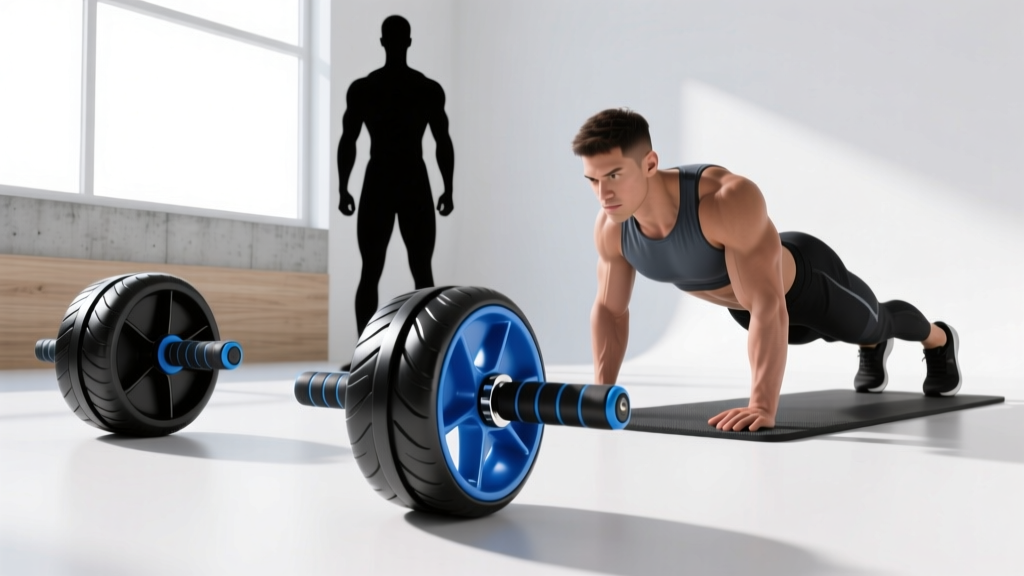
Best Gym Equipment for Ab Workouts: 2026 Ab Wheel Guide
Discover the best gym equipment for ab workouts with our 2026 ab roller buying guide. Compare top wheels, pricing, and features for elite core training.

The Undisputed King of Core Training: Why the Ab Wheel Reigns Supreme
When fitness enthusiasts begin searching for the most effective gym equipment for ab workouts, they are often bombarded with expensive, motorized machines and complex cable attachments. Yet, decade after decade, the humble ab roller wheel remains the gold standard for rectus abdominis and transversus abdominis activation. According to biomechanical analyses featured on ExRx, the ab wheel forces the core to resist spinal extension under a moving load, triggering significantly higher electromyography (EMG) muscle activation than traditional crunches or sit-up benches.
As we move through 2026, the ab roller market has evolved. We are no longer just looking at simple plastic wheels on a steel rod. Today's market features ergonomic angled grips, elbow-support harnesses, and variable-resistance mechanisms. This comprehensive buying guide will break down the exact specifications, failure modes, and top-tier models you need to know before investing in your next core tool.
Expert Insight: The primary function of the core is anti-extension and anti-rotation. The ab wheel is an anti-extension device. If your lower back arches (extends) during the rollout, you have lost core tension and shifted the load to your lumbar spine. Form always supersedes range of motion.Critical Buying Criteria for 2026 Ab Rollers
Not all wheels are created equal. A $12 budget wheel and a $45 premium wheel offer vastly different user experiences, particularly regarding joint health and stabilization requirements. Here is what you must evaluate:
1. Wheel Width and Tread Pattern
- Narrow Wheels (1.5 to 3 inches): Require intense lateral stabilization. They heavily recruit the obliques and serratus anterior to prevent tipping. Best for advanced athletes.
- Wide Wheels (4 to 7 inches): Provide a stable base in the sagittal plane, allowing the user to focus purely on the anti-extension rollout without worrying about balancing left-to-right. Ideal for beginners and heavy lifters.
- Tread: Look for diamond-knurled rubber or high-density EVA foam. Hard plastic wheels slip dangerously on hardwood or smooth gym floors.
2. Axle Material and Load Capacity
The axle is the most common failure point on cheap models. Budget wheels use thin PVC or low-grade aluminum that can bend under the dynamic load of a 200+ lb athlete dropping into a full extension. Always look for carbon steel or stainless steel axles rated for at least 300 lbs (136 kg).
3. Grip Ergonomics and Wrist Strain
Standard straight handles force the wrists into extreme flexion and ulnar deviation at the bottom of the rollout. This is a primary cause of wrist impingement. Modern 2026 designs mitigate this through angled handles or forearm/elbow support cradles, which transfer the load from the small carpal joints to the larger forearm and shoulder girdle.
2026 Ab Roller Comparison Matrix
Below is a side-by-side comparison of the top-performing ab wheels on the market this year, categorized by their specific use cases and biomechanical impacts.
| Model | Wheel Width | Avg. Price (2026) | Wrist Strain | Best For |
|---|---|---|---|---|
| Perfect Fitness Ab Carver Pro | 7.0 inches | $40 - $45 | Low (Angled Grips) | Beginners & Heavy Lifters |
| Trideer Ab Roller (Elbow Support) | 3.5 inches | $35 - $40 | None (Forearm Load) | Wrist Injury Rehab & Volume |
| EnterSports Elite Roller | 2.0 inches | $20 - $25 | High (Straight Bar) | Advanced Oblique Stabilization |
| Cap Barbell Classic Wheel | 2.5 inches | $12 - $15 | Moderate | Budget / Travel Gym Bags |
In-Depth Model Breakdown
1. Perfect Fitness Ab Carver Pro (The Ergonomic Standard)
The Ab Carver Pro remains a top-tier choice in 2026 due to its wide, 7-inch tread and internal carbon steel spring mechanism. The spring doesn't just pull you back; it provides variable resistance, making the initial push-off slightly more demanding while assisting the concentric return phase. The angled, padded handles keep the wrists in a neutral, handshake position, drastically reducing carpal tunnel aggravation.
- Pros: Exceptional sagittal stability; joint-friendly grips; internal kinetic spring.
- Cons: Bulky for travel; the wide base reduces oblique activation compared to narrow wheels.
- Edge Case: The internal spring can accumulate dust and squeak after 18+ months of heavy home gym use. A quick application of dry PTFE lubricant on the axle bearings resolves this.
2. Trideer Ab Roller with Elbow Support (The Joint Saver)
By replacing traditional hand grips with padded forearm cradles and adjustable straps, Trideer has engineered a wheel that completely bypasses the wrists. This allows athletes with wrist flexor tendonitis or previous scaphoid fractures to perform high-volume anti-extension work. The 3.5-inch wheel offers a middle ground between stability and lateral challenge.
- Pros: Zero wrist strain; allows for deeper stretch and longer time-under-tension; includes a high-density knee pad.
- Cons: Straps can cause forearm chafing if worn over bare skin during high-rep sets.
3. EnterSports Elite Roller (The Stabilizer)
For athletes who need to train the deep stabilizers (multifidus and obliques), a narrow 2-inch wheel is mandatory. The EnterSports Elite uses a solid steel axle and a dense, non-marking rubber tread. Because the base is so narrow, any asymmetry in your lat or core engagement will cause the wheel to tip, providing immediate biofeedback on your muscular imbalances.
- Pros: Maximum core recruitment; highly portable; aggressive tread grips rubber gym floors.
- Cons: Unforgiving on form; high wrist strain at full extension.
Technique, Failure Modes, and Injury Prevention
According to core training guidelines referenced by the American Council on Exercise (ACE), the ab roller is an advanced movement that requires prerequisite core stiffness. Attempting full-range rollouts without foundational strength is a fast track to lumbar disc herniation.
"The moment the pelvis tilts anteriorly and the lumbar spine sags into hyperextension, the rectus abdominis disengages, and the sheer force transfers directly to the lumbar vertebrae. Range of motion is irrelevant if spinal neutrality is compromised."
Common Failure Modes to Avoid:
- The "Sagging Boat" (Lumbar Hyperextension): Caused by rolling out further than your anterior core can control. Fix: Roll out only to the point where you feel your lower back about to arch, then pull back. Use a wall as a physical stopper during the learning phase.
- Scapular Winging: Failing to protract the shoulder blades at the bottom of the movement. Fix: Actively push the floor away at full extension, engaging the serratus anterior.
- Arm-Dominant Pulling: Using the lats and triceps to pull the wheel back rather than contracting the abs. Fix: Initiate the return phase by aggressively crunching the ribcage down toward the pelvis.
The 2026 Progression Framework
Do not jump straight into standing ab wheel rollouts. Follow this periodized progression to build connective tissue tolerance and neurological adaptation:
- Phase 1: Wall-Assisted Kneeling Rollouts. Face a wall, place the wheel 2 feet away, and roll forward until the wheel touches the wall. Gradually increase the distance from the wall over 4 weeks.
- Phase 2: Full Kneeling Rollouts. Perform on a thick pad. Focus on a posterior pelvic tilt (tucking the tailbone) before initiating the roll.
- Phase 3: Elevated Toe Rollouts. Place your toes on a plyo box or bench to increase the gravitational load on the core.
- Phase 4: Full Standing Rollouts. The pinnacle of anti-extension. Only attempt this when you can comfortably perform 3 sets of 15 full kneeling rollouts with zero lumbar discomfort.
Frequently Asked Questions
Can I use an ab roller every day?
While the abdominals recover relatively quickly, the connective tissue in the shoulders and lower back requires rest. For optimal hypertrophy and strength gains, treat the ab wheel like any other heavy resistance exercise: train it 2 to 3 times per week with at least 48 hours of recovery between intense sessions.
Is a wide wheel better than a narrow wheel?
Neither is universally "better"; they serve different purposes. A wide wheel (like the Ab Carver Pro) isolates the sagittal plane, allowing you to push closer to muscular failure safely. A narrow wheel forces the obliques and deep stabilizers to work overtime to prevent lateral tipping. Advanced athletes should incorporate both into their training blocks.
Why do I feel my hip flexors taking over?
If your hip flexors (psoas and rectus femoris) are burning more than your abs, you are likely starting the movement with an anterior pelvic tilt. Before you roll, actively squeeze your glutes and tuck your tailbone. This pre-tension shuts down the hip flexors and forces the rectus abdominis to bear the load. For more advanced biomechanical breakdowns of core isolation, resources like Men's Health fitness guides frequently highlight the importance of glute engagement during anti-extension movements.
Final Verdict
When curating the ultimate list of gym equipment for ab workouts, the ab roller remains unmatched in its portability, cost-efficiency, and sheer core-building power. For the majority of home gym owners in 2026, the Perfect Fitness Ab Carver Pro offers the best blend of ergonomics and stability. However, if you suffer from wrist pain, the Trideer Elbow Support model is a non-negotiable upgrade. Invest in quality steel, respect the progression framework, and prioritize spinal neutrality over ego-driven range of motion.
More gear to consider
All reviews
Trigger vs Sports: A Precision Engineering Breakdown for Competitive Shooters and Athletes

Stability Ball & BOSU: Abs Workout Gym Equipment Mistakes Fixed

Best Home Gym Space Budget for Theragun: Smart Layouts, Real Measurements, and Cost-Saving Strategies

Foam for Tool Organization: Engineering Precision, Protection, and Long-Term Value

Captain's Chair Abs Workout: Men's Equipment Budget & Value Guide
