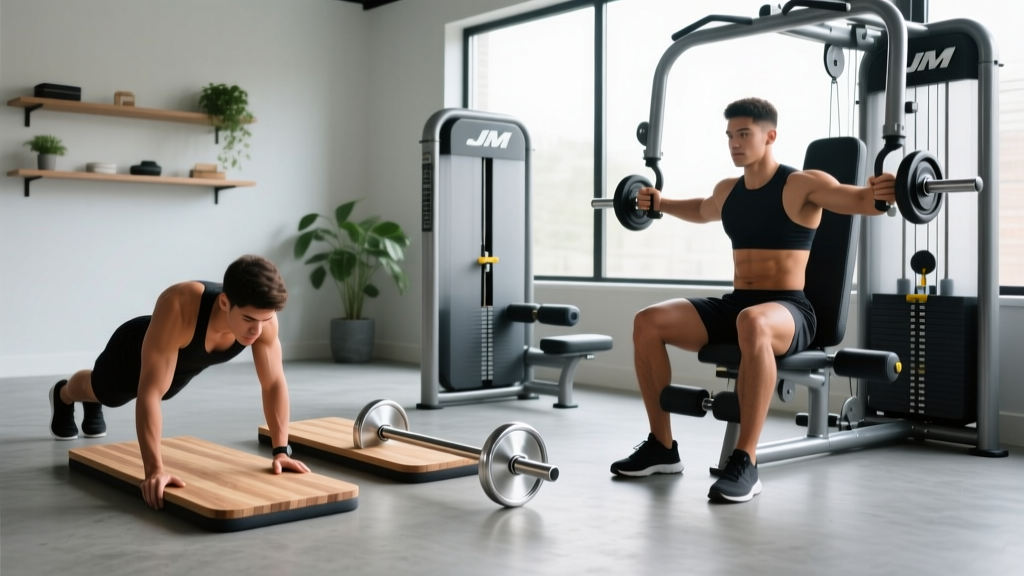
Hammer Chest Press Machine Types: Mistakes & Troubleshooting
Compare plate-loaded hammer chest press machines with selectorized and cable types. Learn common form mistakes, mechanical fixes, and setup tweaks.

The Biomechanics of the Hammer Chest Press Machine
When commercial gym-goers and athletes discuss chest development, the hammer chest press machine is frequently cited as the gold standard for hypertrophy and joint safety. Unlike traditional barbell benching, plate-loaded leveraged machines—specifically those engineered with a converging range of motion—allow the hands to move closer together as the arms extend. According to biomechanical analyses published in the Journal of Strength and Conditioning Research, this converging arc better aligns with the natural adduction function of the pectoralis major, maximizing sternal head activation while reducing anterior deltoid shear.
However, the mechanical advantages of these machines are entirely nullified if the user fails to troubleshoot their setup. In 2026, the market is dominated by three primary chest press architectures: plate-loaded converging levers (e.g., Hammer Strength MTS), fixed-path selectorized pin-loaded machines (e.g., Life Fitness Signature Series), and dual-cable functional trainers (e.g., Rogue FT-2). Each type presents unique failure modes, both biomechanical and mechanical.
Quick Setup Rule: On any hammer chest press machine, the handles must align precisely with the 4th intercostal space (mid-sternum/nipple line) at the bottom of the movement. If the handles align with your clavicle, you are overloading the anterior deltoids and risking AC joint impingement.Machine Type Comparison Matrix
Before troubleshooting your form, you must understand the mechanical path of your specific equipment. Below is a comparison of the three dominant chest press machine types found in modern training facilities.
| Machine Type | Path of Motion | Primary Failure Mode | Average 2026 Cost |
|---|---|---|---|
| Plate-Loaded (Hammer Strength MTS) | Converging Arc (Independent Levers) | Pivot binding from straight-line pressing | $4,500 - $5,200 |
| Selectorized (Life Fitness Signature) | Fixed Linear / Slight Arc | Scapular retraction loss on thick pads | $3,800 - $4,400 |
| Cable Functional Trainer | Variable / User-Defined | Core instability and elbow flare | $4,000 - $5,500 |
Top 3 Form Mistakes on the Hammer Chest Press Machine
The hammer chest press machine is notorious for exposing poor pressing mechanics. Because the levers are independent, asymmetrical force production becomes immediately obvious. Here are the most common errors and how to troubleshoot them.
1. Fighting the Converging Arc (The 'Sticking Point' Illusion)
The Mistake: Users accustomed to barbells naturally press the weight straight up toward the ceiling. On a converging hammer chest press machine, the levers are designed to move inward as they travel forward. Pressing in a perfectly straight vertical line forces the bronze bushings on the pivot shafts to bind against lateral torque.
The Fix: Consciously aim your hands toward each other during the concentric phase. Imagine you are trying to touch your biceps together at the peak of the contraction. This follows the machine's engineered cam path and eliminates the artificial 'sticking point' at mid-range.
2. Gas-Spring Seat Misalignment
The Mistake: Failing to adjust the seat height, resulting in the grips starting above the shoulder joint. This shifts the load entirely to the upper chest and front delts, defeating the purpose of a flat/incline hybrid press.
The Fix: Engage the gas-shock seat lever (usually located under the right side of the seat pan on MTS models). Adjust the seat so that when you grab the handles, your forearms are perfectly parallel to the floor, and the grip sits exactly one inch below the anterior deltoid tie-in.
3. Scapular Protraction at Lockout
The Mistake: Allowing the shoulder blades to slide forward off the back pad at the top of the movement to 'push the weight further.' This dumps tension off the pectorals and onto the serratus anterior and rotator cuff.
The Fix: Stop the concentric phase roughly one inch before full elbow extension. Maintain aggressive scapular retraction and depression (pull your shoulder blades down and back into the pad) throughout the entire set. As noted by exercise kinesiologists at ExRx.net, maintaining a stable scapular base is the primary driver of isolated pectoral tension in machine pressing.
Troubleshooting Selectorized and Cable Alternatives
If your facility lacks a plate-loaded hammer chest press machine, you are likely using a selectorized pin-loaded unit or a cable crossover. These require different troubleshooting protocols.
Selectorized Pad Thickness Issues
Machines like the Technogym Selection or Life Fitness Signature series feature heavily contoured, thick lumbar and thoracic pads. While comfortable, a 4-inch thick back pad can prevent users with smaller rib cages from achieving adequate scapular retraction. Troubleshooting: Place a standard 1/2-inch neoprene barbell pad horizontally across the upper back pad to create a localized fulcrum, forcing your thoracic spine into extension and allowing your scapulae to pinch together behind the pad.
Cable Crossover Core Leakage
When performing standing cable chest presses, the lack of a back pad means your core must transfer 100% of the force. Troubleshooting: Adopt a staggered stance with the rear foot elevated slightly on a 45-degree angle. Set the pulleys to notch 5 (roughly sternum height). Brace your core using the Valsalva maneuver before every single rep, treating the standing cable press like a standing Pallof press rather than a traditional bench movement.
Mechanical Maintenance: Fixing Squeaks, Stacks, and Sticking Pivots
Even with perfect form, a poorly maintained machine will ruin your workout. Facility managers and home gym owners must address these common mechanical failure modes.
- Pivot Joint Friction: If the independent levers on a plate-loaded machine feel 'jerky' or emit a metallic grinding sound, the bronze or composite bushings have dried out. Fix: Remove the pivot bolt, clean the shaft with a degreaser, and apply a generous coat of white lithium grease. Avoid WD-40, which attracts dust and accelerates wear.
- Selectorized Weight Stack Drag: If the weight stack drops slowly or stutters on the eccentric phase, the guide rods are likely scored or lacking lubrication. Fix: Wipe the dual chrome guide rods with a microfiber cloth and apply a light layer of silicone-based lubricant. Never use petroleum-based oils, which degrade the nylon top-hat bushings.
- Frayed Aircraft Cables: On cable functional trainers, inspect the 7x19 strand aircraft cables at the pulley routing points. If you see 'fish-hooks' (broken micro-strands), the cable must be replaced immediately to prevent catastrophic snapping under load.
Expert Warning: Never attempt to adjust the cam or pulley alignment on a commercial selectorized chest press yourself. Altering the factory-calibrated cable routing by even 3 millimeters can cause the cable to derail from the nylon sheave during heavy eccentric loads, resulting in severe injury.
Summary: Choosing and Using the Right Press
The hammer chest press machine remains the premier choice for lifters seeking heavy, joint-friendly pectoral overload due to its independent, converging levers. However, its benefits are only realized when the user respects the machine's biomechanical arc and maintains strict scapular stability. By diagnosing your specific machine type—whether plate-loaded, selectorized, or cable—and applying these targeted troubleshooting steps, you can eliminate joint pain, bypass artificial sticking points, and maximize sternal pec hypertrophy.
More gear to consider
All reviews
Chest Press Machine Muscles Worked: Types and Beginner Guide

Incline, Flat, or a Used Chest Press Machine? Budget Value Analysis

Equip Bands Tools Checklist: A Field-Tested, Precision-Driven Inventory for Fitness Professionals

Hammer Strength Chest Press Machine vs Bench Press Rack: Cost & Value

Converging Chest Press Machine vs. Incline & Flat Benches: 2026 Data