
Cable Crossover vs Chest Supported Machine Press: Mistakes & Fixes
Fix your cable crossover form and avoid common mistakes. We compare it to the chest supported machine press for optimal chest hypertrophy.

The Biomechanical Divide: Isolation vs. Stabilization
When building a comprehensive chest training arsenal, commercial gyms and elite home facilities rely heavily on two distinct pieces of equipment: the cable crossover machine and the chest supported machine press. While both target the pectoralis major, their biomechanical demands, resistance profiles, and common user errors are vastly different. As of 2026, with the rise of AI-driven form tracking and advanced biomechanical analysis, we now have clearer data than ever on how lifters sabotage their own hypertrophy through improper machine setup and execution.
The cable crossover is a free-motion isolation tool that demands high levels of joint stabilization and offers a variable resistance curve. Conversely, the chest supported machine press removes the stabilization requirement, allowing for maximum mechanical tension and safe loading to failure. Understanding the nuances between these two modalities is the first step in troubleshooting your chest day.
Equipment Comparison Matrix
| Feature | Cable Crossover Machine | Chest Supported Machine Press |
|---|---|---|
| Primary Function | Horizontal Adduction (Fly/Isolation) | Horizontal Adduction & Extension (Press/Compound) |
| Stability Requirement | High (Core, rotator cuff, Erector spinae) | Minimal (Torso fully braced against pad) |
| Resistance Profile | Constant tension throughout ROM | Cam-driven (matches human strength curve) |
| Commercial Price Range (2026) | $3,800 - $8,500 (e.g., Life Fitness Signature) | $2,900 - $5,200 (e.g., Hammer Strength Iso-Lateral) |
| Failure Mode Safety | Moderate (Cables can snap back if dropped) | High (Weight stack rests safely on guide rods) |
Top 3 Cable Crossover Mistakes (And How to Fix Them)
According to ExRx Cable Crossover Biomechanics, the cable crossover is one of the most effective exercises for targeting the sternal head of the pectoralis major. However, its versatility is also its biggest pitfall. Here are the most frequent errors we see on the gym floor.
1. The 'T-Rex' Press Hybrid (Elbow Angle Failure)
The most pervasive mistake is turning a fly into a press. Lifters often bend their elbows to 90 degrees or less, effectively performing a standing cable press. This shifts the primary load from the pectorals to the anterior deltoids and triceps.
⚠️ The Fix: Maintain a slight, fixed bend in the elbow—ideally between 150 and 170 degrees. Imagine you are hugging a massive oak tree. Your elbow angle should not change by more than 10 degrees from the stretched position to the peak contraction. If you feel your triceps engaging heavily, your elbows are bent too much.2. Pulley Height Ignorance
Setting the pulleys at a static height for every set ignores the anatomical fiber orientation of the chest. The pectoralis major has distinct clavicular (upper) and sternocostal (lower/mid) fibers that run at different angles.
- High-to-Low Crossovers: Pulleys set at the highest notch (approx. 7 feet). Targets the lower sternocostal fibers. The line of pull should match the angle of the lower pec fibers, drawing the hands down toward the hips.
- Low-to-High Crossovers: Pulleys set at the lowest notch. Targets the upper clavicular fibers. The hands should finish at eye level, matching the upward angle of the upper chest.
- Mid-Height Crossovers: Pulleys set at shoulder height. Best for overall mid-chest mass and maximum stretch.
3. Scapular Dumping at Peak Contraction
Many lifters achieve a great stretch but ruin the contraction by letting their shoulders roll forward (scapular protraction) as they bring their hands together. This 'dumping' of the shoulder blades disengages the pecs and places the anterior capsule of the shoulder under immense, unnecessary stress.
The Fix: Pin your scapulae down and back into the bench or maintain a retracted posture while standing. When your hands meet in the middle, actively squeeze the shoulder blades together. Do not reach forward with your shoulders to get an extra two inches of movement.
When to Abandon the Crossover for the Chest Supported Machine Press
There is a time and place for stabilization, but as you approach muscular failure, stabilization becomes the limiting factor. This is where the chest supported machine press shines. If you find your lower back arching excessively or your core giving out during heavy cable crossovers, you have hit your stabilization ceiling.
Transitioning to a chest supported machine press (like the Prime Fitness Smart Strength or the classic Hammer Strength Iso-Lateral) allows you to safely push past this ceiling. Because your torso is pinned against a contoured pad, your central nervous system does not need to allocate motor units to balance your body. 100% of your neural drive can be directed into moving the load, making it vastly superior for mechanical tension and progressive overload in the 6-10 rep range.
Equipment Troubleshooting: When the Machine Fights Back
Even with perfect form, poorly maintained or improperly calibrated equipment will ruin your workout. Here is how to troubleshoot the hardware itself.
Cable Friction and Weight Stack Sticking
If the weight stack on your cable crossover stutters on the eccentric (lowering) phase, it destroys the constant tension that makes the exercise valuable. In 2026, most premium commercial machines use 1/4-inch galvanized aircraft cables and sealed nylon pulleys.
- Check the Guide Rods: Never use standard WD-40 or wet silicone sprays on weight stack guide rods; they attract dust and create a grinding paste. Use a PTFE (Teflon) dry lubricant sprayed onto a microfiber cloth and wipe the rods clean.
- Inspect Pulley Bearings: Spin the top selector pulleys by hand. If they wobble or grind, the sealed bearings are shot. Replacing a $15 sealed bearing pulley prevents catastrophic cable snapping, which can cost upwards of $300 in replacement parts and downtime.
- Cable Stretch: New cables stretch up to 1/2 inch in their first 500 uses. If the weight stack doesn't fully rest at the bottom when the handle is on the floor, adjust the tensioner bolt at the base of the machine.
Carabiner and Swivel Handle Degradation
The connection point between the cable and the D-handle is a massive failure point. Standard zinc-plated carabiners wear out at the swivel joint, causing the handle to twist violently during the concentric phase. Upgrade your gym's D-handles with 316 stainless steel snap hooks equipped with ball-bearing swivels. This ensures the handle rotates smoothly as your wrist naturally pronates at the peak contraction, saving your elbow joints from rotational torque.
Programming Framework: Integrating Both Modalities
To maximize hypertrophy, you must utilize both the heavy, stable pressing movements and the high-stretch, constant-tension isolation movements. Below is a highly effective, evidence-based chest workout structure that leverages both machines.
The Ultimate 2026 Chest Hypertrophy Protocol
1. Chest Supported Machine Press (Heavy Compound)
- Sets/Reps: 3 sets of 6-8 reps
- Tempo: 3-1-X-1 (3 sec eccentric, 1 sec pause, explosive concentric, 1 sec squeeze)
- Purpose: Maximize mechanical tension and motor unit recruitment while the nervous system is fresh.
2. Mid-Height Cable Crossover (Stretch & Isolation)
- Sets/Reps: 3 sets of 12-15 reps
- Tempo: 2-0-1-2 (Focus heavily on the 2-second peak contraction squeeze)
- Purpose: Induce metabolic stress and pump the muscle with constant tension, utilizing the deep stretch that cables provide at the bottom of the movement.
Expert Insights on Muscle Activation
'The cable crossover provides a unique advantage over free-weight dumbbell flyes because the resistance vector remains perpendicular to the muscle fibers throughout the entire range of motion. At the peak contraction of a dumbbell fly, gravity pulls straight down, resulting in near-zero tension on the pecs. Cables solve this biomechanical flaw entirely, provided the user maintains proper scapular retraction.' — Biomechanical Analysis of Pectoral Isolation Movements
For further reading on the anatomical targeting of these machines, refer to the ExRx Pectoralis Sternal Kinesiology Guide and the comprehensive breakdown of the Machine Chest Press mechanics.
Final Thoughts on Execution and Equipment
Mastering the chest supported machine press and the cable crossover requires a dual focus: rigorous attention to your own biomechanical form, and a critical eye for equipment maintenance. Stop treating the cable crossover like a standing bench press, and stop treating the chest supported press like a light warm-up tool. Respect the resistance profiles, maintain your gym's hardware with PTFE lubricants and premium carabiners, and your pectoral development will reflect the precision of your approach.
More gear to consider
All reviews
Dumbbell vs Cable Fly: Is Chest Press Machine Same as Bench Press?

Chest Press Machine Gym ROI: Dumbbell Fly vs Cable Fly Comparison
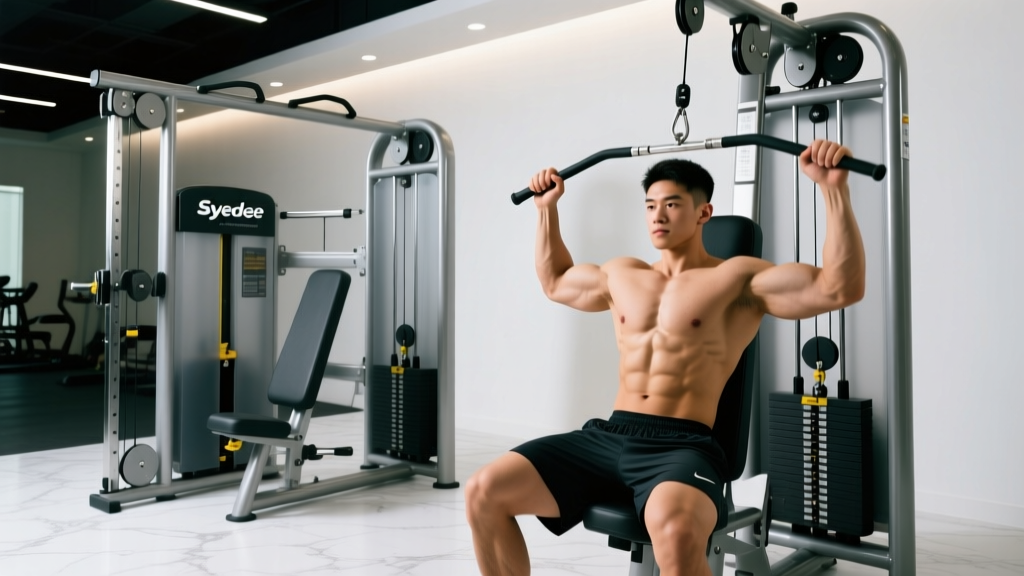
Syedee Chest Press Machine vs Cable Crossover: Chest Training Guide

Chest Press Machine Weight Guide: Types & 2026 Comparison

Step vs. Boots: A Technical Comparison for Functional Footwear Selection
