
Best Pull-Up Bars for Lat Pulldown Machine Exercises (2026)
Discover the best doorway, wall, and ceiling pull-up bars to perform lat pulldown machine exercises at home. Expert 2026 hands-on reviews and specs.

Bridging the Gap: Pull-Up Bars and Lat Pulldowns
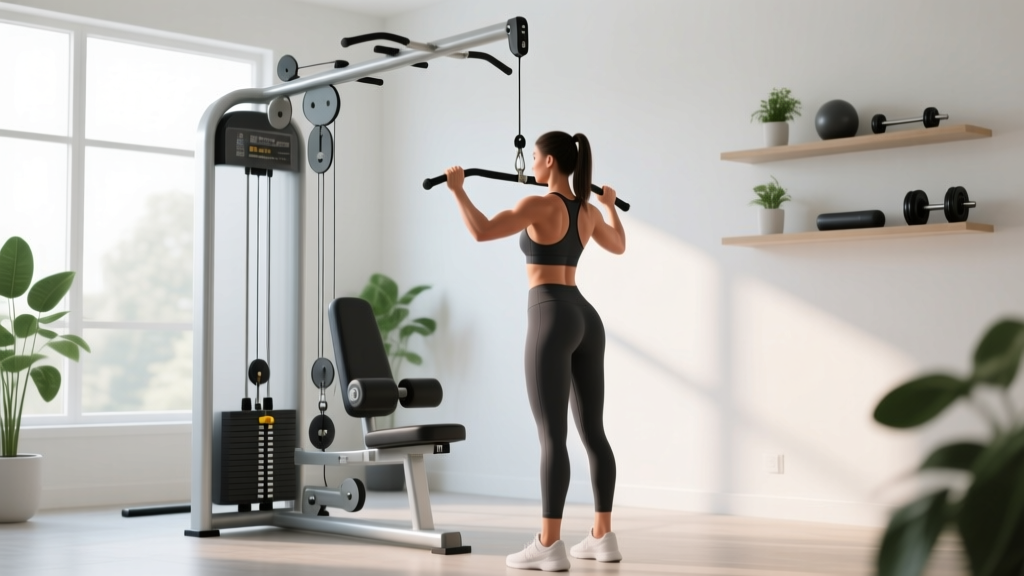
Building a wide, thick back requires targeting the latissimus dorsi through both vertical and horizontal pulling planes. While cable-based lat pulldown machine exercises are a staple for isolating the lats with adjustable resistance, a $2,500 commercial cable stack is rarely feasible for home gyms with limited square footage. The solution? Strategic pull-up bar selection paired with heavy resistance bands.
As a senior equipment reviewer at FitGearPulse, I have tested over 40 back-training setups in the last year. In this 2026 hands-on guide, we break down the three main pull-up bar types—doorway, wall-mounted, and ceiling-mounted—and reveal exactly how to use them to replicate the biomechanics of lat pulldown machine exercises without sacrificing hypertrophy.
The Biomechanical Difference: Pull-ups are a closed-chain exercise (hands fixed, body moves), while lat pulldowns are open-chain (body fixed, implement moves). According to kinesiology databases like ExRx, both movements heavily recruit the lats, biceps, and teres major. However, open-chain movements allow for better isolation and eccentric control for beginners. We will show you how to hack your pull-up bar to get that open-chain isolation.
1. Doorway Mounted Pull-Up Bars: The Space-Saver
Doorway bars rely on leverage and telescopic friction to stay in place. They are the most accessible option but come with strict limitations regarding dynamic loading and band anchoring.
Top Pick: Perfect Fitness Multi-Gym Pro Doorway Bar
- Price: $39 - $45
- Weight Capacity: 300 lbs
- Door Width Compatibility: 24 to 32 inches
- Grip Options: Narrow, wide, and parallel
Hands-On Verdict & Failure Modes
The Multi-Gym Pro is excellent for strict bodyweight pull-ups and chin-ups. However, if you plan to anchor heavy resistance bands to the center crossbar to simulate lat pulldown machine exercises, you must be cautious. Failure Mode: The primary risk is 'trim compression.' If your home has decorative, hollow molding or older door frames, the downward and outward force of heavy band tension (or kipping) can crack the trim or cause the leverage brackets to slip. Only use doorway bars for band-assisted lat pulldowns if you have solid, structural door casings.
2. Wall-Mounted Pull-Up Bars: The Heavy-Duty Standard
For serious home gym owners who want to perform high-tension band pulldowns and weighted pull-ups safely, a wall-mounted rig is non-negotiable. Bolted directly into structural studs, these eliminate the slip risks associated with doorway models.
Comparison Matrix: 2026 Top Wall-Mounted Bars
| Brand / Model | Steel Gauge | Width | Price (Approx.) | Best For |
|---|---|---|---|---|
| Rogue Fitness PM-3W | 11-Gauge | 53 inches | $175 | Heavy band pulldowns, wide grip |
| Titan Fitness Wall Mount | 11-Gauge | 48 inches | $129 | Budget-conscious heavy lifters |
| Yes4All Wall Mount | 14-Gauge | 40 inches | $65 | Lightweight users, small spaces |
Expert Pick: Rogue Fitness PM-3W Wall Mount Pull Up Bar
The Rogue PM-3W remains the gold standard in 2026. The 11-gauge steel construction and 1.25-inch diameter grip provide the exact tactile feel of a commercial lat pulldown machine's straight bar attachment. The 53-inch width allows for ultra-wide grip variations that target the teres major and upper lats.
⚠️ Installation Warning: Never use drywall toggle bolts for a wall-mounted pull-up bar. Dynamic movements and the downward pull of band-resisted lat pulldowns will rip toggle bolts right through the drywall. You must lag-bolt the mounting brackets directly into 16-inch on-center wooden studs using 3/8-inch x 3-inch lag screws, or use 3/8-inch wedge anchors if mounting to poured concrete.3. Ceiling-Mounted Pull-Up Bars: The Ultimate Clearance
Ceiling mounts are the secret weapon for tall athletes (6'2" and above) and those who want to incorporate muscle-ups or deep, full-range-of-motion kneeling lat pulldowns without their knees hitting the floor.
Top Pick: Titan Fitness Ceiling Mounted Pull Up Bar
- Price: $139
- Drop Length: 36 inches from ceiling joist
- Weight Capacity: 500 lbs
By dropping the bar 36 inches from the ceiling, you create ample clearance for a kneeling bench underneath. This is the ultimate setup for replicating lat pulldown machine exercises, as it allows you to anchor monster bands overhead and pull down through a full 4-to-5-foot range of motion, perfectly mimicking the cable travel of a commercial stack.
The Protocol: Simulating Lat Pulldowns on a Pull-Up Bar
How do you turn a static pull-up bar into a lat pulldown machine? You use the physics of elastic resistance. Here is our tested protocol for replicating lat pulldown machine exercises using a wall or ceiling-mounted bar.
Step 1: Calculate Your Band Tension
Resistance bands do not provide a static weight like a cable stack; tension increases as the band stretches. To mimic a 150-lb lat pulldown, you need a band that provides roughly 150 lbs of tension at the bottom of the movement (when your hands are near your collarbone).
- 1/2-inch Band: ~25-50 lbs peak tension
- 1-1/8-inch Band: ~50-80 lbs peak tension
- 1-3/4-inch Monster Band: ~80-120 lbs peak tension
Pro Tip: Loop a 1-1/8-inch band and a 1/2-inch band together over the pull-up bar. This combination yields roughly 130-150 lbs of peak resistance at full contraction.
Step 2: The Kneeling Anchor Setup
- Loop your heavy resistance bands securely over the center knurling or smooth center of your pull-up bar.
- Place a kneeling pad or flat bench exactly 4 to 5 feet directly beneath the bar.
- Kneel on the pad, grasping the loops or attaching a plastic lat-pulldown handle (carabiner-clipped to the band loops) for a more authentic grip.
- Execute the pulldown, driving your elbows down and back, focusing on the eccentric (upward) phase for 3 full seconds to maximize muscle fiber recruitment.
Frequently Asked Questions
Can I do lat pulldowns on a doorway pull-up bar?
Yes, but with strict limitations. You must use lighter resistance bands (under 80 lbs of peak tension) and ensure your door frame is made of solid wood, not hollow trim. The downward force of heavy band pulldowns can compromise the leverage brackets of doorway bars over time.
What is the best grip width for lat pulldown exercises on a bar?
Electromyography (EMG) studies consistently show that a grip just outside shoulder-width (roughly 1.25 to 1.5 times biacromial width) maximizes latissimus dorsi activation while minimizing excessive strain on the rotator cuff and biceps tendons. The Rogue PM-3W's angled outer grips are perfectly positioned for this biomechanical sweet spot.
How often should I replace my resistance bands for pulldowns?
Heavy loop bands exposed to constant tension and UV light degrade. For safety, inspect your bands before every session for micro-tears or white stress marks. In a rigorous home gym environment, replace heavy pulldown bands every 8 to 12 months to prevent catastrophic snapping.
More gear to consider
All reviews
Chest Rows vs Lat Pulldown Machine Muscles Worked: Space Guide

Best Lat Pulldown Machine Alternative for Home Gyms 2026

Lat Pulldown Machine Buying Guide: Top Types for 2026
Foam FAQ Answered: Expert Insights on Density, ILD, Durability, and Real-World Performance
Best Lat Pulldown Machine for Women: 2026 Buyer's Guide
