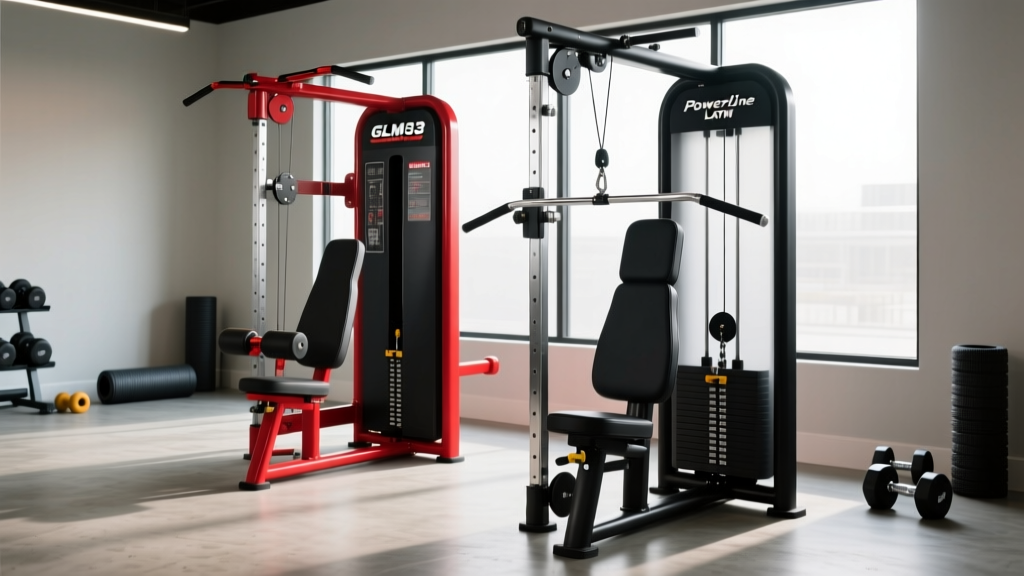
Body-Solid Lat Pulldown Machine Showdown: GLM83 vs LATM
We compare the Body-Solid GLM83 and Powerline LATM lat pulldown machines to help you choose the best back training equipment for your home gym.

The Home Gym Back-Training Dilemma in 2026
Building a comprehensive back training setup in a home gym requires balancing footprint, budget, and biomechanical efficiency. When lifters search for a reliable body solid lat pulldown machine, they are typically funneled toward two distinct product tiers within the brand's ecosystem: the commercial-inspired Body-Solid Pro Club Line GLM83 and the budget-friendly, plate-loaded Powerline by Body-Solid LATM.
As home gym trends in 2026 continue to favor high-density, multi-functional equipment, choosing the right lat pulldown machine is no longer just about pulling weight—it is about cable routing smoothness, thigh-pad stability, and long-term maintenance. This head-to-head comparison strips away the marketing fluff to examine the exact engineering, failure modes, and real-world usability of these two back training staples.
Quick Verdict Summary
Choose the GLM83 if: You have a $900+ budget, prioritize drop-sets via a pin-loaded 210 lb stack, and demand commercial-grade sealed bearings.
Choose the Powerline LATM if: You are on a strict sub-$300 budget, already own a plethora of Olympic plates, and do not mind the friction of manual plate loading.
Contender 1: Body-Solid GLM83 Lat Machine
Build Quality and Stack Mechanics
The GLM83 is the cornerstone of Body-Solid's commercial light-commercial lineup. It is constructed from 12-gauge, 2" x 2" all-steel mainframes. In 2026, the GLM83 retails between $949 and $1,099 depending on freight and dealer markups. The primary draw is its 210-pound selectorized weight stack. The stack utilizes a high-tensile aircraft-grade steel cable routed through fiberglass-reinforced nylon pulleys equipped with sealed ball bearings.
The biomechanical advantage of the GLM83 lies in its DuraFirm™ multi-position thigh pad. Unlike flat foam pads, the DuraFirm pad features a contoured, biomechanically curved design that locks the pelvis in place. This prevents the lower back from extending during heavy eccentric phases, ensuring the latissimus dorsi and teres major absorb the load rather than the lumbar erectors.
Known Edge Cases and Limitations
While 210 lbs is sufficient for 85% of the lifting population, elite powerlifters or heavyweight bodybuilders may max out the stack during close-grip, heavy rows or partial-rep pulldowns. Furthermore, the GLM83's footprint (43" L x 28" W x 84" H) requires dedicated vertical clearance, making it unsuitable for low-ceiling basement gyms under 7 feet.
Contender 2: Powerline by Body-Solid LATM
Plate-Loaded Realities
The Powerline LATM represents the entry-level, plate-loaded alternative, typically priced between $269 and $319. Instead of a weight stack, it features a plate-loading horn compatible with standard 1-inch plates (with an optional Olympic adapter sleeve available). The frame utilizes slightly thinner 14-gauge steel oval tubing to keep manufacturing costs and overall weight down.
The pulley system on the LATM is strictly vertical. While it provides the necessary line of pull for basic latissimus dorsi activation, it lacks the angled, multi-grip top pulley found on higher-end functional trainers. The seat and thigh pads are constructed from standard high-density foam wrapped in vinyl—functional, but prone to compression flattening after 18 to 24 months of heavy use.
The Friction Cost of Plate Loading
The most significant drawback of the LATM is the disruption to training density. Performing mechanical drop sets or rest-pause sets requires manually unloading and reloading plates. In a home gym environment where you are training alone, sliding 45-pound plates on and off a horn positioned near the floor breaks your neurological focus and extends your workout time unnecessarily.
Head-to-Head Comparison Matrix
| Feature | Body-Solid GLM83 | Powerline LATM |
|---|---|---|
| Resistance Type | 210 lb Selectorized Stack | Plate-Loaded (Standard/Olympic) |
| Steel Gauge | 12-Gauge (2"x2" Tubing) | 14-Gauge (Oval Tubing) |
| Pulley Bearings | Sealed Ball Bearings | Standard Nylon Bushings |
| Thigh Pad | Adjustable, Contoured DuraFirm | Fixed Position, Standard Foam |
| Approx. 2026 Price | $949 - $1,099 | $269 - $319 |
| Footprint | 43" L x 28" W x 84" H | 42" L x 28" W x 80" H |
Biomechanics and Cable Routing Deep Dive
To understand why the GLM83 commands a premium, we must look at cable routing and force vectors. According to biomechanical analyses documented by ExRx.net, the latissimus dorsi functions optimally when the line of pull aligns with the muscle fibers' natural orientation. The GLM83's top pulley is mounted on a slight forward cant. This subtle engineering choice allows the lifter to sit slightly behind the bar, creating a direct vertical line of pull that minimizes rear deltoid compensation and maximizes lat stretch at the top of the movement.
Furthermore, a study published in the National Center for Biotechnology Information (NCBI) highlights that grip width and torso stability drastically alter muscle activation during pulldowns. The GLM83's pop-pin adjustable thigh pad allows lifters of varying femur lengths to lock their lower body in place. If the thigh pad is too loose (a common issue with the fixed pad on the LATM), the lifter's core must overcompensate to prevent being lifted off the seat, leaking kinetic energy and reducing the isolation effect on the back musculature.
Expert Insight: When performing behind-the-neck pulldowns (though generally discouraged for those with limited thoracic mobility), the fixed geometry of the LATM forces an awkward lean. The GLM83's swivel pulley accommodates minor shifts in torso angle, keeping the cable tension smooth and protecting the rotator cuff from sudden jerking motions.
Known Failure Modes and Maintenance Protocols
No home gym equipment is immune to wear, but the failure modes differ vastly between selectorized and plate-loaded machines.
GLM83 Failure Points
- Cable Fraying at the Selector Pin: The most common maintenance issue with any weight stack is cable fatigue near the selector pin housing. Over 3 to 5 years, the repetitive bending at this stress point can cause the aircraft cable to fray. Prevention: Lubricate the guide rods with a silicone-based spray (never WD-40, which attracts dust) every 6 months to ensure the stack doesn't stick, which reduces lateral cable stress.
- Guide Rod Oxidation: If your home gym is in an unclimate-controlled garage, the chrome guide rods can pit and rust, causing the weight stack to drag. Wiping the rods down with a microfiber cloth post-workout is mandatory in high-humidity environments.
LATM Failure Points
- Pulley Bushing Wear: Because the LATM uses nylon bushings instead of sealed bearings, the pulleys will eventually develop a "wobble" after thousands of reps. This creates cable drag and uneven tension.
- Plate Horn Weld Fatigue: Dropping Olympic plates aggressively onto the loading horn can, over time, stress the welds connecting the horn to the mainframe. Always slide plates on with control.
Final Verdict: Which Machine Belongs in Your Home Gym?
Choosing the right back training equipment for your home gym ultimately comes down to your training style and spatial constraints.
The Decision Framework
- The Hypertrophy & Drop-Set Athlete: If your programming relies on rest-pause sets, mechanical drop sets, or high-volume cable work where rapid weight changes are essential, the GLM83 is non-negotiable. The time saved and the neurological flow maintained by a pin-loaded stack justify the $700 price premium.
- The Budget-Conscious Strength Builder: If you primarily use the lat pulldown for heavy, low-rep accessory work after barbell deadlifts, and you already own a home gym full of bumper plates, the Powerline LATM is a highly economical choice. The manual loading acts as a built-in rest period, and the 14-gauge steel is more than adequate for static, heavy pulls.
- The Low-Ceiling Garage Gym: If your ceiling height is under 82 inches, neither machine is ideal in their stock configuration. However, the LATM can sometimes be modified with shorter aftermarket pulley brackets, whereas the GLM83's weight stack tower cannot be easily truncated without voiding the warranty and compromising the cable routing geometry.
Investing in a dedicated lat pulldown machine transforms a home gym from a basic barbell setup into a comprehensive hypertrophy facility. By understanding the mechanical differences between the Body-Solid GLM83 and the Powerline LATM, you can allocate your 2026 fitness budget toward the equipment that best supports your long-term back development goals.
More gear to consider
All reviews
Single Arm Lat Pulldown Machine vs Landmine T-Bar: 2026 Budget Guide

2026 Trends: Cable Machine With Lat Pulldown And Row For Back Pain

Life Fitness Lat Pulldown Machine: 2026 Buying Guide

Lat Pulldown Row Machine vs T-Bar Landmine: 2026 Budget Guide
Smart Safety Tips: Evidence-Based Strategies for Real-World Protection
