Shoulder Press Machine Types: Care & Bicep Curl Machine Muscles Worked
Explore shoulder press machine types and options. Learn maintenance care, longevity tips, and how wear compares to bicep curl machine muscles worked.

Shoulder Press Machine Types and Options: A 2026 Maintenance Guide
When outfitting a commercial gym, university recreation center, or high-end home garage gym, the shoulder press machine remains a cornerstone of upper-body development. Unlike free-weight overhead presses, dedicated machines provide a fixed or semi-fixed path of motion, allowing users to safely push to muscular failure without requiring a spotter. However, the heavy axial loads and repetitive mechanical stress placed on these units demand rigorous maintenance protocols. As of 2026, facility managers must navigate a diverse landscape of shoulder press machine types, each with unique wear patterns, replacement part costs, and longevity considerations.
In this comprehensive guide, we break down the primary shoulder press machine options available today, contrast their mechanical degradation with isolation equipment, and provide an actionable maintenance framework to maximize your equipment's ROI.
Categorizing Shoulder Press Machine Types
Understanding the mechanical architecture of your equipment is the first step in establishing a preventative maintenance schedule. Modern shoulder press machines generally fall into three distinct categories:
1. Plate-Loaded Iso-Lateral Machines
Pioneered by brands like Hammer Strength, plate-loaded iso-lateral shoulder presses allow each arm to move independently. This converging range of motion mimics natural biomechanics and prevents dominant-side compensation. Because they rely on standard Olympic plates rather than internal weight stacks, the primary maintenance focus is on the pivot bearings, seat adjustment pop-pins, and structural welds.
2. Selectorized (Pin-Loaded) Machines
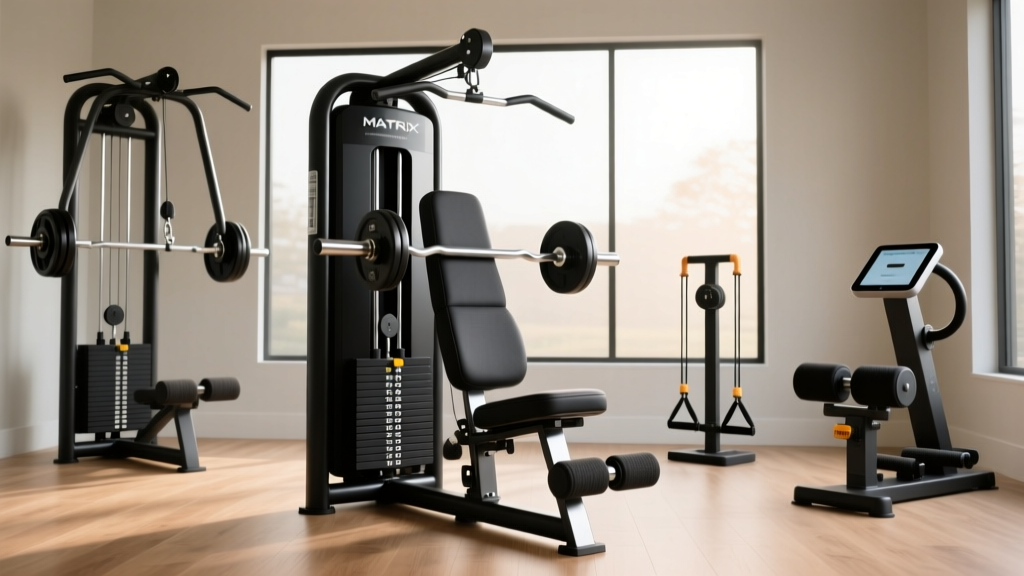
Selectorized units, such as the Life Fitness Signature Series or Matrix Magnum, utilize an internal weight stack guided by linear bearings or precision rods. While highly user-friendly and efficient for space, the internal aircraft cables, pulleys, and guide rods require meticulous lubrication and tension checks to prevent catastrophic mid-set failures.
3. Cable and Functional Trainer Attachments
Many modern facilities opt for adjustable cable columns equipped with specialized shoulder press handles. While versatile, the constant repositioning of pulleys and the high-tension requirements for heavy overhead pressing accelerate cable fraying and pulley bearing wear.
| Machine Type | Top 2026 Models | Avg. Price Range | Primary Maintenance Focus |
|---|---|---|---|
| Plate-Loaded Iso-Lateral | Hammer Strength Iso-Lateral, Prime Fitness | $2,800 - $4,200 | Pivot bearings, seat pop-pins, grip rubber |
| Selectorized / Pin-Loaded | Life Fitness Signature, Technogym Selection | $3,500 - $5,500 | Guide rods, aircraft cables, weight stack bumpers |
| Cable / Functional Trainer | Matrix Magnum, Rogue Monster | $4,000 - $7,000 | Pulley bearings, cable tension, swivel joints |
Biomechanical Wear: Compound vs. Isolation Stress Profiles
To truly understand equipment longevity, facility managers must analyze the biomechanical forces at play. When analyzing equipment degradation, it is highly instructive to contrast the stress profiles of compound movements with isolation exercises. For instance, understanding the bicep curl machine muscles worked—primarily the biceps brachii, brachialis, and brachioradialis through a single-axis elbow flexion—reveals that these machines endure high-repetition, low-load friction concentrated at a single pivot bearing. The absolute weight lifted on a bicep curl machine rarely exceeds 150 lbs, but the repetitive hinge motion can grind out cheap bushings over thousands of cycles.
Conversely, shoulder press machines are designed for heavy, multi-joint compound loading. A seasoned lifter might press 250 to 350+ lbs on a plate-loaded shoulder press. This massive axial load places sheer stress on the machine's mainframe welds and linear bearings. According to kinesiological data outlined by ExRx.net, the anterior deltoid and triceps brachii generate immense upward force vectors during the concentric phase of a shoulder press. This means that while a bicep curl machine fails slowly via pivot-point friction, a poorly maintained shoulder press machine risks sudden structural or cable failure under heavy compressive loads, making its maintenance schedule far more critical for user safety.
Essential Maintenance Care and Longevity Protocols
Adhering to a strict maintenance cadence is non-negotiable for commercial and heavy-use home gym environments. The International Health, Racquet & Sportsclub Association (IHRSA) consistently highlights that preventative maintenance reduces long-term equipment replacement costs by up to 40%.
CRITICAL WARNING: Never use standard WD-40 or petroleum-based lubricants on selectorized guide rods or pivot points. Petroleum products attract dust, chalk, and dead skin cells, creating an abrasive paste that will destroy linear bearings and void manufacturer warranties. Always use 100% pure silicone spray.Daily and Weekly Upkeep
- Upholstery Sanitization: Wipe down vinyl pads daily with a pH-neutral, quaternary ammonium-based cleaner. Avoid bleach-based products, which dry out the vinyl and cause micro-cracking along the stitching seams.
- Grip Inspection: Check rubber and urethane handles for tearing. Sweat acidity degrades rubber over time; wiping handles with a damp cloth weekly extends their lifespan by years.
- Pop-Pin Verification: Ensure seat and backrest adjustment pop-pins fully engage into the detent holes. A partially engaged pin under a 300 lb load will shear the pin or bend the adjustment rod.
Monthly and Quarterly Deep Maintenance
- Guide Rod Lubrication (Monthly): Apply 100% silicone spray to a microfiber cloth and wipe down all linear guide rods on selectorized units. This ensures the weight stack carriage glides without stuttering.
- Aircraft Cable Inspection (Monthly): Visually inspect all 3/16" and 1/4" aircraft cables. Run a gloved hand along the cable length; if you feel any 'snags' or broken wire strands, the cable must be replaced immediately. Replacement cables typically cost between $45 and $85.
- Pivot Bolt Torque (Quarterly): Use a calibrated torque wrench to check all structural pivot bolts on plate-loaded iso-lateral machines. Vibrations from dropping plates can loosen these over time. Re-torque to the manufacturer's specified Nm (Newton-meters) rating.
- Pulley Bearing Check (Quarterly): Spin every pulley by hand. If you hear grinding, clicking, or feel lateral play, the internal sealed bearings have failed. Press in new 608zz or 6202zz bearings (usually under $5 each) to restore smooth operation.
Troubleshooting Common Failure Modes
Even with rigorous maintenance, high-traffic shoulder press machines will exhibit wear. Here is how to diagnose and resolve the most common issues:
Sticky or Jumping Weight Stacks
Symptom: The weight stack catches during the eccentric (lowering) phase.
Diagnosis: Guide rods are dry, or the top roller wheels of the carriage are misaligned.
Solution: Clean the rods with a degreaser, apply pure silicone, and check the carriage alignment. If the top nylon wheels are flat-spotted, order a replacement carriage kit ($120-$180).
Lateral Wobble in Iso-Lateral Arms
Symptom: The pressing arms wobble side-to-side during the lift.
Diagnosis: The main pivot bushings or sealed bearings have worn out due to heavy, uneven loading.
Solution: Disassemble the pivot joint. Replace the bronze oil-impregnated bushings or pressed-in bearings. This is a high-labor, low-parts-cost repair that completely restores the machine's factory feel.
Slipping or Stretching Belts
Symptom: The weight stack lifts, but the handle does not move proportionately.
Diagnosis: The internal Kevlar or nylon-coated drive belt has stretched or slipped a tooth on the drive pulley.
Solution: Access the top shroud, re-tension the belt via the idler pulley, or replace the belt entirely if the teeth are stripped.
When to Repair vs. Replace
Facility managers must weigh the cost of repairs against the acquisition of new equipment. According to the American College of Sports Medicine (ACSM) facility guidelines, equipment that poses a sudden catastrophic failure risk under load should be retired if structural welds are compromised.
If your selectorized shoulder press requires a new cable ($60), new pulleys ($30), and fresh upholstery ($150), the $240 repair is highly justified on a $4,000 machine. However, if the mainframe exhibits stress fractures near the base welds, or if the linear guide rods are deeply pitted with rust, it is time to decommission the unit. In 2026, with supply chains for commercial fitness parts fully stabilized, ordering direct OEM replacement parts is faster than ever, making component-level repairs the most economically sound choice for machines less than 10 years old.
Conclusion
Maximizing the lifespan of your shoulder press machines requires moving beyond reactive fixes and adopting a proactive, biomechanically informed maintenance strategy. By understanding the immense axial loads these compound machines endure—especially when compared to the localized friction of the bicep curl machine muscles worked—you can tailor your lubrication, inspection, and part-replacement schedules to prevent downtime. Invest in high-quality silicone lubricants, keep a stock of OEM aircraft cables and sealed bearings, and your shoulder press stations will remain safe, smooth, and profitable for well over a decade.
More gear to consider
All reviews
Best Home Gym Machines for Buyers: Expert Recommendations Based on Space, Budget, and Fitness Goals

Cybex Bicep Curl Machine vs Top Alternatives: 2026 Guide

Maintaining Arm Workout Equipment: Shoulder Press Machine Care

Troubleshooting Bicep Curl Machine Form: EZ vs Straight Bar
Equip Body Arms for Beginners: A Practical, Measurement-Driven Guide to Safe and Effective Arm Training