
How to Use Biceps Curl Machine vs Cable Attachments: Value Guide
Compare the cost of dedicated bicep machines versus cable attachments. Learn how to use biceps curl machine setups and maximize your 2026 gym budget.

The Core Dilemma: Dedicated Machines vs. Cable Attachments
When outfitting a home gym or upgrading a commercial fitness floor in 2026, arm training equipment presents a unique budgetary challenge. The biceps and triceps are relatively small muscle groups, yet they command a massive footprint in traditional gym layouts. Facility owners and home lifters alike face a critical decision: invest in a dedicated, single-purpose isolation machine, or maximize the utility of a functional trainer with specialized cable machine arm exercise attachments? To make an informed financial decision, we must evaluate not just the upfront capital expenditure, but the biomechanical ROI, maintenance costs, and exercise versatility.
How to Use Biceps Curl Machine (And Why Form Dictates Value)
Before breaking down the financials, it is vital to understand the biomechanical baseline. Knowing how to use biceps curl machine equipment properly is the only way to extract value from the investment. If the user cannot align their joints with the machine's pivot points, the expensive cam system becomes useless.
Step-by-Step Setup and Execution
- Seat Height Calibration: The most common failure in machine curls is improper seat height. Adjust the seat so that your elbow joint sits exactly in line with the machine's mechanical pivot point (the axis of rotation). Misalignment forces the shoulder to compensate, shifting tension away from the biceps brachii.
- Scapular Retraction: Depress and retract your shoulder blades. According to ExRx.net's biomechanics guide on preacher curls, stabilizing the scapula prevents the anterior deltoid from hijacking the concentric phase of the lift.
- The Eccentric Yield: Lower the weight over a strict 3-second count. Dedicated machines excel here by providing consistent resistance through the entire range of motion, unlike free weights where tension drops off at the top of the movement.
- Wrist Positioning: Maintain a neutral or slightly extended wrist. Flexing the wrist recruits the forearm flexors, stealing stimulus from the biceps.
Budget Breakdown: Dedicated Bicep Machines
Dedicated arm machines are engineered with specific resistance profiles (cams) that match the natural strength curve of the biceps or triceps. However, this engineering comes at a premium.
2026 Market Pricing Tiers
- Entry-Level / Light Commercial ($600 - $900): Models like the Body-Solid ProClub Line Seated Bicep Curl Machine (SPC329) offer reliable biomechanics but utilize lighter-gauge steel and standard vinyl upholstery. These are ideal for garage gyms but may require upholstery replacement within 3-4 years in a busy commercial setting.
- Mid-Tier Commercial ($1,200 - $1,800): Brands like Life Fitness and Matrix dominate this space. These units feature self-aligning pivot points, premium urethane-coated weight stacks, and ergonomic molded seats.
- Elite / Plate-Loaded ($2,200 - $3,500+): Prime Fitness and Hammer Strength plate-loaded isolateral machines represent the pinnacle of arm training. They allow for unilateral loading and converging/diverging movement arcs, but the cost-to-exercise ratio is steep.
Budget Breakdown: Cable Machine Arm Exercise Attachments
If you already own a functional trainer or a dual-pulley cable crossover, the financial logic shifts dramatically. Cable machine arm exercise attachments offer modular versatility, transforming a single cable column into dozens of specialized arm stations.
Essential Attachments and Current Costs
- Rogue Fitness Cable Curl Bar ($65.00): A specialized, angled EZ-curl bar with a swivel carabiner. The angled grips reduce wrist valgus stress, mimicking the ergonomics of a $1,500 dedicated machine for a fraction of the cost.
- Titan Fitness Heavy-Duty Tricep Rope ($34.99): Constructed from thick braided nylon with reinforced rubber stoppers. Essential for overhead tricep extensions and cross-body hammer curls.
- A2ZCARE Single D-Handle Pair ($38.00): Rotating handles are crucial for unilateral bicep curls and tricep pushdowns, allowing the wrist to naturally supinate or pronate through the movement without binding the cable.
- Latios Fitness Ankle/Cuff Attachment ($25.00): While often used for glutes, cuff attachments are highly valuable for cable kickbacks and single-leg hamstring curls, maximizing the functional trainer's ROI.
Total Attachment Investment: Approximately $163.00. This modest spend unlocks over 15 distinct arm and forearm exercises, rivaling the utility of three separate dedicated machines.
Value Analysis Matrix: Cost Per Arm Exercise
To truly understand the value proposition, we must look at the "Cost Per Exercise" metric. The table below compares a dedicated setup versus a fully equipped cable attachment setup.
| Metric | Dedicated Bicep Machine | Cable Attachment Ecosystem |
|---|---|---|
| Upfront Equipment Cost | $1,200 - $2,500+ | $150 - $200 (Assuming trainer exists) |
| Exercise Variations | 1 to 2 (Strict Isolation) | 15+ (Multi-angle, multi-joint) |
| Resistance Profile | Fixed Cam (Optimized for peak contraction) | Linear (Requires body positioning to alter curve) |
| Floor Space Required | 12 - 16 sq. ft. | 0 sq. ft. (Stores on挂钩/wall) |
| Cost Per Exercise | $1,200.00+ | ~$12.00 |
Real-World Failure Modes and Maintenance Costs
A true value analysis must account for depreciation and maintenance. Equipment failure is inevitable; the question is how much it costs to fix.
Dedicated Machine Failure Points
The primary failure point on a seated bicep curl machine is the main pivot bearing. Because the user's entire arm force is leveraged against this single joint, cheap bushings will develop lateral play within 18 months of heavy use, resulting in a squeaking or grinding sensation. Replacing these industrial bearings requires specialized tools and can cost $150-$250 in parts and labor. Additionally, the vinyl upholstery on the arm pad is highly susceptible to sweat-induced degradation and tearing, requiring $100+ reupholstering jobs.
Cable Attachment Failure Points
Cable attachments fail in much more benign, and cheaper, ways. The most common issue is nylon fraying on tricep ropes where the material rubs against the metal carabiner. A heavy-duty rope might last 2-3 years before needing replacement. Chrome-plated EZ curl bars may develop surface rust if users fail to wipe off sweat, but this is purely cosmetic. The actual cable machine's internal aircraft-grade steel cables and aluminum pulleys bear the brunt of the mechanical stress, and as ExRx.net's cable curl execution standards note, maintaining proper cable tension and pulley lubrication is generally all that is required to keep the system running smoothly for a decade.
💡 Pro-Tip for Cable Longevity: Never leave heavy attachments (like the solid steel curl bar) hanging on the cable carabiner when not in use. The constant static load stretches the internal swivel mechanism, leading to premature binding. Store attachments on a dedicated wall-mounted pegboard.Bridging the Biomechanical Gap
Critics of cable attachments often point to the lack of a specialized resistance cam. A dedicated machine uses an elliptical cam to increase resistance at the point of peak bicep contraction (when the forearm is perpendicular to gravity). Cables provide linear resistance. However, you can manually manipulate the resistance curve of a cable machine by altering your body position relative to the pulley. By stepping back and leaning forward during a cable curl, you change the angle of pull, effectively mimicking the peak-contraction overload of a dedicated machine. Understanding kinesiology levers and moment arms allows a knowledgeable lifter to extract 95% of the biomechanical benefit of a dedicated machine using a $65 cable bar.
The Final Verdict for Home and Commercial Gyms
If you are outfitting a high-traffic commercial facility where user-friendliness and "grab-and-go" simplicity are paramount, the dedicated bicep curl machine is a justifiable expense. It removes the learning curve, ensuring members safely isolate the biceps without requiring a deep understanding of pulley angles.
However, for the home gym owner, the budget-conscious garage gym builder, or the boutique personal training studio, cable machine arm exercise attachments are the undisputed champions of value. By investing $165 in a high-quality curl bar, tricep rope, and rotating D-handles, you unlock a vast library of arm exercises that rival the stimulus of dedicated machines, all while preserving critical floor space and keeping your capital expenditure firmly in the green.
More gear to consider
All reviews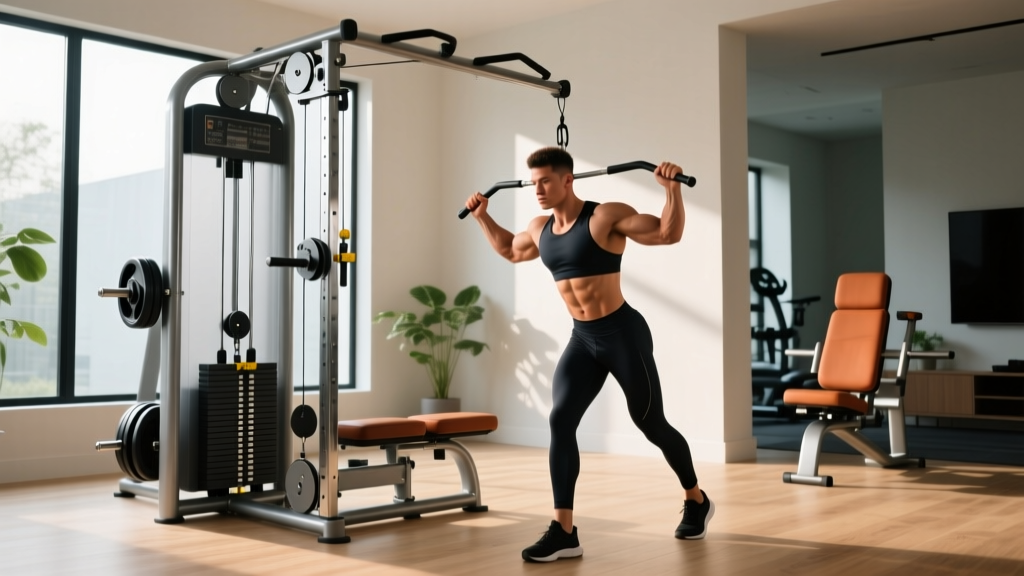
Beyond the Biceps Curl Machine: 2026 Tricep Extension Guide

12 Proven DIY Cold Ideas for Home, Workshop, and Emergency Preparedness

Tricep Rope vs Bar: Cable Gear Beyond the Bicep Curls Machine

Preacher Bench Setup for the Perfect Biceps Curl Machine Workout

EZ Bar vs Straight Bar & Dumbbell Shoulder Press Mistakes Fixed
