
Compact Gym Layouts: Battle Rope Sizing & Oval Yoga Mat Zones
Optimize your home gym layout with our battle rope length and thickness guide. Learn spatial planning, anchor placement, and oval yoga mat integration.

The Spatial Reality of Battle Ropes in Home Gyms
Designing a high-performance home gym in a constrained footprint requires rigorous spatial planning, especially when integrating high-velocity, dynamic equipment. Battle ropes are among the most metabolically demanding tools available—capable of spiking heart rates past 150 BPM in under 30 seconds—but they are also notorious space-hogs. Unlike static equipment like dumbbells or kettlebells, a battle rope requires a three-dimensional 'strike zone' that accounts for floor length, lateral swing arcs, and ceiling height. As of 2026, with urban home gyms and garage conversions shrinking in average square footage, mastering the battle rope length and thickness guide is no longer optional; it is a fundamental requirement for safe and effective facility layout.
Furthermore, a truly optimized gym layout must balance high-intensity zones with dedicated recovery areas. This is where strategic accessory placement comes into play. When mapping out the static recovery zone adjacent to your high-impact rope area, selecting the right yoga mat—oval versus traditional rectangular—can fundamentally alter your spatial efficiency. This guide breaks down the exact measurements, anchor engineering, and layout matrices required to fit a battle rope station and an oval yoga mat recovery zone into compact environments without compromising safety or performance.
Battle Rope Length Guide: Measuring Your Clearance Zone
The most common mistake in home gym design is purchasing a 50-foot rope for a room that only supports 20 feet of clearance. A battle rope does not simply lay flat; it requires slack to generate the whip effect and wave amplitude. According to biomechanics research published in the Journal of Strength and Conditioning Research, the kinetic transfer of a battle rope requires a minimum parabolic arc to properly engage the posterior chain and shoulder stabilizers. If the rope is choked against the anchor point due to insufficient length, you lose the training stimulus and risk snapping the rope fibers.
| Rope Length | Required Anchor Distance | Minimum Ceiling Height | Best Layout Application |
|---|---|---|---|
| 30 Feet | 15 - 18 Feet | 8 Feet | Small apartments, tight bedrooms |
| 40 Feet | 20 - 24 Feet | 9 Feet | Standard 2-car garage gyms |
| 50 Feet | 25 - 30 Feet | 10+ Feet | Dedicated warehouse / outdoor spaces |
The Slack Factor: Never measure your room and buy the exact same length in rope. A 40-foot rope requires an anchor distance of roughly 20 to 24 feet. The remaining 16 to 20 feet of rope is distributed as the 'slack loop' necessary to create alternating waves and double slams. If your wall-to-wall distance is exactly 20 feet, you must step forward 4 feet during use, or downgrade to a 30-foot rope.
Thickness, Swing Arc, and Lateral Layout Constraints
While length dictates the X-axis (depth) of your layout, rope thickness dictates the Y-axis (lateral width) and the Z-axis (vertical clearance). Thicker ropes are heavier, requiring more force to accelerate, which naturally results in a wider lateral swing arc during alternating waves. The American College of Sports Medicine (ACSM) recommends a minimum of 3 feet of lateral clearance on either side of the user for dynamic cable and rope movements to prevent joint impingement from restricted movement patterns.
1.5-Inch (38mm) Ropes: The Compact Apartment Choice
A 1.5-inch poly-dacron rope is the undisputed king of small-space layouts. Weighing roughly 0.4 lbs per foot, it allows for high-frequency, low-amplitude waves. Because the rope is lighter, the lateral swing arc is tighter, meaning you can safely operate within a 6-foot wide corridor. This is ideal for narrow basement gyms where equipment racks flank the user.
2.0-Inch (50mm) Ropes: Managing the Heavy Arc
Stepping up to a 2.0-inch rope (approx. 0.6 lbs per foot) increases the grip demand and the kinetic output. The heavier mass means the rope travels wider during outside-to-inside waves. You must allocate at least 8 feet of lateral width in your floor plan. Additionally, the increased weight demands a more robust anchor point to handle the sheer force of double slams.
2.5-Inch (63mm) Ropes: The Garage-Only Behemoth
At 0.8+ lbs per foot, 2.5-inch ropes are massive grip-strength builders. However, from a layout perspective, they are a nightmare for small spaces. The swing arc requires a 10-foot wide clearance zone, and the overhead slams require ceilings higher than 10 feet to avoid drywall destruction. Reserve these strictly for open-concept garage gyms.
Designing the Recovery Zone: The Yoga Mat Oval Integration
High-intensity interval training with battle ropes rapidly depletes the central nervous system, necessitating an immediate transition to a parasympathetic recovery state. This requires a dedicated mobility zone. However, in a compact layout, placing a standard 68x24 inch rectangular yoga mat directly adjacent to the rope station creates a tripping hazard and wastes valuable corner square footage.
This is where the yoga mat oval design becomes a critical space-optimization tool. If you are sourcing a yoga mat, oval profiles are increasingly favored by sports physical therapists for home gyms. An oval mat contours to the natural footprint of the human body during supine and prone recovery poses (like savasana or pigeon pose), eliminating the sharp 90-degree corners of traditional mats.
- Spatial Savings: An oval yoga mat reduces the corner footprint by roughly 15-20%, allowing you to tuck the recovery zone closer to the battle rope anchor rig without the corners catching on nearby dumbbell racks or kettlebell stands.
- Flow Optimization: The curved edges create a natural 'funnel' effect, guiding the athlete out of the high-impact strike zone and into the recovery zone without requiring sharp, spatially demanding pivots.
- Material Pairing: Pair your oval yoga mat with a 5mm thick natural rubber base to absorb the low-frequency vibrations generated by the battle rope slams, ensuring your meditation and stretching remain undisturbed by floor tremors.
Anchor Point Engineering for Compact Spaces
You cannot anchor a battle rope to a standard drywall stud using a hardware-store eye-bolt. The kinetic shockwave of a double slam generates hundreds of pounds of instantaneous pull-force. Using inadequate hardware will result in metal fatigue and catastrophic anchor failure within 3 to 4 weeks, potentially causing severe injury or property damage.
WARNING: Never wrap a battle rope around a PVC pipe, a support column wrapped in drywall, or a standard squat rack crossmember without a protective nylon sleeve. The friction will shred the rope's outer dacron jacket in under five sessions.For the ultimate space-saving anchor, install a Heavy-Duty Wall-Mount D-Ring (such as the Titan Fitness or Rogue wall anchors, typically priced between $40 and $85).
- Locate the Stud: Use a magnetic stud finder to locate the exact center of a structural wood stud or steel beam.
- Hardware Selection: Use a forged steel D-ring with a 4-hole mounting plate. Secure it using 3/8-inch x 3-inch structural lag bolts.
- Height Placement: Mount the D-ring exactly 18 inches from the floor. This allows the rope to rest at a natural angle for alternating waves without dragging excessively on the floor, which causes premature fraying.
If you are renting and cannot drill into walls, you must use a freestanding anchor rig. These typically cost $150 to $250 and feature a wide, sandbag-weighted base. Be aware that freestanding rigs require an additional 3 feet of depth behind the anchor point to prevent tipping during aggressive slams.
Quick-Reference Layout Matrix
Use this matrix to determine your optimal equipment loadout based on your available room dimensions.
| Room Dimensions | Recommended Rope | Anchor Type | Recovery Zone Setup |
|---|---|---|---|
| 10' x 10' Bedroom | 30ft / 1.5-inch | Wall-Mount D-Ring | Foldable oval yoga mat stored vertically |
| 12' x 20' Garage Bay | 40ft / 2.0-inch | Wall-Mount or Rig Tie-off | Permanent oval yoga mat zone adjacent to anchor |
| 20' x 20' Open Space | 50ft / 2.5-inch | Freestanding Sandbag Rig | Dual mat layout (Rectangular + Oval) |
Frequently Asked Questions
Can I just buy a 50-foot rope and fold it in half for a small room?
No. Folding a rope and anchoring it at the midpoint completely destroys the whip effect and wave propagation. You will essentially be yanking dead weight, which places dangerous sheer stress on the rotator cuff and lumbar spine. Always buy the correct length for your space.
How do I protect my subfloor from rope slams?
Battle rope slams transfer massive kinetic energy into the floor. To protect concrete or wood subfloors, place a 4x6 foot, 3/4-inch thick vulcanized rubber horse stall mat (typically $45 to $60 at agricultural supply stores) directly under the user and the first 10 feet of the rope's path. Do not use cheap interlocking foam tiles; they will compress and tear upon first impact.
Does rope material matter for indoor air quality?
Yes. Cheap nylon ropes shed microscopic plastic lint with every slam, which quickly clogs HVAC filters and degrades indoor air quality in small, unventilated home gyms. Always invest in a premium Poly-Dacron rope (priced around $85 to $140 for a 40-foot model), which features a tightly braided outer sheath that eliminates lint shedding.
More gear to consider
All reviews
Loop vs Tube Band Maintenance and FSA Yoga Mat Care

Pull-Up Band Sizing vs. The Viral Subway Bread Yoga Mat

Stability Ball vs BOSU Ball: Core Routines for Your SPRI Yoga Mat

Exercise Ball Size Guide: Space Layouts and Using a Yoga Mat on Carpet
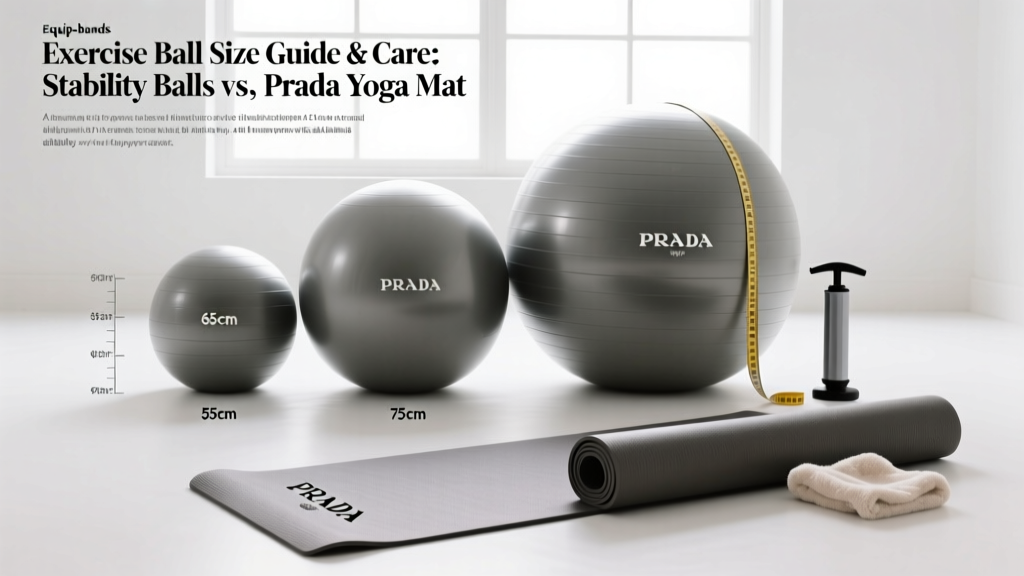
Exercise Ball Size Guide & Care: Stability Balls vs. Prada Yoga Mat
