
Loop vs Tube Bands: Budget Analysis & Rolled Yoga Mat Pairings
Compare loop band vs tube band costs, durability, and use cases. Plus, discover the best rolled yoga mat pairings to maximize your home gym budget.

The 2026 Home Gym Economy: Loop Band vs Tube Band
When building a cost-effective home gym, the debate between loop bands and tube bands is a cornerstone of budget fitness planning. According to the American Council on Exercise (ACE), elastic resistance provides comparable neuromuscular activation to free weights, but at a fraction of the cost and spatial footprint. However, not all elastic resistance is created equal. To truly maximize your return on investment in 2026, we must break down the manufacturing costs, failure modes, and hidden expenses of both band types. Furthermore, we will explore why pairing your chosen resistance tool with a high-quality rolled yoga mat is the secret to a complete, joint-friendly training ecosystem.
💡 The Value Thesis: A $25 tube band set might seem cheaper upfront than a $40 loop band set, but if the carabiners tear through the latex within six months, your cost-per-use skyrockets. True value requires analyzing the total lifespan of the gear and the supportive equipment—like a proper floor mat—needed to use it safely.Manufacturing & Mechanics: Where Your Money Goes
To understand the pricing disparities, you have to look at how these bands are engineered. The cost differences are rooted in material processing and hardware integration.
Loop Bands: The Vulcanized Standard
Loop bands (often called pull-up assist bands or power bands) are manufactured through a continuous vulcanization process. Liquid latex is layered over a cylindrical mandrel and cured, creating a seamless, flat loop. Because there are no glued seams or mechanical attachments, the structural integrity relies entirely on the quality of the natural rubber. Premium brands like Rogue Fitness or WODFitters use 100% natural Malaysian latex, which resists micro-tearing better than synthetic TPE blends.
- Average Cost (Set of 4): $35 - $65
- Tension Range: 10 lbs to 150+ lbs (depending on width, typically 1/4" to 4")
- Primary Value Driver: Seamless construction eliminates weak points, offering a lifespan of 3 to 5 years with proper care.
Tube Bands: The Hardware-Dependent Option
Tube bands consist of extruded cylindrical latex, often with an inner nylon safety cord, capped with heavy-duty plastic or metal carabiners. These attach to ABS plastic handles, ankle straps, or door anchors. The manufacturing is cheaper, but the introduction of hardware creates multiple failure points.
- Average Cost (Stackable Set of 5): $20 - $35
- Tension Range: 10 lbs to 50 lbs per tube (stackable up to 150 lbs)
- Primary Value Driver: Versatility and ergonomic handles make them ideal for traditional bodybuilding isolation movements (e.g., bicep curls, tricep pushdowns).
2026 Cost & Failure Mode Matrix
A budget breakdown is incomplete without factoring in how and when the equipment fails. The National Institutes of Health (NIH) notes that while elastic resistance is highly effective for hypertrophy and rehab, material degradation is the primary risk factor for injury. Below is a comparative analysis of what you are actually paying for.
| Feature | Flat Loop Bands | Tube Bands w/ Handles |
|---|---|---|
| Initial Investment | $35 - $65 | $20 - $35 |
| Expected Lifespan | 3 - 5 Years | 1 - 2 Years |
| Common Failure Mode | Edge micro-tears from knurling or sharp anchors | Carabiner slicing through latex; ABS handle snapping |
| Replacement Cost | $15 - $25 (per individual band) | $10 - $15 (per replacement tube) |
| Best Biomechanical Use | Compound lifts, pull-up assists, glute activation | Isolation curls, presses, seated rows |
The Ground Game: Why a Rolled Yoga Mat is Essential
You cannot accurately evaluate the value of resistance bands without considering the surface you train on. Whether you are performing lateral band walks with a mini-loop around your knees, or anchoring a tube band under your feet for standing overhead presses, your point of contact with the ground dictates your stability and safety.
This is where investing in a premium rolled yoga mat becomes non-negotiable for value-seekers. Bare floors (hardwood, tile, or even thin carpet) offer inconsistent friction coefficients. When a tube band is stretched to 300% of its resting length, it generates significant kinetic energy. If your foot slips on a slick floor during a banded squat, the resulting snap-back can cause severe welts or eye injuries. A high-density rolled yoga mat provides the necessary grip to anchor your bands securely while protecting your joints during floor-based exercises like banded glute bridges or seated abdominal twists.
Mat Thickness vs. Band Anchoring: Finding the Sweet Spot
Not all mats are suitable for resistance training. The thickness of your rolled yoga mat directly impacts your force transfer and balance.
- Ultra-Thin (1mm - 2mm): Excellent for travel and direct floor connection, but offers zero cushioning for the spine during supine banded exercises. Verdict: Poor value for band training.
- The Sweet Spot (4mm - 5mm): Provides optimal friction for anchoring tube bands underfoot while offering enough high-density foam to protect the tailbone and knees. Verdict: Highest ROI.
- Extra Thick (6mm - 10mm+): Great for Pilates, but the excessive squish creates an unstable base when standing on the mat to anchor heavy tube bands, increasing ankle rollover risk. Verdict: Situational.
Top Rolled Yoga Mat Pairings for Band Workouts
To complete your budget breakdown, here are three highly specific rolled yoga mat recommendations that pair perfectly with resistance band training in 2026:
- The Budget Anchor: Gaiam Essentials (5mm, ~$22)
Constructed from closed-cell PVC, this mat offers decent grip for barefoot tube band anchoring. It is an excellent entry-level option if your primary focus is keeping the initial setup cost under $50 total. - The Durability King: JadeYoga Harmony (4.7mm, ~$79.95)
Made from open-cell natural rubber, the JadeYoga mat provides unparalleled grip. When you are sweating through a high-rep banded HIIT circuit, this mat will not slip, ensuring your tube band anchors remain rock solid. - The Heavy-Duty Standard: Manduka PRO (6mm, ~$132)
While expensive, the Manduka PRO's dense, closed-cell surface is virtually indestructible. If you wear shoes while training with heavy loop bands, this mat will withstand the abrasion that destroys cheaper alternatives, making its 10-year cost-per-use incredibly low.
The Ultimate $85 Budget Loadout Framework
How do you combine these insights into a cohesive, budget-friendly home gym? Here is a practical, step-by-step purchasing framework that maximizes versatility without sacrificing safety.
Step 1: Secure the Foundation ($25)
Purchase a mid-tier, 5mm closed-cell rolled yoga mat (like the BalanceFrom GoYoga or Gaiam Essentials). This ensures you have a sanitary, high-friction surface for floor work and a stable base for standing band anchors.
Step 2: Choose Your Primary Resistance ($35 - $45)
Allocate the bulk of your budget here based on your training style:
Option A (Strength & Power): Buy a 3-piece flat loop band set (Light, Medium, Heavy). Use them for banded squats, deadlifts, and pull-up assistance.
Option B (Hypertrophy & Isolation): Buy a 5-piece stackable tube band set with a door anchor. Use them for chest flyes, bicep curls, and lateral raises.
Step 3: Invest in Maintenance ($10)
Buy a silicone-based band conditioner and a UV-blocking storage bag. Latex degrades rapidly when exposed to sunlight and ozone. Storing your bands and your rolled yoga mat in a cool, dark place will easily double their functional lifespan, effectively cutting your long-term replacement costs in half.
Expert Verdict: Which Should You Buy?
From a strict budget breakdown perspective, flat loop bands offer superior long-term value due to their seamless construction and lack of mechanical failure points. They are the undisputed champions of cost-per-use longevity. However, if your training strictly mimics traditional dumbbell bodybuilding routines, the ergonomic handles of tube bands provide a more comfortable user experience, provided you are willing to replace the tubes every 12 to 18 months.
Regardless of which elastic resistance type you choose, treating a high-quality rolled yoga mat as a mandatory companion piece is the hallmark of a smart consumer. The mat protects your joints, stabilizes your anchors, and transforms a simple piece of rubber into a comprehensive, safe, and highly effective home gym system.
More gear to consider
All reviews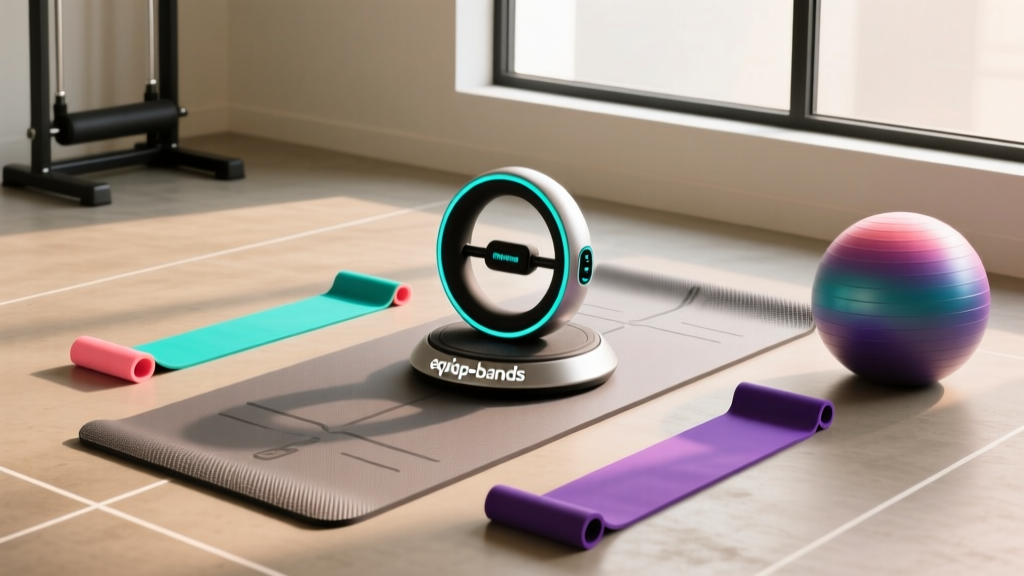
Purpose of Yoga Mat Gear vs 2026 Pilates Accessories Trends

Jump Rope Types Guide: Speed, Beaded, Weighted & Yoga Mats Cleaning
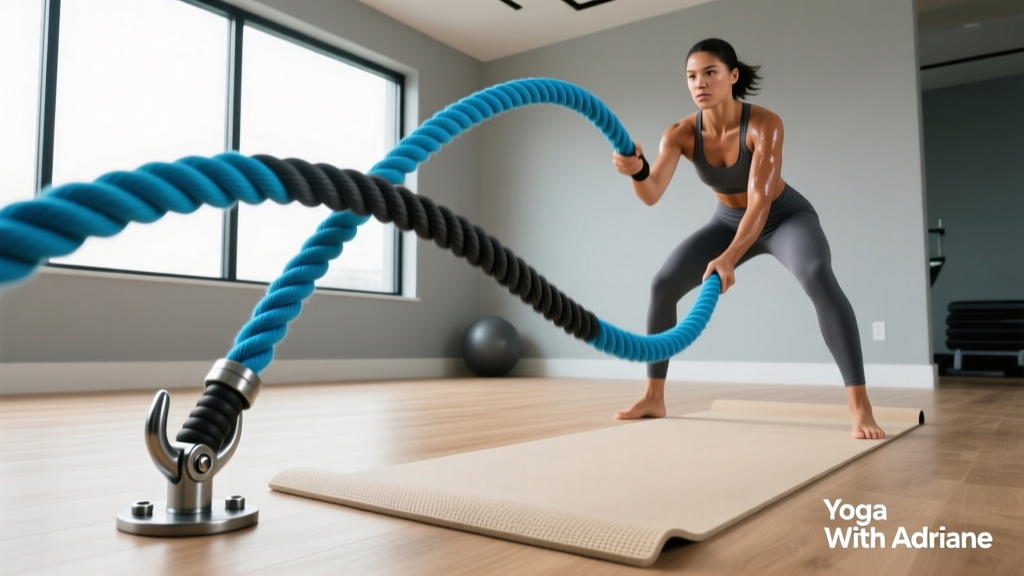
Battle Rope Sizing Guide: Protect Your Yoga With Adriene Yoga Mat
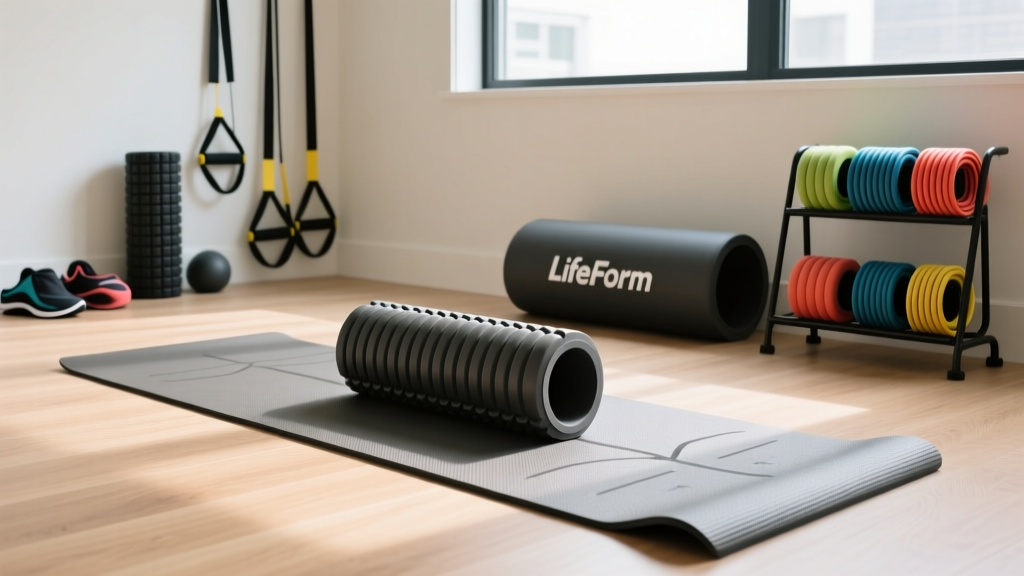
Foam Roller Sizing Guide & How to Clean LifeForm Yoga Mats

Foam Roller Density Guide & Cleaning Yoga Mat Washing Machine Errors
